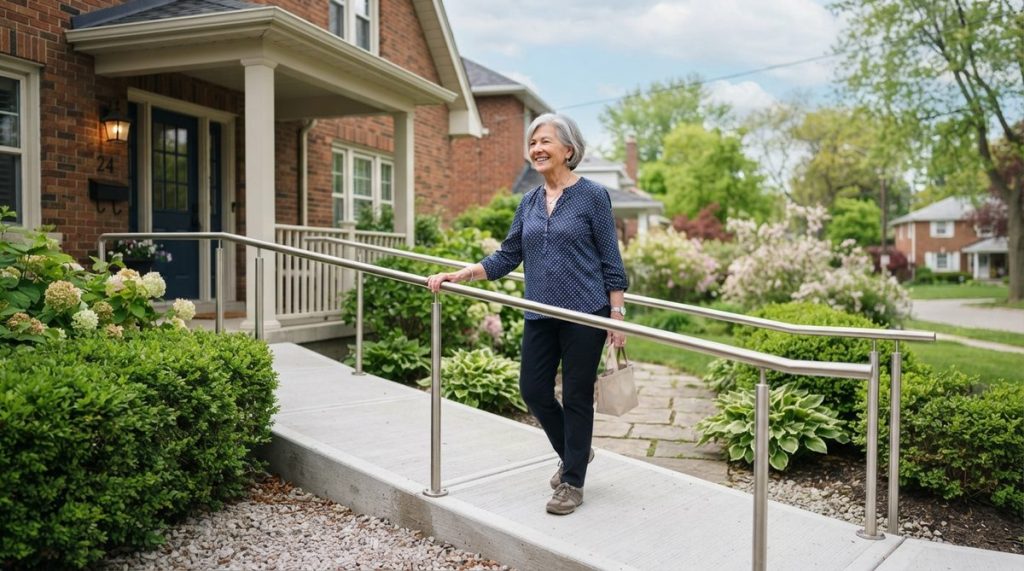


Most of What You’ve Heard About Aging in Place Is Wrong
I’ve spent 14 years as a Certified Aging-in-Place Specialist helping homeowners over 50 prepare their homes for the decades ahead. And in that time, I’ve watched the same myths circulate through families, online forums, and even well-meaning advice columns — myths that lead to delayed action, wasted money, and preventable injuries.
Aging in place — the ability to live safely and independently in your own home as you grow older — is something roughly 77% of adults over 50 say they want, according to AARP’s 2024 Home and Community Preferences survey. The desire is nearly universal. The understanding of what it actually takes? That’s where things fall apart.
Let me walk you through the most persistent aging in place myths I encounter, explain why they’re wrong, and give you the real information you need to make smart decisions — before a crisis forces your hand.
Myth: “I Don’t Need to Think About This Until I’m 80”
This is the single most damaging misconception I encounter. What I see most often is a family calling me after a fall, a hip replacement, or a hospital discharge — scrambling to retrofit a home in days that should have been adapted over years.
The truth is that aging in place modifications are most effective — and most affordable — when they’re done proactively. The CDC reports that one in four Americans aged 65 and older falls each year, and falls are the leading cause of injury-related death in that age group. Many of these falls happen at home, in bathrooms and on staircases that could have been made safer with relatively simple changes.
Starting in your 50s or early 60s gives you time to budget, plan, and make upgrades gradually rather than paying emergency contractor rates when you’re recovering from surgery. It also means you get to enjoy the improvements — a curbless shower, better lighting, lever-style door handles — as comfort upgrades, not medical necessities.
When to Start Planning
- Your 50s: Evaluate your home’s layout, identify future problem areas (narrow doorways, steep stairs, slippery bathroom tile), and begin budgeting
- Your 60s: Prioritize high-impact modifications like bathroom accessibility, improved lighting, and entrance-level living arrangements
- Your 70s and beyond: Fine-tune based on evolving needs, add smart home technology, and ensure emergency systems are in place
If you’re already thinking about how to stretch your retirement budget to cover these upgrades, you’re not alone. Many homeowners are surprised to learn that several smart senior home upgrades actually pay for themselves in reduced injury risk, lower insurance costs, and increased home value.
Myth: “Aging in Place Just Means Adding Grab Bars”
Grab bars are important. I recommend them in every project. But treating them as a one-and-done solution is like putting a bandage on a broken bone. True aging in place involves a holistic assessment of your home’s accessibility, safety, and livability across every room and system.
I often tell my clients that a comprehensive aging-in-place plan addresses five categories:
- Mobility: Wider doorways (at least 36 inches), zero-step entries, stairlifts or main-floor living, non-slip flooring throughout
- Bathroom safety: Walk-in or roll-in showers, comfort-height toilets, adequate grab bars, anti-scald valves
- Kitchen functionality: Pull-out shelving, varied counter heights, lever-style faucets, task lighting under cabinets
- Lighting and visibility: Motion-activated lighting in hallways and bathrooms, rocker-style light switches at accessible heights, high-contrast stair edges
- Technology and emergency systems: Medical alert devices, smart locks, video doorbells, automated medication reminders
The National Council on Aging emphasizes that a safe home environment requires addressing fall risks, medication management, social isolation, and emergency preparedness together. Grab bars check one box. You need to check all of them.
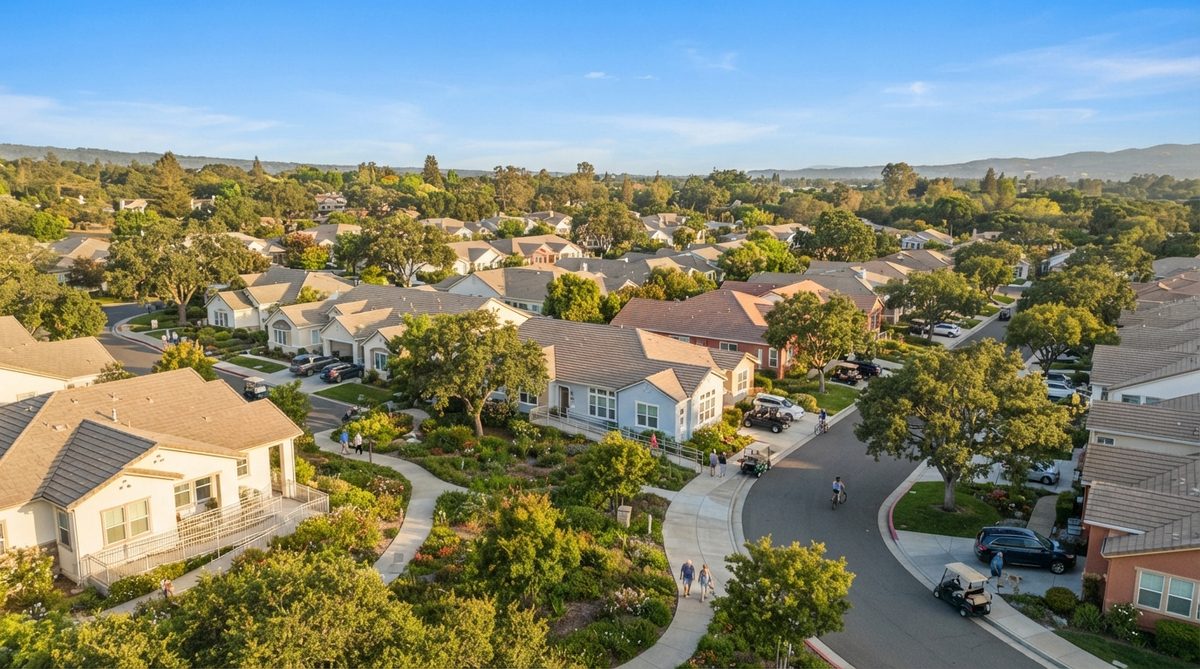
Myth: “It’s Too Expensive — I’ll Just Move to a Facility When the Time Comes”
This myth operates on two false assumptions: that aging in place is prohibitively expensive, and that assisted living is an affordable fallback. Let me address both.
The average cost of a comprehensive aging-in-place renovation ranges from $10,000 to $50,000, depending on the scope. A bathroom remodel with accessibility features might run $8,000 to $20,000. A stairlift installation averages $3,000 to $5,000. These are real numbers, and yes, they’re significant — but compare them to the alternative.
According to Genworth’s 2024 Cost of Care Survey, the national median cost of an assisted living facility is $5,511 per month — that’s $66,132 per year. A private room in a nursing home? The median is $9,733 per month, or $116,796 annually. Even three years in assisted living would cost nearly $200,000.
Suddenly, a $25,000 home modification looks like a bargain. And there may be financial help coming. A 2025 Senate bill proposes a $10,000 tax credit specifically for senior home upgrades — a signal that legislators are recognizing the economic logic of keeping people in their homes.
Funding Options Many Seniors Overlook
- Medicaid Home and Community-Based Services (HCBS) waivers: Available in most states for qualifying individuals, these can cover some home modifications
- VA Specially Adapted Housing grants: For veterans with service-connected disabilities, grants up to $109,986 (2024 limits) for home adaptations
- USDA Rural Development grants: Up to $10,000 for low-income homeowners 62+ in rural areas
- Area Agencies on Aging: Local programs often provide free assessments and small-scale modifications at no cost
- Home equity: HELOCs or reverse mortgages can fund larger projects, though these require careful financial planning
Whatever path you choose, keeping a close eye on your overall retirement spending is critical. If you’re concerned about the bigger financial picture, I’d recommend reading this guide on seniors depleting retirement savings too fast to understand how home modifications fit into a broader financial strategy.
Myth: “My Home Is Already One Story, So I’m Fine”
Single-story living eliminates stair risks, and that’s genuinely important. But in my experience, a ranch-style home can still be a minefield of accessibility problems that homeowners never notice — until they’re using a walker or recovering from knee replacement surgery.
Here’s what I check in every single-story home I assess:
- Bathroom doorways: Standard interior doors are 28 to 30 inches wide. A standard wheelchair needs 32 inches minimum, and 36 inches is ideal. Most bathrooms in homes built before 2000 fail this test.
- Shower access: Traditional tub-shower combos require stepping over a barrier that’s typically 14 to 16 inches high. For a 70-year-old with arthritis or balance issues, that’s a fall waiting to happen.
- Floor transitions: Thresholds between rooms, carpet-to-tile transitions, and area rugs create trip hazards that cause thousands of falls every year.
- Kitchen reach zones: Upper cabinets that require reaching overhead or standing on step stools become inaccessible and dangerous as shoulder mobility decreases.
- Garage entry: Many ranch homes have a step down into the garage. One step. It accounts for a surprising number of fall injuries.
A single story is a great starting point, not a finish line. The National Institute on Aging recommends a room-by-room safety check that goes far beyond the staircase question, covering everything from electrical cord placement to water temperature settings.
Myth: “Universal Design Makes My Home Look Like a Hospital”
I hear this one at least once a week, and it frustrates me every time — because it was true 20 years ago, and it hasn’t been true for a long time. The aging-in-place industry has transformed dramatically.
Today’s accessible design is often indistinguishable from high-end remodeling. Walk-in showers with frameless glass doors and rainfall showerheads are a design trend, not just a medical accommodation. Lever-style door handles are standard in luxury homes. Motion-sensor faucets appear in upscale kitchens regardless of the homeowner’s age.
Design Features That Look Premium, Not Clinical
- Curbless showers with linear drains and large-format tile — featured in magazines like Better Homes & Gardens as a top bathroom trend
- Decorative grab bars in brushed nickel, matte black, or oil-rubbed bronze that double as towel bars and accent pieces
- Pocket doors or barn-style sliding doors that save space and eliminate the need to grip and turn traditional knobs
- Under-cabinet LED lighting that provides task illumination while creating ambiance
- Comfort-height toilets (17 to 19 inches) that look identical to standard models but are significantly easier to use
When I work with clients, I show them examples of completed projects. Without exception, they’re surprised. The modern aging-in-place home doesn’t look adapted — it looks updated, thoughtful, and intentional. Many of these upgrades increase resale value because they appeal to buyers of all ages.
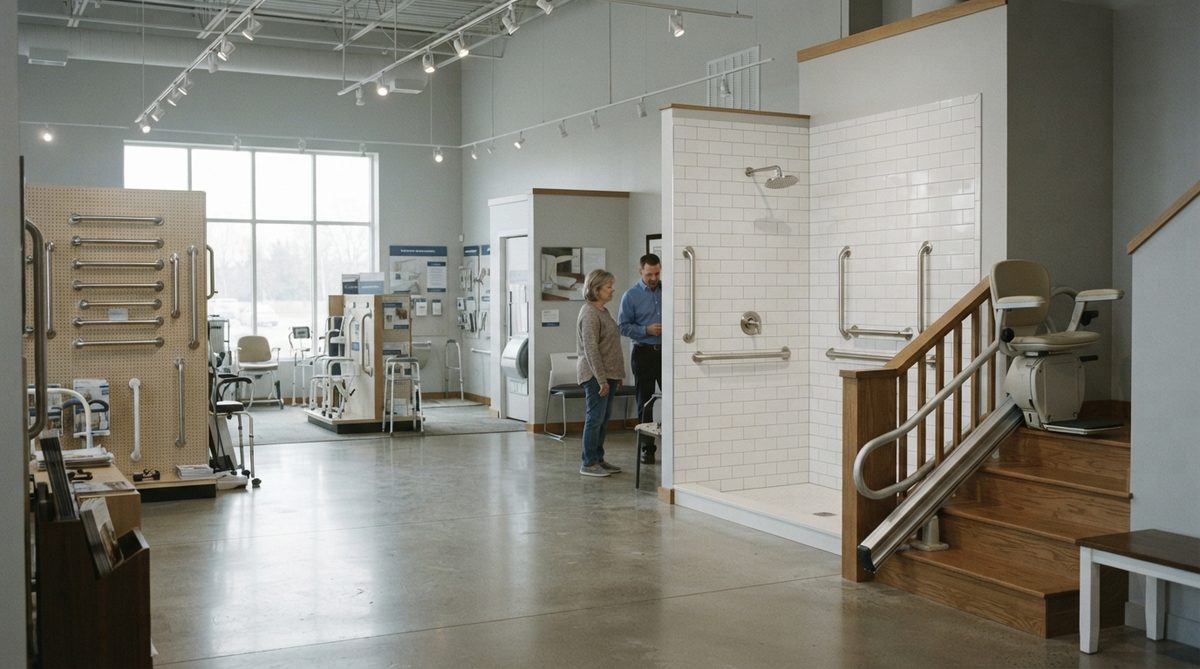
Myth: “Technology Will Solve Everything”
Smart home technology is a powerful complement to physical modifications, but I’ve seen a troubling trend: families installing Alexa devices and smart cameras and assuming their parent is safe. Technology without structural adaptation is like putting a smoke detector in a house made of kindling.
Medical alert systems, fall-detection wearables, smart medication dispensers, and video monitoring all have their place. But they respond to emergencies — they don’t prevent them. A voice-activated assistant can call 911 after a fall in the bathroom. A properly installed grab bar and non-slip flooring can prevent that fall from happening at all.
The best approach is layered: physical modifications reduce risk, technology provides monitoring and rapid response, and regular home assessments ensure everything stays current as needs evolve. I recommend reassessing every two to three years or after any significant health event.
Myth: “My Family Will Take Care of Me — I Don’t Need to Modify the Home”
Family caregiving is admirable, and roughly 53 million Americans provide unpaid care to a loved one, according to AARP and the National Alliance for Caregiving. But relying entirely on family care without adapting the home puts enormous strain on everyone involved — and often accelerates the very move to a facility that families are trying to avoid.
What I see most often is a well-intentioned adult child helping a parent in an unmodified home. They’re lifting their parent over a tub edge, navigating narrow hallways with a wheelchair, or running up and down stairs multiple times a day to bring meals. Within months, the caregiver is exhausted, injured, or burned out. Then the conversation shifts to “Maybe we should look at assisted living.”
A properly modified home makes caregiving sustainable. It protects the independence of the person aging in place and the physical and emotional health of their caregivers. These two goals aren’t competing — they’re complementary.
Myth: “Medicare or Insurance Will Cover Home Modifications”
This is a painful misconception. Traditional Medicare does not cover home modifications, period. It may cover certain durable medical equipment — like a hospital bed or commode — with a doctor’s order, but it will not pay for a bathroom remodel, stairlift installation, or doorway widening.
Some Medicare Advantage plans offer limited home safety benefits, typically in the range of $500 to $3,000 annually for specific modifications. Medicaid coverage varies dramatically by state, with some states offering robust HCBS programs and others providing almost nothing.
Homeowners insurance doesn’t cover modifications either, though some insurers offer discounts for safety features that reduce claim risk. The bottom line: most aging-in-place costs come out of pocket, which is exactly why planning early and budgeting strategically matters so much. Understanding your broader financial landscape — including how the five biggest financial concerns for retirees interact with home costs — can help you allocate funds wisely.
The Truth About Aging in Place: It’s a Process, Not a Project
If there’s one overarching myth I want to dismantle, it’s the idea that aging in place is a single event — a weekend of installing grab bars and calling it done. It isn’t. It’s an ongoing process of assessment, adaptation, and adjustment that evolves alongside your health, mobility, and lifestyle.
The families I work with who succeed at aging in place share a few common traits. They started planning early. They invested in professional assessments rather than guessing. They treated modifications as quality-of-life upgrades, not reluctant concessions. And they revisited their plans regularly.
You don’t have to do everything at once. But you do have to start. The best time to make your home safe for aging in place was five years ago. The second-best time is today.
If you’re not sure where to begin, contact your local Area Agency on Aging for a free or low-cost home safety assessment, or find a Certified Aging-in-Place Specialist through the National Association of Home Builders directory. A two-hour walkthrough of your home can reveal risks you’ve been stepping over — literally — for years.
About Marcus Bell, Certified Aging-in-Place Specialist (CAPS)
Marcus Bell is a Certified Aging-in-Place Specialist (CAPS) with 14 years of experience helping American seniors create safer, more comfortable living environments. He has consulted on hundreds of home modifications — from bathroom safety upgrades to smart home installations — and writes extensively about the products, services, and strategies that help older adults live independently for longer. At Daily Trends Now, Marcus covers home improvement, aging-in-place solutions, gardening, and practical lifestyle tips for seniors.