

The $1,500 Myth — And What Aging in Place Actually Demands
Here’s a statistic that stopped me in my tracks the first time I saw it confirmed: according to the AARP, roughly 77% of adults age 50 and over want to remain in their current home as they age. Yet fewer than 10% of U.S. housing stock has the three basic accessibility features — no-step entry, single-floor living, and wide doorways — needed to support someone with a mobility limitation. That gap between desire and reality is where families either plan well or spend a fortune in crisis mode.
I’ve spent 14 years as a Certified Aging-in-Place Specialist evaluating homes across the Southeast, and the most common misconception I encounter is the idea that you can truly age-proof a home for pocket change. Recent headlines have touted a $1,500 figure, and while that budget can accomplish meaningful first steps — I’ll show you exactly what it covers — treating it as a comprehensive solution sets people up for dangerous surprises. The real cost picture is more nuanced, more personal, and far more consequential than any single price tag suggests.
This deep-dive analysis breaks down what age-proofing your home genuinely costs in 2025, which modifications deliver the highest safety return, and where the smart money goes first. Whether you’re 55 and thinking ahead or 75 and adapting right now, the data will help you prioritize with confidence.
What the National Data Tells Us About Aging-in-Place Costs
Let’s start with the numbers that rarely make it into feel-good articles. A 2024 report from the National Council on Aging found that the median cost of a comprehensive home modification for adults 65 and older was approximately $10,000 to $15,000 when structural changes were involved. The range, however, was staggering — from as low as $500 for basic grab bars and improved lighting to over $100,000 for full bathroom overhauls, stairlifts, and kitchen reconfigurations.
The Harvard Joint Center for Housing Studies’ 2023 “Housing America’s Older Adults” report added another uncomfortable data point: among homeowners 80 and above, roughly one in four reported difficulty using some feature of their home. That means people are already living in homes that don’t work for them — and they’re not modifying them fast enough.
Why the $1,500 Number Isn’t Wrong — It’s Just Incomplete
If you’ve read recent coverage suggesting you can set up your home to age in place for under $1,500, that guidance is genuinely useful for Phase 1 — the prevention and awareness stage. At that budget, you can typically accomplish:
- Installing grab bars in the primary bathroom (materials and professional installation: $150–$400)
- Adding non-slip treads or coatings to bathtub and shower floors ($30–$80)
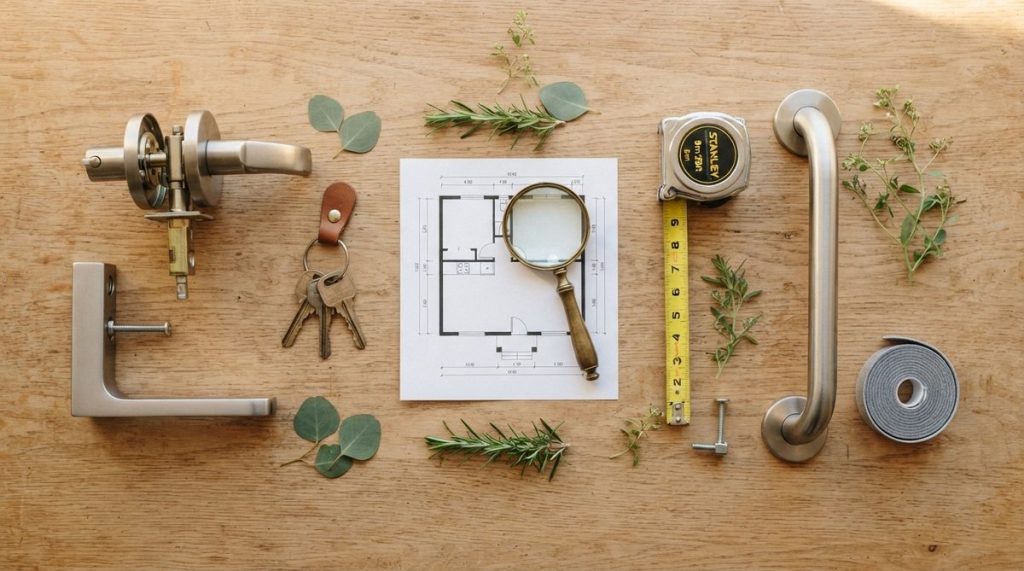
- Replacing round doorknobs with lever-style handles throughout the home ($15–$30 per handle, roughly $200–$400 total)
- Improving lighting in hallways, staircases, and bathrooms with motion-sensor LED fixtures ($100–$250)
- Securing loose rugs or removing them entirely ($0–$50)
- Installing a handheld showerhead on an adjustable slide bar ($60–$150)
- Adding a raised toilet seat ($30–$80)
These are meaningful interventions. I often tell my clients that the $1,500 tier is like getting a thorough annual physical — it catches the most immediate risks and gives you a baseline. But nobody confuses a physical with heart surgery if heart surgery is what’s needed.
The Three Tiers of Age-Proofing: A Cost Framework
In my practice, I break aging-in-place modifications into three tiers based on scope, cost, and the life stage they address. This framework helps families avoid both under-investing and overspending.
Tier 1: Prevention ($500–$2,000)
This is the “do it now regardless of your age” tier. It targets fall prevention, which is the single biggest threat to aging in place. The CDC reports that one in four Americans aged 65 and older falls each year, and falls are the leading cause of injury death for that age group. Most Tier 1 modifications are the items listed above — grab bars, lighting, floor surfaces, and hardware changes.
What I see most often is people skipping Tier 1 entirely because they feel fine. Then a fall happens, and they jump straight to Tier 3 in a panic, paying emergency rates for contractors and making hasty decisions. If you do nothing else after reading this article, schedule a weekend to walk through every room and identify trip hazards, dim corridors, and bathroom risks.
Tier 2: Adaptation ($5,000–$25,000)
This tier involves structural changes that accommodate declining mobility or specific health conditions. It typically includes:
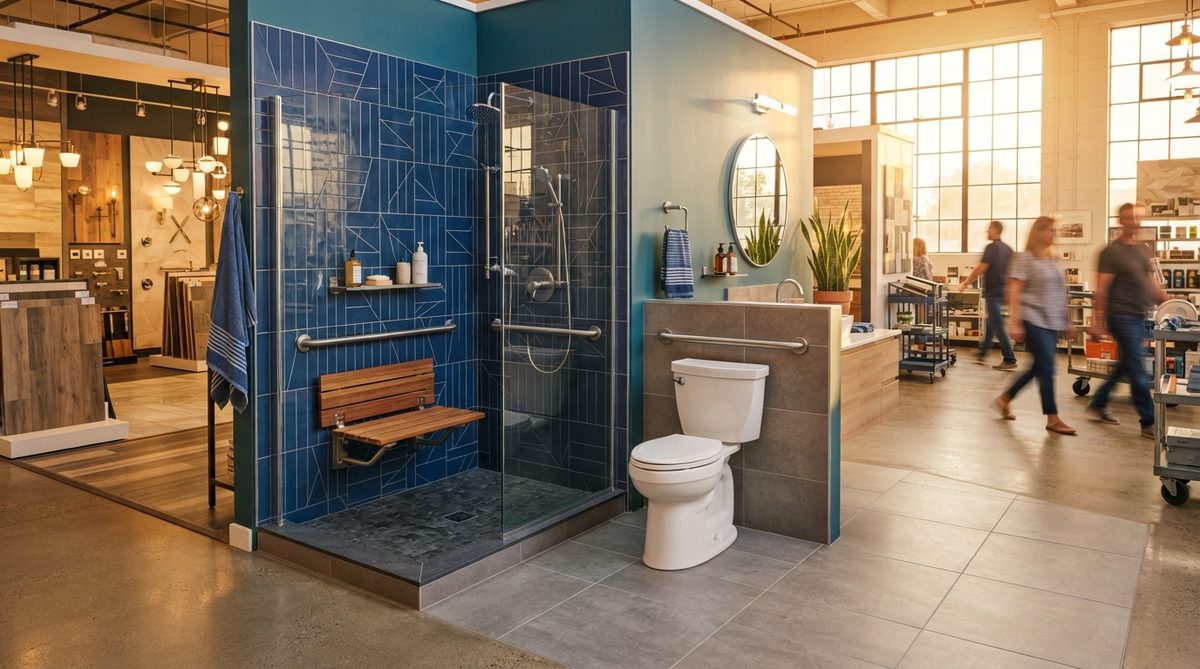
- Walk-in shower conversions (replacing a tub-shower combo): $4,000–$12,000
- Widening doorways to 36 inches for wheelchair or walker access: $800–$2,500 per doorway
- Installing a stairlift on a straight staircase: $3,000–$5,000 (curved staircases: $10,000–$15,000)
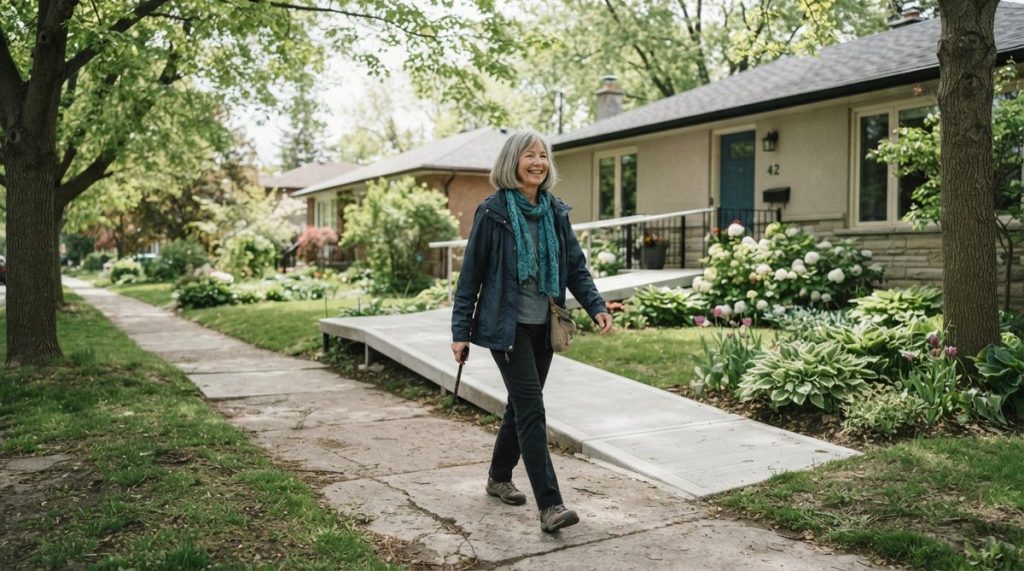
- Building a no-step entry with a ramp or graded walkway: $1,500–$8,000
- Lowering kitchen countertops or adding pull-out shelving: $2,000–$6,000
- Adding a first-floor bedroom if one doesn’t exist: $15,000–$25,000+
Tier 2 is where planning pays enormous dividends. A walk-in shower installed proactively during a planned bathroom remodel costs 30–40% less than the same project done urgently after a hip fracture. I’ve seen this play out dozens of times.
Tier 3: Comprehensive Retrofit ($25,000–$100,000+)
Tier 3 is full-scale home adaptation, often triggered by a diagnosis like Parkinson’s disease, advanced arthritis, or progressive vision loss. It may include smart-home technology, whole-home automation, bathroom and kitchen gut renovations, elevator installation (yes, residential elevators start around $20,000–$35,000), and sometimes additions like a first-floor primary suite.
A 2024 Remodeling Magazine cost analysis placed the average cost of a “universal design” bathroom remodel at $38,000 nationally. That figure aligns with what I’ve quoted in markets from Atlanta to Nashville. It’s a significant investment — but compare it to the national median annual cost of assisted living, which the Genworth Cost of Care Survey pegged at $64,200 in 2023. Even a $50,000 home modification pays for itself in under a year of avoided facility costs.
The Hidden Costs Nobody Talks About
Hardware and labor are the visible expenses. But age-proofing your home carries costs that don’t show up on a contractor’s invoice.
Property Tax and Insurance Implications
Major renovations can trigger a property reassessment in some states, potentially increasing your property taxes. In California, Proposition 19 (effective April 2021) created some transfer protections for seniors, but renovation-triggered reassessments remain a concern in states like Texas and Georgia. Before greenlighting a $30,000 project, consult your county assessor’s office.
On the insurance side, some modifications — particularly electrical work, bathroom plumbing changes, and structural additions — may require updated homeowner’s coverage. The upside: certain safety features (grab bars, improved lighting, non-slip surfaces) can sometimes earn you a small premium discount. Ask your insurer.
The Opportunity Cost of Waiting
This is the hidden cost I hammer home with every client. A study published in the Journal of the American Geriatrics Society found that older adults who experienced a fall-related hip fracture had a 20–30% mortality rate within one year. The financial cost of a hip fracture — hospitalization, surgery, rehabilitation — averages $35,000 to $55,000 according to data from the Agency for Healthcare Research and Quality.
Compare that with a $400 grab bar installation. The return on investment isn’t abstract — it’s life or death math. Delaying Tier 1 modifications because “I’m not that old yet” is, statistically speaking, one of the most expensive gambles a homeowner over 60 can make.
Income Planning Intersections
Major home modifications affect your broader retirement financial picture. If you’re drawing down savings or taking a home equity line of credit to fund renovations, that interacts with Medicare premiums, tax brackets, and income-related adjustments. Understanding how inflation is already pressuring retirement savings should inform when and how you finance modifications.
Which Modifications Deliver the Highest Safety Return?
Not all modifications are created equal. If I could only recommend five changes to every homeowner over 60 in America, here’s where the evidence points:
- Bathroom grab bars: The CDC’s STEADI initiative specifically identifies grab bars as one of the most effective fall-prevention tools. Cost: $150–$400 installed. Impact: enormous.
- Improved lighting throughout the home: The National Institute on Aging emphasizes that age-related vision changes — reduced contrast sensitivity, slower pupil adaptation — make dim areas significantly more dangerous. Cost: $100–$500. Impact: daily risk reduction.
- No-step entry to at least one exterior door: A single step with no railing is responsible for a disproportionate share of falls among older adults. Cost: $200 for a portable ramp to $8,000 for a graded concrete walkway. Impact: entry and exit safety every single day.
- Non-slip bathroom flooring or coatings: Wet tile is the most dangerous surface in the average home. Cost: $80–$500 for coatings; $1,500–$4,000 for full floor replacement. Impact: addresses the single most common fall location.
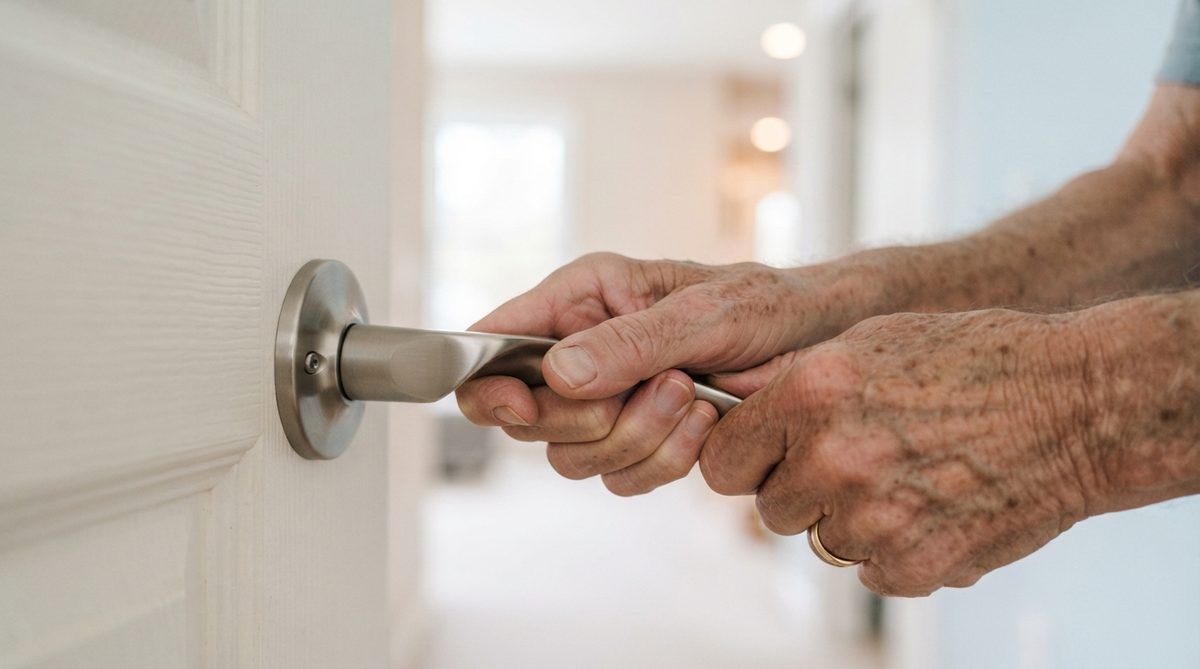
- Lever-style door and faucet handles: Round knobs become nearly unusable with arthritis, which affects over 53 million American adults. Cost: $200–$500 for a full home swap. Impact: daily independence with every door and faucet.
Physical strength also plays a critical role in fall prevention and overall aging-in-place success. Maintaining muscle mass through consistent exercise — even brief sessions — directly impacts your ability to catch yourself during a stumble, rise from a chair, and manage daily tasks. If you haven’t explored a strength routine yet, daily resistance training in as little as four minutes can produce real, measurable results.
The DIY vs. Professional Question
I get this question in every consultation: “Can I just do it myself?” The honest answer depends on the modification.
Safe for DIY (With Basic Skills)
- Removing throw rugs and securing carpet edges
- Installing motion-sensor night lights
- Swapping doorknobs for lever handles (simple screwdriver work)
- Adding non-slip adhesive strips to stairs and bathtub
- Rearranging furniture to create wider walking paths
Hire a Professional — No Exceptions
- Grab bar installation (they must be anchored into wall studs or blocking, not drywall alone — an improperly mounted grab bar is worse than none because it creates false confidence)
- Electrical work for new lighting circuits
- Plumbing for walk-in shower conversions
- Structural changes like widening doorways or building ramps
- Stairlift installation
A grab bar that pulls out of the wall during a fall is not a theoretical concern. I’ve personally inspected homes where this happened. In one case, a 74-year-old woman in Chattanooga suffered a fractured wrist because a grab bar was screwed into drywall with toggle bolts instead of being properly lag-bolted into studs. The bar held for six months, then failed at the worst possible moment. Professional installation for grab bars typically runs $50–$100 per bar above the materials cost. It’s the best $50 you’ll ever spend.
Funding Options Most People Don’t Know About
Cost is the number-one barrier to age-proofing, but there are more funding sources available than most homeowners realize.
- Medicaid Home and Community-Based Services (HCBS) Waivers: In many states, Medicaid waivers cover home modifications for qualifying individuals. Eligibility varies dramatically by state — check with your local Area Agency on Aging.
- Veterans Affairs (VA) Grants: The VA offers the Specially Adapted Housing (SAH) grant (up to $109,986 in 2024) and the Home Improvements and Structural Alterations (HISA) grant (up to $6,800 for service-connected disabilities) specifically for home modifications.
- USDA Rural Development Loans and Grants: If you live in a rural area, the Section 504 program offers loans up to $40,000 and grants up to $10,000 for homeowners 62 and older to remove health and safety hazards.
- State and Local Programs: Many states operate home modification assistance programs through their aging services departments. Pennsylvania’s OPTIONS program, Georgia’s Community Care Services Program, and similar initiatives exist in most states.
- Tax Deductions: If a doctor prescribes a home modification as medically necessary (e.g., a ramp for a mobility impairment), the cost may be partially deductible as a medical expense on your federal tax return — specifically, the amount by which the modification cost exceeds any increase in home value.
A Timeline That Actually Works
Rather than thinking of age-proofing as a single project, I recommend my clients adopt a phased approach tied to life stages rather than crisis events.
Ages 50–60 — The Assessment Phase: Get a professional aging-in-place evaluation ($200–$500). Implement all Tier 1 modifications. Begin budgeting for Tier 2. This is also the time to honestly evaluate whether your current home is a viable long-term candidate — a three-story colonial with narrow doorways and a basement laundry room may not be worth modifying compared to relocating to a single-story home that’s inherently more accessible.
Ages 60–70 — The Action Phase: Complete the major Tier 2 modifications. Convert at least one bathroom to a walk-in shower. Ensure a no-step entry exists. If your bedroom is on the second floor, create a viable first-floor sleeping option.
Ages 70–80 — The Refinement Phase: Add smart-home technology (voice-controlled lights, video doorbells, medical alert systems). Reassess kitchen accessibility. Consider Tier 3 modifications if health conditions have changed. Update your plan annually.
Age 80+ — The Support Phase: Focus on maintenance of existing modifications, caregiver accommodation (is there space for an in-home aide to work comfortably?), and technology that connects you to family and emergency services.
The Bottom Line: What Age-Proofing Your Home Really Costs
After evaluating hundreds of homes and working with families across every income bracket, here’s my honest summary: a meaningful, phased aging-in-place modification plan for an average American single-family home runs $15,000 to $40,000 over a decade when done proactively. That’s $1,500 to $4,000 per year — roughly the cost of a modest vacation or a year of streaming subscriptions and dining out.
Done reactively — after a fall, after a diagnosis, under emergency timelines — the same modifications cost 40–60% more, deliver less thoughtful results, and arrive too late to prevent the event that triggered them.
The $1,500 starting point is real and valuable. But treating it as the finish line is a mistake I’ve watched too many families make. Age-proofing your home is not a weekend project. It’s a decade-long strategy that protects your independence, your savings, and quite possibly your life.
Start with the grab bars. Start with the lighting. Start this weekend. But don’t stop there.
Frequently Asked Questions
What is the average cost to fully age-proof a home?
A comprehensive aging-in-place modification for a typical single-family home costs between $15,000 and $40,000 when done proactively over several years. Basic safety upgrades can start at $500 to $1,500, while major structural changes like walk-in showers, stairlifts, and doorway widening push costs into the $25,000 to $100,000+ range. The phased approach most experts recommend spreads these costs across a decade.
Does Medicare pay for home modifications for aging in place?
Original Medicare (Parts A and B) generally does not cover home modifications like grab bars, ramps, or shower conversions. However, some Medicare Advantage plans offer supplemental benefits that may include limited home safety modifications. Medicaid, through Home and Community-Based Services waivers, does cover home modifications in many states for qualifying individuals. VA benefits and USDA rural development grants are additional options worth exploring.
What is the single most important home modification for seniors?
Fall-prevention experts and aging-in-place specialists consistently rank bathroom grab bars as the highest-impact, lowest-cost modification. The bathroom is the most common location for in-home falls among older adults due to wet surfaces and the physical demands of bathing. Properly installed grab bars — anchored into wall studs, not just drywall — cost $150 to $400 professionally installed and dramatically reduce fall risk during one of the most hazardous daily activities.
At what age should I start modifying my home for aging in place?
Most Certified Aging-in-Place Specialists recommend beginning assessments and basic modifications between ages 50 and 60. This allows time for proactive planning, phased budgeting, and thoughtful contractor selection rather than crisis-driven decisions after a fall or health event. Early modifications like improved lighting, lever handles, and grab bars benefit people at any age, and completing them before they're urgently needed typically costs 30 to 40 percent less.
About Marcus Bell, Certified Aging-in-Place Specialist (CAPS)
Marcus Bell is a Certified Aging-in-Place Specialist (CAPS) with 14 years of experience helping American seniors create safer, more comfortable living environments. He has consulted on hundreds of home modifications — from bathroom safety upgrades to smart home installations — and writes extensively about the products, services, and strategies that help older adults live independently for longer. At Daily Trends Now, Marcus covers home improvement, aging-in-place solutions, gardening, and practical lifestyle tips for seniors.