

A 10-Second Test That Can Predict Your Risk of Death
Here is a statistic that still stops my patients mid-conversation: a 2022 study published in the British Journal of Sports Medicine found that adults aged 51 to 75 who could not stand on one leg for 10 seconds had an 84% higher risk of all-cause mortality over the following seven years. Not a blood panel. Not an MRI. A single-leg balance test performed in socks on a clinic floor.
That study crystallized something I have been telling patients in my 22 years of geriatric practice: the simplest screening tools are often the most powerful predictors of how well—or how poorly—we will age. And the exciting news in 2025 and 2026 is that researchers are validating a growing toolkit of these straightforward assessments, giving older adults and their physicians a clearer, earlier window into future health trajectories.
What follows is a deep-dive analysis of the simple predictive tools that are reshaping geriatric care, which ones you can try at home today, and why combining them creates a remarkably accurate picture of your health future.
Why Conventional Lab Work Alone Misses the Full Picture
Standard annual physicals focus heavily on bloodwork—cholesterol panels, A1C levels, complete blood counts. These are valuable, but they tell us about disease states, not about functional capacity. A 72-year-old can have a pristine lipid panel and still be at serious risk of a fall-related hip fracture because their balance and muscle mass have quietly deteriorated.
The National Institute on Aging has been advocating for years that geriatric assessments should incorporate functional measures alongside traditional labs. What I see most often in my clinic is that patients are genuinely surprised when a 30-second physical test reveals more about their five-year outlook than a page of lab results.
This is where simple predictive tools come in. They measure what labs cannot: how your muscles, brain, and cardiovascular system perform in real-world conditions. And the research backing them has reached a level of rigor that makes them impossible to ignore.
The Five Simple Tools With the Strongest Evidence
1. Gait Speed: The “Sixth Vital Sign”
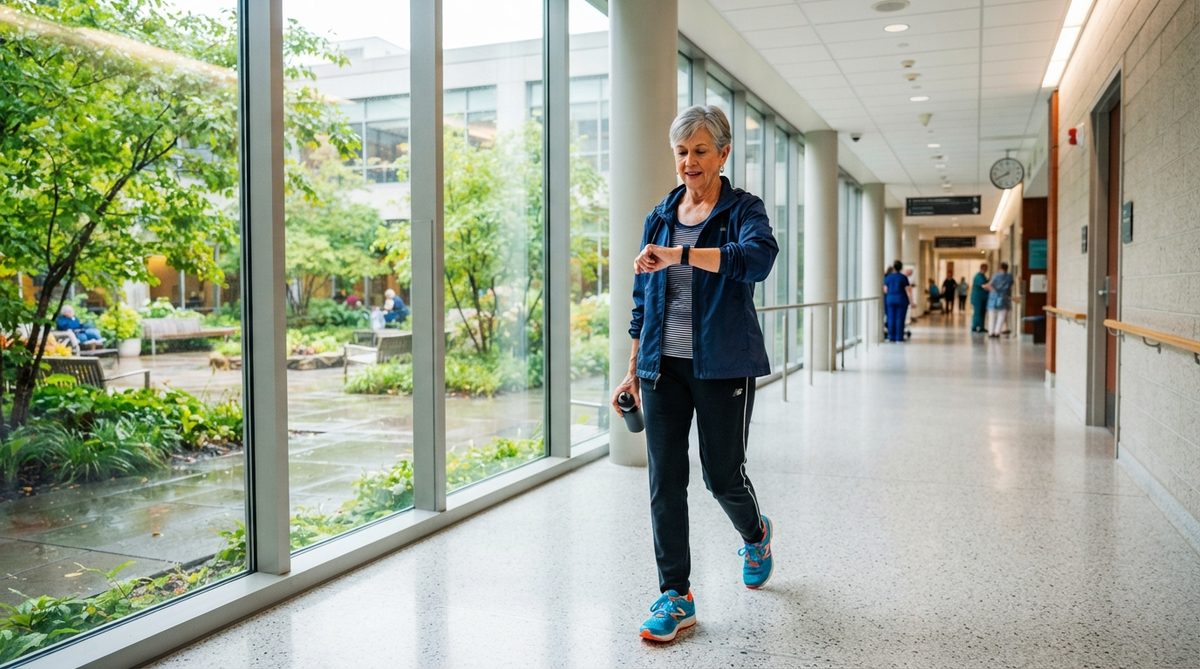
Gait speed—how fast you walk at a comfortable pace over a short distance—has been called the “sixth vital sign” by researchers at the University of Pittsburgh. A walking speed below 0.8 meters per second (roughly 1.8 miles per hour) is associated with higher hospitalization rates, greater disability risk, and increased mortality in adults over 65.
A landmark 2011 meta-analysis in JAMA pooled data from over 34,000 older adults and found that each 0.1 m/s increase in gait speed corresponded to a 12% reduction in mortality risk. You can measure this at home: mark a 4-meter (about 13-foot) stretch in a hallway, time yourself walking it at your normal pace, and divide 4 by your time in seconds.
2. Grip Strength
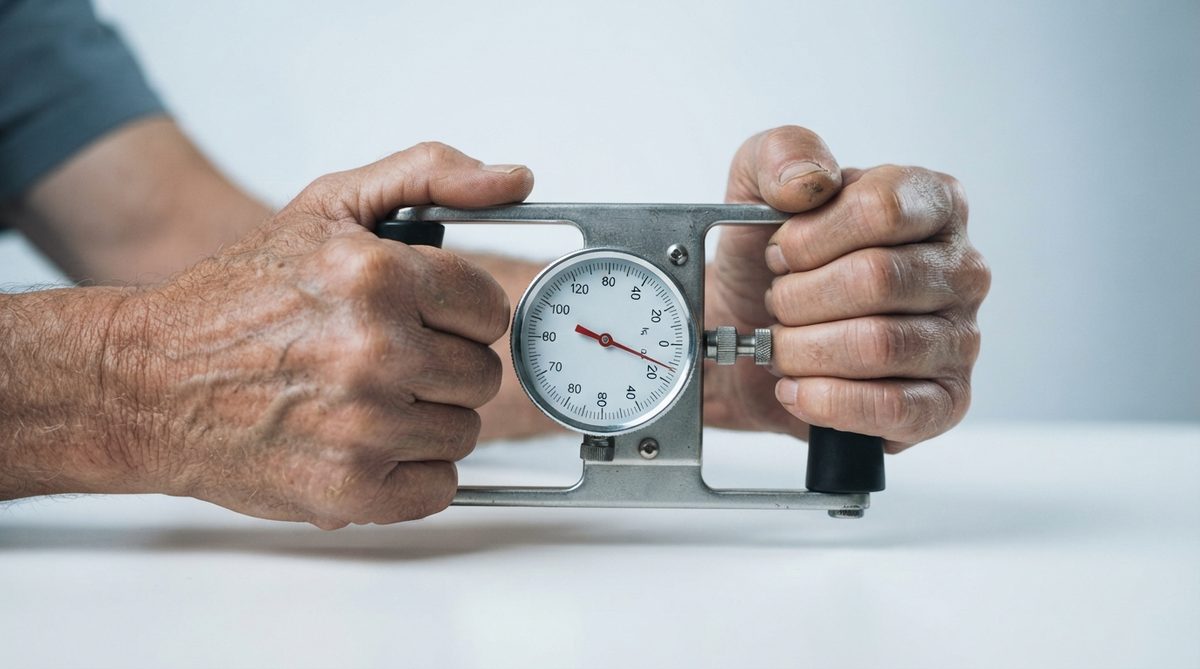
Grip strength measured with a simple handheld dynamometer is one of the most validated biomarkers in geriatric medicine. The Mayo Clinic highlights that low grip strength is linked to higher risks of cardiovascular disease, longer hospital stays, and increased functional limitations.
For men over 65, a grip strength below 26 kilograms is considered clinically concerning. For women, the threshold is approximately 18 kilograms. What makes this tool so valuable is that it serves as a proxy for total-body muscle quality—something that declines by 3–8% per decade after age 30 and accelerates sharply after 60.
3. The Timed Up-and-Go (TUG) Test
This test is elegantly simple: you sit in a standard chair, stand up, walk 3 meters (about 10 feet), turn around, walk back, and sit down again. A time of 12 seconds or more signals elevated fall risk. Over 13.5 seconds and the risk becomes substantial.
I use TUG in virtually every patient visit for adults over 70. It integrates strength, balance, and coordination into a single metric—and it requires nothing more than a chair and a stopwatch.
4. The Single-Leg Stance Test
As I mentioned at the outset, the inability to hold a one-leg stance for 10 seconds in middle and older age is a powerful mortality predictor. But it is also a remarkably sensitive indicator of neurological health, inner-ear function, and core stability. I often tell my patients that this test is like a “check engine light” for the whole body.
5. The Mini-Cog and Clock-Drawing Test
Cognitive screening does not require a 45-minute neuropsychological battery. The Mini-Cog—a 3-minute test involving three-word recall and clock-drawing—has a sensitivity of approximately 76–99% for detecting dementia, depending on the population studied. The CDC reports that approximately 6.7 million Americans aged 65 and older are living with Alzheimer’s disease as of 2023, and early detection through simple screening remains one of the most impactful interventions available.
How These Tools Compare: A Side-by-Side Analysis
To help you understand where each tool fits, I have compiled the key evidence into a single reference table. Note that “sensitivity” refers to how accurately the tool identifies people who are truly at risk, while “specificity” refers to how well it excludes those who are not.
| Screening Tool | What It Measures | Time to Perform | Key Risk Threshold | Primary Outcome Predicted | Equipment Needed |
|---|---|---|---|---|---|
| Gait Speed | Walking pace over 4 meters | ~30 seconds | < 0.8 m/s | Mortality, hospitalization, disability | Tape measure, stopwatch |
| Grip Strength | Maximum hand-squeeze force | ~1 minute | < 26 kg (men), < 18 kg (women) | Cardiovascular events, functional decline | Handheld dynamometer ($20–$35) |
| Timed Up-and-Go (TUG) | Mobility, balance, and strength | ~1 minute | ≥ 12 seconds | Fall risk, loss of independence | Chair, stopwatch |
| Single-Leg Stance | Static balance and proprioception | ~30 seconds | < 10 seconds | All-cause mortality, fall risk | None |
| Mini-Cog | Short-term memory and executive function | ~3 minutes | Score ≤ 2 out of 5 | Dementia, cognitive decline | Pen, paper |
Why Combining Multiple Tools Creates a Clearer Picture
No single test is a crystal ball. What I have observed over two decades is that the real predictive power emerges when you layer these assessments together. A patient with normal gait speed but low grip strength and a TUG over 14 seconds tells a very different clinical story than someone who flags on gait speed alone.
Researchers at Johns Hopkins published data in 2023 showing that combining gait speed, grip strength, and a cognitive screen into a single “frailty index” improved the prediction of 3-year hospitalization risk by 38% compared to any single measure used in isolation. This composite approach is now becoming standard practice in progressive geriatric clinics.
The concept echoes the broader principle of the geriatric comprehensive assessment—a model that the National Institute on Aging has promoted for over a decade. If you are currently managing chronic conditions, understanding these overlapping metrics can help you and your doctor tailor interventions far more precisely than relying on labs and medication lists alone. For a broader look at evidence-based strategies, you may find 6 Myths About Healthy Aging After 60 That Could Hurt You useful as a companion read.
How to Start Using These Simple Health Prediction Tools at Home
You do not need a clinic appointment to begin benchmarking your functional health. Below is a step-by-step approach I recommend to patients who want to take an active role in monitoring their trajectory.
- Set a baseline this week. Perform the single-leg stance test (eyes open, on a firm surface near a wall for safety) and record your time in seconds for each leg. Do not attempt this without a nearby handhold if you have any history of falls.
- Measure your gait speed. Mark a 4-meter stretch on a hard floor. Have a partner time you, or use a smartphone stopwatch. Walk at your normal pace—not faster. Record the result and compare to the 0.8 m/s threshold.
- Perform the Timed Up-and-Go test. Use a standard-height dining chair (approximately 18 inches). Start seated, arms crossed over your chest. On “go,” stand, walk 3 meters to a marked line, turn, walk back, and sit. Record your time.
- Purchase a grip-strength dynamometer. Quality handheld models are available online for $20–$35. Squeeze three times per hand, rest 30 seconds between attempts, and record the highest value for each hand.
- Ask your physician about the Mini-Cog. This cognitive screen should be administered by a trained professional to ensure accurate interpretation. Request it be added to your next annual wellness visit, especially if you are over 65.
- Log and repeat quarterly. Track all results in a simple notebook or spreadsheet. Trends over time—not single measurements—reveal the most meaningful information. A gait speed that drops by 0.1 m/s over six months warrants a conversation with your doctor.
- Share results with your care team. Bring your home measurements to your next appointment. In my experience, patients who present their own data get more productive, focused visits.
What the Research Says About Intervention After Screening
Resistance Training Reverses Grip Strength Decline
A 2024 systematic review in The Journals of Gerontology confirmed that progressive resistance training two to three times per week for 12 weeks increased grip strength by an average of 2.4 kilograms in adults over 65. That may sound modest, but it can move someone from the “clinically concerning” zone back into a healthy range—a shift associated with measurably lower cardiovascular risk.
Balance Training Cuts Fall Risk by Nearly Half
The CDC reports that one in four Americans aged 65 and older falls each year, and falls are the leading cause of injury-related death in that population. Evidence-based programs like Tai Chi and the Otago Exercise Program have been shown to reduce fall rates by 35–50% in clinical trials. If your single-leg stance time is under 10 seconds or your TUG is over 12 seconds, prioritizing balance training is not optional—it is urgent.
Cognitive Engagement and Physical Activity Synergize
Emerging research from the Alzheimer’s Association suggests that combining aerobic exercise with cognitively stimulating activities (learning a new language, strategic board games, musical instrument practice) may offer greater neuroprotective benefits than either approach alone. For adults whose Mini-Cog results are borderline, this dual strategy deserves serious attention.
If you are also thinking about the practical side of maintaining independence as you age, How to Set Up Your Home to Age in Place for Under $1,500 offers concrete modifications that complement the physical improvements discussed here.
The Role of AI and Emerging Technology
NIH-funded research programs are now exploring how artificial intelligence can enhance these simple tools. Smartphone accelerometers can measure gait speed passively during daily life. Wearable sensors can track balance metrics 24/7 and alert users—and their physicians—to deterioration weeks before a clinical visit would catch it.
A 2025 pilot study at the University of Michigan used machine learning to analyze walking patterns captured by a $30 smartphone app and predicted fall events in the subsequent 90 days with 79% accuracy. We are entering an era where the simplicity of these screening tools merges with the precision of technology—and that combination could save thousands of lives annually.
However, I want to be clear: technology is an amplifier, not a replacement. The fundamental assessments—standing on one leg, walking across a room, squeezing a device—remain the bedrock. No algorithm is useful without the human decision to act on what it reveals.
When to Escalate: Red Flags That Demand Professional Attention
Home screening is empowering, but certain results should trigger an immediate call to your healthcare provider:
- Gait speed below 0.6 m/s — This level is associated with significantly elevated mortality risk and often indicates sarcopenia, peripheral neuropathy, or cardiovascular compromise.
- TUG time above 20 seconds — At this threshold, the risk of a serious fall in the next year is high enough that a comprehensive fall-prevention assessment is warranted.
- Inability to stand on one leg for more than 3 seconds — This suggests significant balance impairment that may involve neurological evaluation.
- Sudden decline in any metric — A drop in grip strength, a slower gait speed, or a worsened TUG time over a span of weeks rather than months could indicate an acute medical issue such as infection, medication side effect, or early stroke.
If you notice these patterns, do not wait for your next scheduled appointment. In my practice, some of the best outcomes I have seen came from patients who flagged their own declining numbers early enough for us to intervene before a crisis. For broader seasonal strategies to stay ahead of health risks, check out 7 Spring Health Tips for Seniors to Thrive in 2026.
The Bottom Line: Your Body Is Already Telling You the Answer
The most sophisticated imaging machines and laboratory panels in the world cannot fully capture something your own body demonstrates every time you rise from a chair, walk to the mailbox, or reach for a jar on a high shelf. Simple health prediction tools translate those everyday movements into actionable data—data that can guide exercise programs, medication adjustments, home safety modifications, and long-term care planning.
In my 22 years of caring for older adults, I have watched the field of geriatrics move from reactive medicine—treating problems after they become emergencies—toward a proactive model built on early detection. These five tools are the front line of that shift. They cost almost nothing. They take minutes. And their predictive accuracy rivals tests that cost hundreds of dollars.
The question is not whether these tools work. The evidence is overwhelming. The question is whether you will use them—and whether your physician is incorporating them into your care. If the answer to either is “not yet,” this week is the right time to start.
Frequently Asked Questions
How accurate are simple screening tools compared to advanced medical tests for predicting health outcomes in older adults?
Research shows that functional screening tools like gait speed and grip strength predict mortality and hospitalization risk with accuracy comparable to many advanced laboratory tests. A 2011 JAMA meta-analysis found gait speed alone predicted survival as reliably as many complex clinical models. When multiple simple tools are combined, predictive accuracy improves by up to 38% over any single measure.
Can I perform these health prediction tests safely at home without medical supervision?
Most of these tests—gait speed, grip strength, and the Timed Up-and-Go—can be done safely at home with basic precautions. For balance tests like the single-leg stance, always stand near a wall or sturdy surface in case you lose balance. If you have a history of falls, dizziness, or neurological conditions, perform these tests with a partner present and discuss results with your physician.
How often should older adults repeat these screening assessments?
Quarterly measurement provides a good balance between tracking meaningful changes and avoiding over-testing. Gait speed, grip strength, and balance can shift gradually, so checking every three months allows you to spot trends before they become critical. If you notice a sudden decline between scheduled checks, contact your healthcare provider immediately rather than waiting.
At what age should someone start using these predictive health tools?
While these tools are most commonly used in adults over 65, establishing a baseline in your 50s is ideal. Muscle mass begins declining by 3–8% per decade after age 30, and balance deterioration often starts well before noticeable symptoms appear. Adults aged 50 to 60 who track their functional metrics early gain the greatest advantage for detecting and reversing early decline.
Will Medicare or insurance cover these assessments during a doctor's visit?
Most of these functional assessments are included as part of a standard geriatric evaluation or Medicare Annual Wellness Visit at no additional out-of-pocket cost. The Mini-Cog cognitive screen, gait speed measurement, and Timed Up-and-Go are routinely performed in geriatric clinics. Ask your provider specifically to include functional screening in your next wellness visit to ensure these tests are documented and tracked.
About Dr. James Roberts, MD, Board-Certified in Geriatrics
Dr. James Roberts is a board-certified geriatrician with 22 years of clinical experience caring for American seniors. He specializes in chronic disease management, medication safety, cognitive health, and senior wellness. Dr. Roberts is passionate about translating the latest medical research into clear, practical guidance that helps older adults make confident, informed decisions about their health. At Daily Trends Now, his articles are based on peer-reviewed studies and authoritative sources such as the CDC, Mayo Clinic, and the National Institute on Aging.