

Key Takeaways
- Decline after 60 is not inevitable — research shows lifestyle changes at any age can dramatically improve health outcomes and even reverse frailty.
- Strength training is one of the most important habits for seniors, yet it remains the most neglected due to outdated beliefs about exercise and aging.
- Social connection is a medical necessity, not a luxury — isolation carries health risks comparable to smoking 15 cigarettes a day.
- Cognitive decline is not a guaranteed part of aging, and proactive brain health strategies can significantly reduce dementia risk even in your 70s and 80s.
Why So Many Seniors Are Getting Healthy Aging Wrong
After 22 years of practicing geriatric medicine, I can tell you that the biggest threat to my patients’ health isn’t a specific disease. It’s misinformation. Outdated beliefs about what happens after 60 lead otherwise sharp, motivated adults to make choices that accelerate the very decline they fear.
Every week in my clinic, I meet patients who have essentially given up on certain health goals — not because their bodies told them to, but because a myth told them to. They stopped lifting weights because they heard it was dangerous. They assumed memory slips meant dementia was inevitable. They withdrew socially because they thought loneliness was just “part of getting old.”
None of that is true. And the science backing up healthy aging after 60 has never been stronger than it is right now in 2025. So let’s dismantle the six most persistent myths I encounter — and replace them with what actually works.
Myth #1: Physical Decline After 60 Is Inevitable and Irreversible
This is the granddaddy of all aging myths, and it does enormous damage. Yes, biological aging is real. But the trajectory of that aging — how fast, how steep, how debilitating — is far more within your control than most people believe.
A landmark 2022 study from the University of Adelaide developed an online intervention tool that successfully reversed markers of frailty in seniors who followed structured exercise and nutrition protocols. Not slowed — reversed. Participants regained grip strength, walking speed, and functional independence that they had lost years earlier.
What I see most often is patients confusing disuse with aging. When you stop moving at 55, you don’t feel the consequences until 65, and then you blame age instead of inactivity. The National Institute on Aging has consistently published data showing that adults who begin regular physical activity even in their 70s experience measurable improvements in cardiovascular health, bone density, and balance within 8 to 12 weeks.
“The single most dangerous phrase I hear from patients over 60 is ‘I’m too old for that.’ In my 22 years of geriatric practice, I’ve seen 78-year-olds build muscle, 82-year-olds improve their balance enough to avoid falls, and 70-year-olds reverse prediabetes — all by rejecting the myth that decline is a one-way street.”
If you’ve been told your best years of physical health are behind you, I’d encourage you to read about how 7 myths about aging and decline have been debunked by science. The evidence is overwhelming.
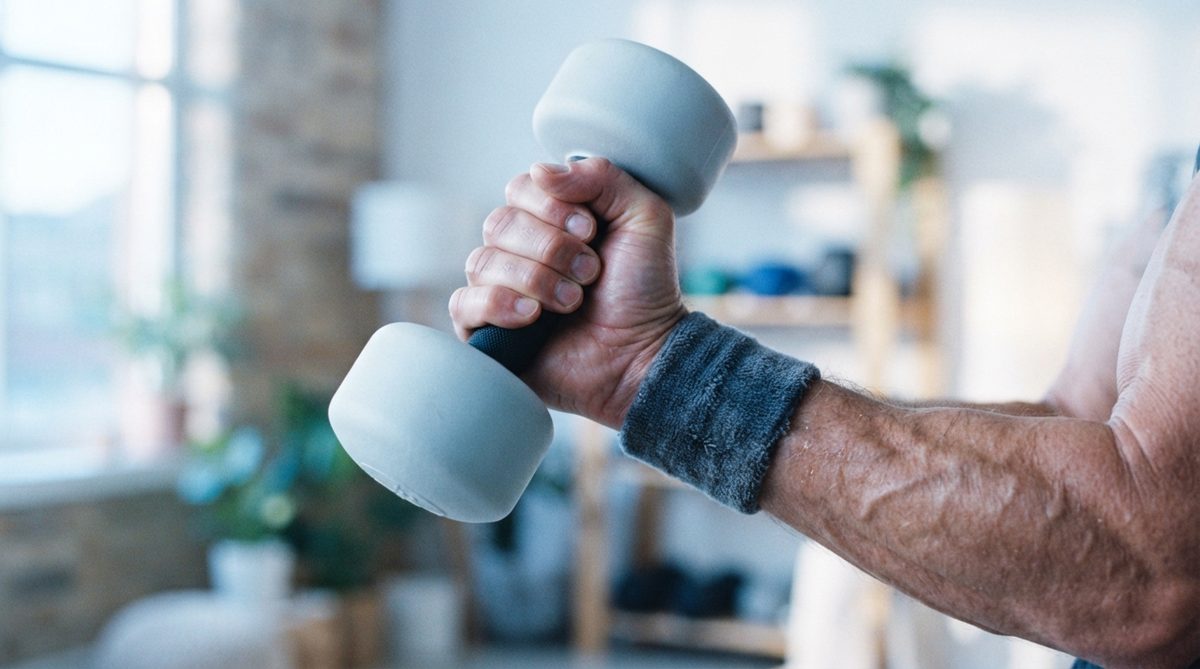
Myth #2: Seniors Should Avoid Strength Training
This myth has cost more independence than almost any disease I treat. The fear that lifting weights will cause injuries in older adults is not only outdated — it’s the opposite of what the research shows.
Sarcopenia, the age-related loss of muscle mass, begins as early as age 30 and accelerates significantly after 60. By age 80, many adults have lost 30 to 50 percent of their muscle mass. But here’s the critical point: sarcopenia is not destiny. It responds remarkably well to resistance training at every age.
What the Research Actually Shows
A 2023 meta-analysis published in the British Journal of Sports Medicine examined 74 randomized controlled trials involving adults over 60. The conclusion was unequivocal: progressive resistance training improved muscle strength by an average of 25 to 30 percent, reduced fall risk by up to 40 percent, and improved functional independence scores across every age subgroup studied — including adults over 85.
The CDC now recommends that adults 65 and older perform muscle-strengthening activities at least two days per week. Yet according to their own survey data, fewer than 1 in 4 seniors meet this guideline.
I often tell my patients that if strength training were a pill, it would be the most prescribed medication in geriatric medicine. It improves blood sugar control, reduces arthritis pain, protects against falls (the leading cause of injury death in adults over 65), and even improves sleep quality. If you’re unsure where to start, take a look at this guide on daily resistance training for seniors that takes just 4 minutes.
Myth #3: Memory Loss Is a Normal Part of Aging
Let me be very precise here, because this myth works in two harmful directions. On one side, it causes people to ignore early warning signs of actual cognitive disorders like Alzheimer’s disease. On the other, it causes healthy seniors to panic over completely normal lapses in recall.
What’s Normal and What Isn’t
Occasionally forgetting where you put your keys, blanking on an acquaintance’s name, or needing a moment to recall a word — these are normal age-related changes in processing speed. They do not indicate dementia.
What is not normal: getting lost on familiar routes, forgetting how to perform routine tasks you’ve done for decades, significant personality changes, or repeatedly asking the same question within minutes. These warrant immediate medical evaluation.
The Mayo Clinic estimates that roughly 40 percent of dementia cases could be prevented or delayed by addressing 12 modifiable risk factors, including hearing loss, hypertension, physical inactivity, social isolation, depression, excessive alcohol use, and air pollution exposure. That is a staggering number — and it means that cognitive decline after 60 is far less predetermined than most people assume.
Proactive Steps That Protect Your Brain
Recent NIH-funded research into AI-powered cognitive screening tools is making early detection faster and more accessible than ever. But detection is only half the equation. What you do every day matters enormously.
In my clinical experience, the patients who maintain the sharpest cognition into their 80s share three consistent habits: they exercise regularly (which increases blood flow to the brain), they maintain active social lives, and they continue learning new skills. The combination of physical, social, and intellectual stimulation creates what neuroscientists call “cognitive reserve” — essentially, a buffer that protects brain function even when some age-related changes occur.
Myth #4: Loneliness Is Just an Emotional Problem, Not a Health Risk
If there’s one myth I wish I could erase overnight, it’s this one. Social isolation is not a mood issue. It is a medical emergency hiding in plain sight.
The U.S. Surgeon General’s 2023 advisory on loneliness declared social disconnection a public health crisis. The data behind that declaration is sobering: prolonged social isolation increases the risk of premature death by 26 percent, the risk of heart disease by 29 percent, and the risk of stroke by 32 percent. Studies have equated the health impact of chronic loneliness to smoking 15 cigarettes a day.
“Among my patients over 70, the ones who deteriorate fastest are almost never the ones with the most diagnoses. They’re the ones with the fewest visitors. Social connection isn’t a luxury — it’s a vital sign that we’ve been ignoring for too long.”
According to AARP data, approximately 1 in 3 adults over 65 experiences chronic loneliness. And the problem gets worse with age as spouses pass away, friends move, children live far away, and mobility limitations make leaving home harder.
What Actually Helps
Telling a lonely person to “just get out more” is about as helpful as telling a diabetic to “just have less sugar.” It ignores the structural and physical barriers that make isolation so persistent in older adults.
Effective interventions include scheduled community programs (senior centers, faith-based groups, volunteer opportunities), technology-assisted connection (video calls with grandchildren, online interest groups), and — critically — treating underlying conditions like hearing loss and depression that make social engagement harder. If you’re considering aging in place, understanding the real logistics matters; this article on aging in place myths that could cost you big covers the often-overlooked social dimension of staying home alone.
Myth #5: It’s Too Late to Change Your Health Habits After 60
This might be the most self-defeating belief I encounter. Patients tell me some version of “What’s the point?” at least several times a month. My answer is always the same: the point is that your body is still listening, still responding, still capable of change.
The Evidence for Late-Life Lifestyle Changes
Consider these numbers. A study published in JAMA Internal Medicine found that adults who began exercising regularly after age 60 had a 35 percent lower mortality risk over the follow-up period compared to those who remained sedentary. Adults who quit smoking after 60 added an average of 3 to 4 years to their life expectancy. Those who improved their diet quality after 65 saw measurable reductions in inflammatory markers within six months.
Even the cutting edge of longevity science supports this. Researchers recently found that boosting a single protein called PF4 (platelet factor 4) made aging mice measurably stronger and healthier, suggesting that biological aging pathways remain modifiable even in advanced age. You can read more about that breakthrough protein research and what it means for seniors.
The point is not that every disease can be reversed. Some damage is permanent. But the ceiling of what’s possible at 65, 72, or even 80 is far higher than the conventional wisdom suggests.
Six Healthy Aging Habits That Work at Any Age
Based on the best evidence available and my own clinical experience, here are the habits I recommend to every patient over 60 — whether they’re starting from scratch or fine-tuning an existing routine:
- Move daily with intention. Aim for 150 minutes of moderate aerobic activity per week, plus two sessions of resistance training. Walking counts. Chair exercises count. Start where you are, not where you think you should be.
- Prioritize protein at every meal. Most seniors undereat protein, which accelerates muscle loss. The current research suggests adults over 65 need 1.0 to 1.2 grams of protein per kilogram of body weight daily — about 30 percent more than the standard adult recommendation.
- Protect your sleep. Poor sleep is linked to increased fall risk, cognitive decline, and immune dysfunction. If you’re consistently getting fewer than six hours, talk to your doctor. Sleep apnea is wildly underdiagnosed in older adults.
- Stay socially engaged. Schedule social activities the same way you schedule doctor’s appointments. Volunteer work, group exercise classes, and regular phone calls all count. Consistency matters more than intensity.
- Manage chronic conditions aggressively. Uncontrolled hypertension, diabetes, and high cholesterol don’t just threaten your heart — they threaten your brain, your kidneys, your mobility, and your independence. Medication adherence and regular follow-up appointments are non-negotiable.
- Get screened and stay current on vaccinations. Annual wellness visits, cancer screenings appropriate for your age, hearing and vision checks, bone density scans, and staying up to date on flu, pneumonia, shingles, and COVID vaccines can prevent catastrophic health events.
Myth #6: Mental Health Care Is “Not for People My Age”
This is perhaps the quietest myth on the list — and one of the deadliest. Adults over 65 have the highest suicide rate of any age group in the United States, according to CDC data. Yet seniors are the least likely demographic to seek mental health treatment.
The stigma runs deep. Many of my patients grew up in an era where “seeing a therapist” was whispered about, not discussed openly. Depression in older adults often presents differently than in younger people — it may look like fatigue, irritability, physical pain, or withdrawal rather than overt sadness. As a result, it goes unrecognized and untreated for years.
Why This Matters for Physical Health Too
Depression isn’t just a mood disorder. In older adults, untreated depression is associated with a 50 percent increase in healthcare costs, poorer outcomes after surgery, greater disability from chronic conditions, and a significantly elevated risk of dementia. The relationship between mental and physical health is not a parallel track — it’s a feedback loop.
Effective, evidence-based treatments exist and work well for seniors. Cognitive behavioral therapy (CBT) has strong evidence in adults over 65. Medications can be carefully managed alongside other prescriptions. Even newer approaches like structured mindfulness programs have shown promise in clinical trials involving older adults.
If you or someone you love is struggling, start with your primary care doctor. You don’t need a psychiatrist referral to begin the conversation. And if digital wellness concerns are part of the picture, be aware that Healthline has published extensively on how excessive social media use can worsen anxiety and depression in all age groups — including seniors.
The Real Pillars of Healthy Aging After 60
Here’s what I want you to take away from this article. Healthy aging after 60 is not about defying nature or pretending you’re 30 again. It’s about understanding what’s actually within your control — and that territory is far larger than most people realize.
The six pillars that the latest research and my own clinical experience consistently support are: regular physical activity including strength training, adequate nutrition with emphasis on protein, quality sleep, social connection, proactive management of chronic disease, and mental health care without stigma.
Not one of these requires wealth, perfect genetics, or a gym membership. Every single one can be started today, wherever you are, whatever your current health status. The myths that say otherwise aren’t just wrong — they’re stealing years of vibrant, independent life from people who deserve better information.
In my experience, the patients who age best aren’t the ones with the fewest health problems. They’re the ones who refuse to let myths make their decisions for them.
Frequently Asked Questions
What is the single most important habit for healthy aging after 60?
While no single habit works in isolation, research consistently identifies regular physical activity — especially resistance training — as the most impactful intervention for preserving independence, preventing falls, managing chronic disease, and protecting cognitive function in adults over 60.
Is it safe for seniors over 70 to start lifting weights for the first time?
Yes, with appropriate medical clearance and proper guidance. Studies show that adults in their 70s, 80s, and even 90s can safely build muscle and improve strength through progressive resistance training. Start with light weights or resistance bands and increase gradually under supervision.
How much protein do seniors actually need each day?
Current evidence suggests adults over 65 need approximately 1.0 to 1.2 grams of protein per kilogram of body weight per day, which is about 30 percent more than the standard recommendation for younger adults. Spreading protein intake across all three meals is more effective than loading it into one.
When should I be concerned about memory loss versus normal aging?
Occasional forgetfulness — like misplacing items or briefly blanking on a name — is normal at any age. You should seek medical evaluation if you experience confusion in familiar places, difficulty performing routine tasks, significant personality changes, or repeatedly asking the same questions within a short time frame.
About Dr. James Roberts, MD, Board-Certified in Geriatrics
Dr. James Roberts is a board-certified geriatrician with 22 years of clinical experience caring for American seniors. He specializes in chronic disease management, medication safety, cognitive health, and senior wellness. Dr. Roberts is passionate about translating the latest medical research into clear, practical guidance that helps older adults make confident, informed decisions about their health. At Daily Trends Now, his articles are based on peer-reviewed studies and authoritative sources such as the CDC, Mayo Clinic, and the National Institute on Aging.