

Key Takeaways
- Most American homes are not structurally ready for aging in place, but strategic modifications can start for as little as $1,500.
- The real cost of aging in place often exceeds moving to a senior living community when you factor in home care, modifications, and maintenance.
- Social isolation is the hidden danger of staying home that most people underestimate—and it carries health risks equivalent to smoking 15 cigarettes a day.
- Planning for aging in place should begin at 50, not 75, to avoid reactive decisions during a health crisis.
The Dream of Staying Home Forever—and the Myths That Could Wreck It
Nearly 90% of Americans over 65 say they want to remain in their current home as they age, according to AARP. I completely understand the impulse. After 16 years of writing about lifestyle decisions for people in their 50s, 60s, and beyond, I’ve seen how deeply the idea of “home” is tied to identity, independence, and comfort.
But here’s what I see most often: people confuse the desire to age in place with a plan to age in place. They assume that staying home is the default, the easy choice, the affordable choice. And then a fall happens, a spouse passes, or the stairs become an enemy—and suddenly, there’s no plan at all.
The aging in place myths I’m about to walk you through aren’t just harmless misconceptions. Some of them can cost you tens of thousands of dollars. Others can cost you your health. Let me separate what’s real from what’s dangerously wrong.
Myth #1: “My Home Is Fine the Way It Is”
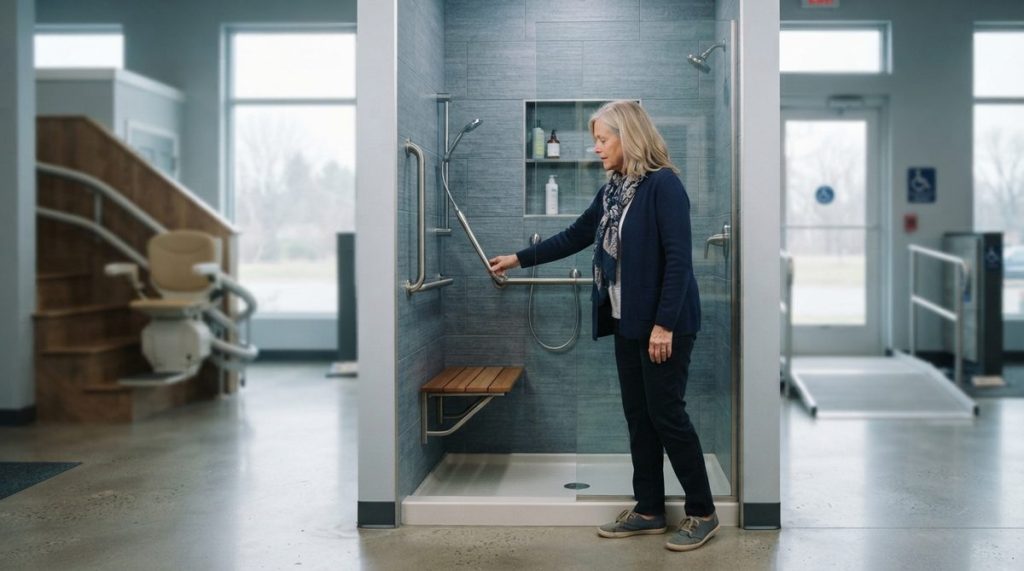
This is the most pervasive aging in place myth, and it’s the one that worries me the most. The truth is stark: according to a 2023 Joint Center for Housing Studies report from Harvard, less than 4% of U.S. housing stock has the basic universal-design features needed for someone with mobility limitations. That means no-step entries, single-floor living, wide doorways, and accessible bathrooms.
Think about your own home for a moment. Can you get from the front door to the bedroom and bathroom without climbing a single step? Is your shower a step-over tub? Are your doorways at least 32 inches wide for a walker or wheelchair?
Most homes built before 2000 fail on at least two of those criteria. The house you raised your family in was designed for a 35-year-old carrying groceries, not a 78-year-old recovering from hip surgery. That doesn’t mean you have to leave—it means you have to modify. And as we’ve covered in our guide on age-proofing your home and the real cost of aging in place, those modifications range from surprisingly affordable to eye-wateringly expensive depending on when you start.
Myth #2: “Aging in Place Is Always Cheaper Than Senior Living”
This one requires some honest math. Yes, if you own your home outright and remain healthy and independent, staying put is almost certainly less expensive than a continuing care retirement community (CCRC) that charges $300,000 or more in entrance fees.
But that’s not the comparison most people should be making. The real comparison is: what does it cost to stay home when you need help?
The Numbers Most People Don’t Calculate
The Genworth 2024 Cost of Care Survey puts the national median cost of a home health aide at $33 per hour. If you need just four hours of help a day, five days a week, that’s $34,320 a year. Need round-the-clock care? You’re looking at roughly $290,000 annually.
Now add ongoing home maintenance. The average homeowner over 65 spends approximately $8,000 to $12,000 per year on maintenance, repairs, property taxes, and insurance. Layer in home modifications—grab bars, ramp construction, stair lifts, bathroom renovations—and the “affordable” option starts looking very different.
I’m not arguing that senior living is always better. I’m arguing that the financial comparison needs to be honest. For a deeper dive on protecting your retirement funds during these calculations, take a look at 5 myths about inflation and retirement savings debunked.
Myth #3: “I’ll Deal With Modifications When I Need Them”
In my 16 years covering this beat, this reactive mindset is the single biggest planning failure I encounter. Here’s the scenario I’ve watched play out dozens of times: a 74-year-old falls in the bathroom on a Tuesday. By Thursday, the family is scrambling to find a contractor who can install grab bars and a walk-in shower. The earliest available appointment? Three weeks out. Meanwhile, the recovering parent is stuck in a rehab facility at $350 a day because the home isn’t safe for discharge.
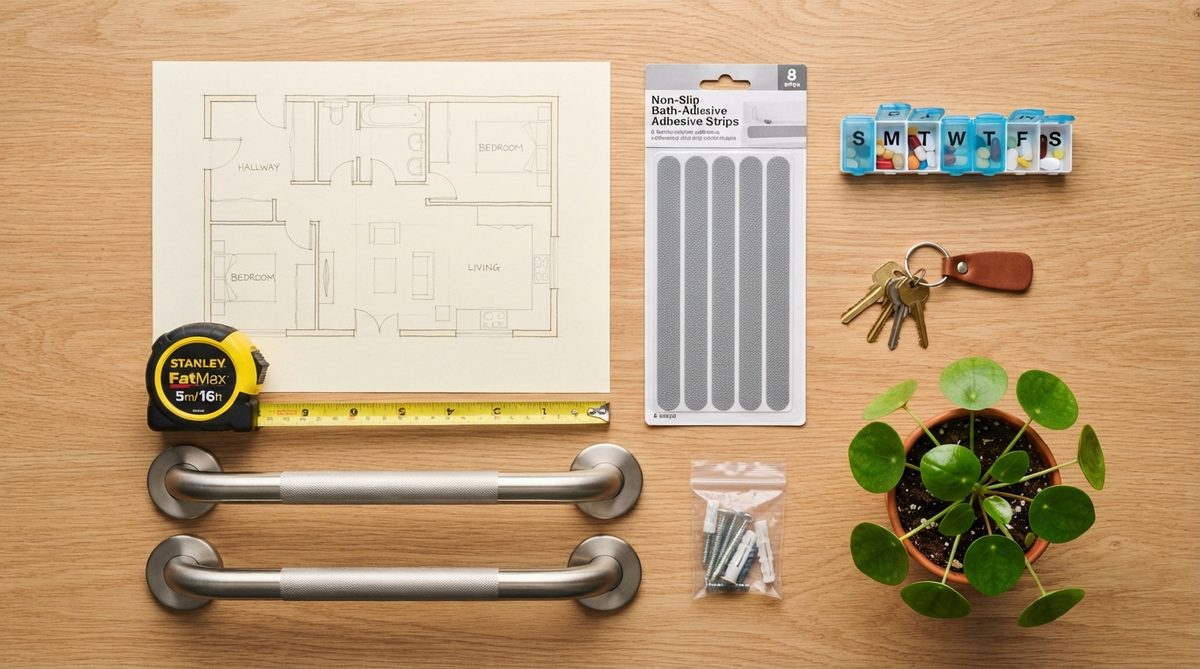
Proactive modification is dramatically cheaper and less stressful than emergency renovation. A basic aging-in-place starter kit—grab bars near the toilet and shower, lever-style door handles, non-slip treads on stairs, improved lighting—can be completed for around $1,500 according to recent reporting from occupational therapists working in the CAPABLE program, a Johns Hopkins–developed model now being piloted across multiple states.
When Should You Actually Start?
The answer is 50. Not 70, not “after the diagnosis.” At 50, you’re typically still in your home, still earning, and still physically capable of overseeing renovation work. You can make changes gradually, spreading costs over years instead of absorbing a $30,000 bathroom remodel in a crisis.
The National Council on Aging recommends a formal home safety assessment by an occupational therapist, which typically costs between $200 and $500 and produces a prioritized checklist. It’s one of the best investments I’ve ever seen a reader make.
Myth #4: “Technology Will Solve Everything”
Smart home devices, medical alert systems, medication dispensers, video doorbells—technology is a wonderful supplement to an aging-in-place strategy. But it is not a substitute for human connection and hands-on care.
I often tell my readers that technology should be your safety net, not your care plan. A fall-detection pendant is useless if the person wearing it is too confused to press the button, which is the reality for roughly 30% of fall incidents involving someone with mild cognitive impairment. A smart pill dispenser doesn’t help if arthritis makes it impossible to open the compartment.
What technology does extraordinarily well is extend the window of independent living. Motion sensors can alert family members to unusual patterns. Video calling keeps you connected to grandchildren across the country. Automated lighting reduces fall risk at night. But these tools work best as part of a layered system that includes regular in-person check-ins, professional home care as needed, and strong community ties.
If you’re exploring technology options, make sure you’re also aware of the risks—7 ways seniors can protect themselves from online scams is essential reading before you connect new devices to your home network.
Myth #5: “Staying Home Means Staying Independent”
This is the myth that breaks my heart, because it sounds so logical. Your home is where you’ve always been independent—so staying there preserves that independence, right?
Not necessarily. The National Institute on Aging has published extensive research linking social isolation in older adults to increased risk of dementia, heart disease, stroke, and depression. A landmark meta-analysis published in PLOS Medicine found that social isolation carries a mortality risk equivalent to smoking 15 cigarettes a day.
The Isolation Trap
Here’s how it typically unfolds. You stop driving at 76. Your spouse passes at 78. Your neighbors of 30 years have moved to be closer to their own children. The church you attended has a new congregation you don’t recognize. Suddenly, the home that represented independence becomes a cage of loneliness.
True independence in later life isn’t just about physical self-sufficiency—it’s about having the social infrastructure to remain engaged, stimulated, and connected. For some people, that’s absolutely achievable at home with intentional effort. For others, a senior living community or co-housing arrangement actually provides more functional independence than an isolated house ever could.
As we’ve explored in 7 myths about aging and decline that science has debunked, cognitive and social engagement are among the most powerful predictors of healthy aging. Where you live matters less than how you live.
Myth #6: “Medicare Will Pay for Home Modifications and Long-Term Care”
I cannot count how many times I’ve heard some version of this. Let me be direct: Medicare does not pay for home modifications like grab bars, ramps, widened doorways, or stair lifts. It does not pay for custodial long-term care—the kind of help with bathing, dressing, cooking, and cleaning that most people eventually need.
Medicare covers short-term skilled care after a qualifying hospital stay (at least three consecutive days). It covers some durable medical equipment like hospital beds and wheelchairs. That’s a far cry from funding your aging-in-place strategy.
What Actually Pays for Aging in Place?
Long-term care insurance, if you purchased it in your 50s or early 60s, can cover a significant portion of home care costs. Medicaid covers home and community-based services for those who meet strict income and asset limits—but qualifying often requires spending down savings to near-poverty levels.
Some state programs, veterans’ benefits (particularly Aid and Attendance), and Area Agency on Aging grants can help offset costs. The CAPABLE program I mentioned earlier, which pairs a nurse, an occupational therapist, and a handyman for a roughly $3,000 intervention per household, has shown remarkable results—including a 75% reduction in depression symptoms and measurable improvements in daily functioning—and is expanding into more communities.
But for most middle-income Americans, aging in place is largely self-funded. That reality needs to be part of your financial planning starting now.
Myth #7: “I Only Need to Plan for My Physical Needs”
Home modifications address the physical environment. But aging in place successfully requires planning across at least four dimensions: physical safety, cognitive health, social engagement, and financial sustainability.
What happens if you develop mild cognitive impairment and can no longer manage your own finances? Who has power of attorney? Where are your important documents? Does your family know your medication list?
What happens when you need to stop driving? Is there public transit within walking distance? Can you afford ride-sharing services three to four times a week?
A Holistic Aging-in-Place Plan Should Address All of These
- Conduct a professional home safety assessment with a certified aging-in-place specialist (CAPS) or occupational therapist. Prioritize modifications by urgency and budget.
- Complete your legal documents—durable power of attorney, healthcare proxy, living will, and an updated standard will or trust. Do this while you are healthy and clear-minded.
- Build your care team on paper before you need one. Identify a primary care geriatrician, a home care agency you trust, and at least two emergency contacts beyond your spouse.
- Create a transportation plan that doesn’t rely on your ability to drive. Research your area’s senior transport services, volunteer driver programs, and ride-share options.
- Establish a social engagement schedule—weekly activities, volunteer commitments, regular meetups—that creates structure and combats isolation.
- Run the financial numbers honestly. Project your costs for home maintenance, property taxes, insurance, potential home care, and modifications over 10, 15, and 20 years. Compare against alternative living arrangements.
- Designate a “home monitor”—a trusted family member, friend, or professional who checks in regularly and has the authority to escalate concerns about your safety or cognitive status.
- Review and update this plan annually, just as you would a financial portfolio. Your needs at 68 will differ from your needs at 82.
Myth #8: “Aging in Place Means Never Leaving My House”
This final misconception is more subtle, but it’s one I encounter regularly. Some people interpret aging in place as a commitment to never leave—as if accepting any help or transitioning to a higher level of care represents failure.
Aging in place is not a loyalty oath to a structure. It’s a philosophy of maintaining the maximum autonomy and comfort possible for as long as possible. For many people, that means staying in their home for 15 or 20 more years with graduated support. For others, it might mean aging in their community—moving from a two-story house to a single-story condo in the same neighborhood, or to an independent living apartment with services nearby.
The healthiest approach I’ve seen in my career is what I call “flexible commitment.” You plan to stay home. You modify your home. You build your support systems. And you also remain open to the possibility that at some point, the kindest thing you can do for yourself is accept a different kind of help.
The Real Key to Aging in Place Successfully
After covering this topic for nearly two decades, here’s what I’ve concluded: the people who age in place most successfully aren’t the ones with the biggest budgets or the newest smart-home gadgets. They’re the ones who started planning early, stayed socially connected, and maintained the flexibility to adapt as their needs changed.
They installed the grab bars before the fall. They had the conversation about power of attorney before the diagnosis. They joined the walking group, the book club, the volunteer crew—not because someone told them to, but because they understood that a full life is a long life.
The aging in place myths I’ve outlined here aren’t meant to discourage you from staying home. They’re meant to ensure that when you do stay home, you do it with your eyes open, your finances mapped, and your safety prioritized. That’s not pessimism—that’s love for your future self.
Start with one step this week. Schedule the home assessment. Call the elder law attorney. Research your local Area Agency on Aging. The best time to plan was ten years ago. The second-best time is right now.
About Jennifer Adams, 16 Years in Lifestyle Journalism
Jennifer Adams is a lifestyle journalist with 16 years of experience writing about travel, hobbies, relationships, home life, and the art of aging well. She has contributed to national publications focused on the interests and aspirations of adults over 50 — from budget-friendly travel destinations to rediscovering hobbies in retirement. At Daily Trends Now, Jennifer writes warm, practical articles that celebrate life after 50 and help readers make the most of every chapter.