
Key Takeaways
- Research indicates that as few as four minutes of daily resistance training can quadruple functional fitness markers in older adults over 12 weeks.
- Resistance training for seniors reduces fall risk by up to 40% and helps manage chronic conditions like diabetes, arthritis, and osteoporosis.
- Starting with bodyweight movements and progressing gradually is safer and more sustainable than jumping into heavy weights.
- Consistency matters more than intensity—brief daily sessions outperform sporadic longer workouts for adults over 50.
The Morning Everything Changed for Margaret
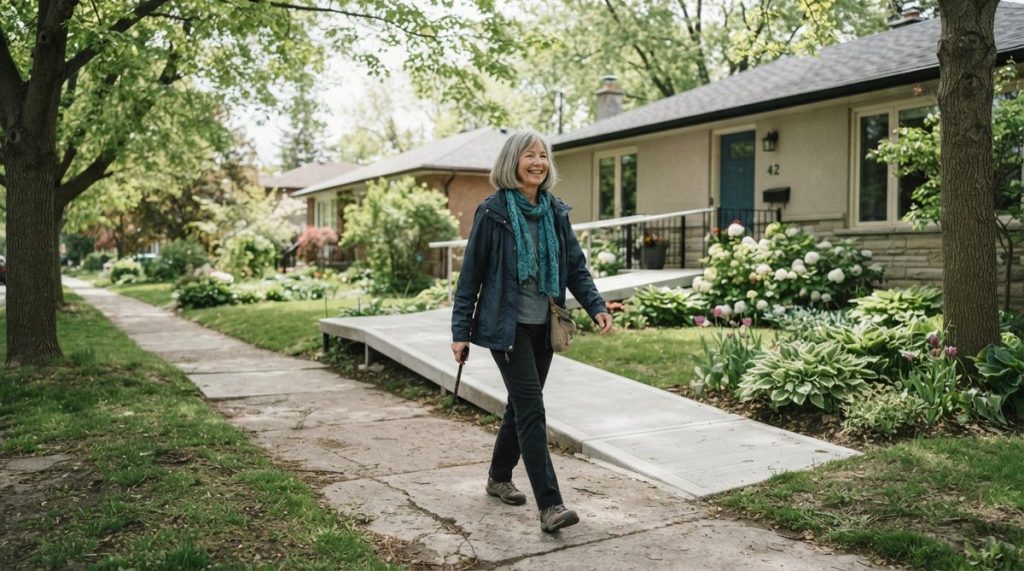
Margaret Chen was 71 when she dropped a bag of groceries in her driveway and couldn’t pick it up. Not because the bag was heavy—it was maybe eight pounds of apples and bread—but because her legs shook when she tried to squat down, and her grip couldn’t hold the handles. She stood there for a full minute, staring at bruised Honeycrisps rolling toward the gutter, and felt something she described to me as “old for the first time.”
When Margaret came into my clinic three days later, she told me she’d been walking 30 minutes a day for years. She ate well. She took her medications. She did “everything right.” And yet her muscle strength had been quietly declining for over a decade, following a trajectory that affects roughly 40% of adults over 70, according to the National Institute on Aging.
What Margaret didn’t know—and what many of my patients over the past 18 years haven’t known—is that walking alone isn’t enough. Her body needed resistance. And the breakthrough? She didn’t need an hour a day to get it. She needed four minutes.
The Four-Minute Finding That’s Changing Geriatric Fitness
In early 2025, researchers published findings that stunned even seasoned clinicians like me: older adults who performed brief, near-maximal resistance exercises for roughly four minutes daily showed functional fitness improvements up to four times greater than a control group over a 12-week period. The study built on earlier Norwegian research into short-duration, high-effort training and applied it specifically to adults aged 65 and older.
The key wasn’t magic. It was specificity and consistency. Participants didn’t wander through a weight room. They performed targeted compound movements—leg presses, chest presses, seated rows—at high relative effort for very short durations, every single day.
I want to be clear about what “four minutes” means here, because I’ve already seen the headline misinterpreted on social media. This isn’t four minutes of leisurely bicep curls. It’s four minutes of focused, deliberate effort at an intensity that challenges the muscle to adapt. For most of my patients, that means working at about 70–85% of their one-rep maximum equivalent, with proper form and appropriate rest between sets.
Why Brief Sessions Work for Older Bodies
Here’s something I often tell my patients: your muscles don’t know how long your workout was. They only know how hard they were asked to work. For seniors, shorter sessions offer three critical advantages:
- Reduced joint stress — Prolonged loading aggravates osteoarthritis and tendinopathy. Brief sessions minimize cumulative joint strain while still triggering muscle adaptation.
- Better recovery — Adults over 60 need 48–72 hours to fully recover from intense resistance work on the same muscle group. Daily four-minute sessions can rotate between upper and lower body, respecting recovery windows.
- Higher adherence — A 2023 CDC report found that only 8.6% of adults over 65 meet the federal guidelines for muscle-strengthening activity (two or more days per week). The most-cited barrier? Time and intimidation. Four minutes removes both excuses.
What Happens When Seniors Don’t Train for Resistance
I need to share some uncomfortable numbers, because I think too many people underestimate what’s happening inside their bodies after 50. Starting around age 30, adults lose approximately 3–5% of muscle mass per decade. After 60, that rate accelerates. By 80, most people have lost 30–50% of the muscle they had at their peak.
This isn’t just about looking different. It’s about function, independence, and survival. The clinical term is sarcopenia—age-related muscle loss—and it directly contributes to:
- Falls (the leading cause of injury death among adults 65+)
- Loss of independence in daily activities like bathing, dressing, and cooking
- Insulin resistance and worsening type 2 diabetes
- Accelerated bone density loss and fracture risk
- Increased hospitalization time and slower surgical recovery
In my 18 years of practice, I’ve watched patients lose their ability to live independently—not because of a single catastrophic event, but because of years of gradual, preventable muscle loss. Daily resistance training for seniors isn’t a luxury. It’s a clinical necessity.
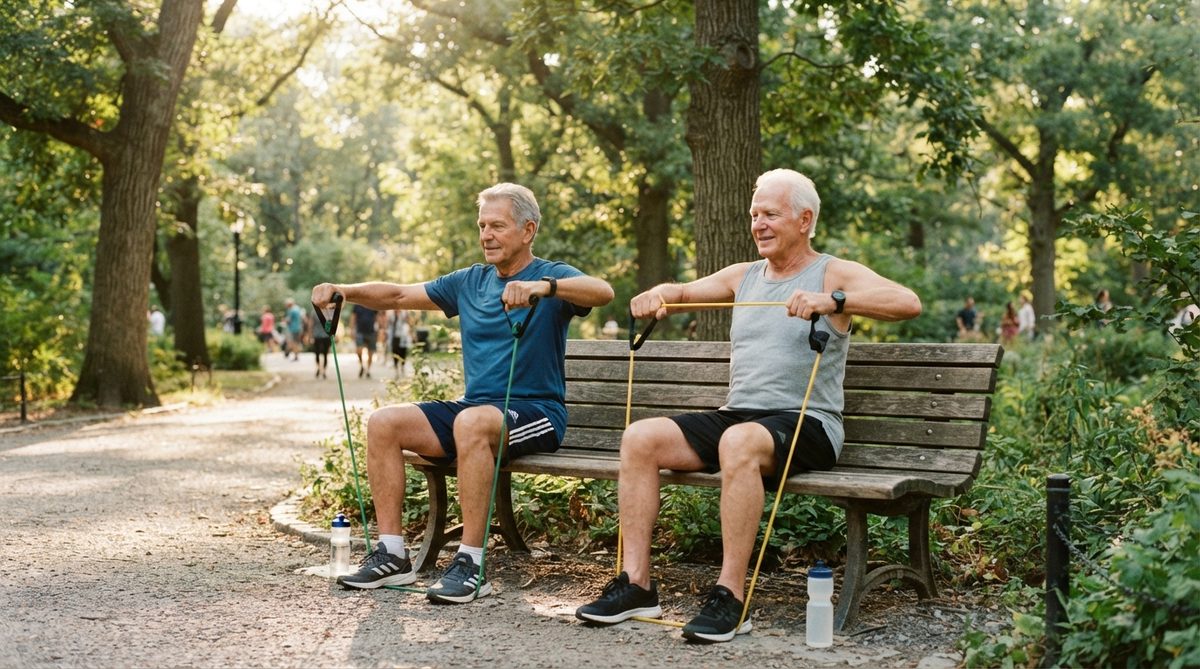
Margaret’s Four-Minute Protocol: A Real-World Template
Let me walk you through what Margaret actually did, because I think a real example is more useful than abstract advice. We started her on a modified version of the protocol during week one in my clinic, then transitioned her to home-based work by week three.
The Daily Rotation
- Day 1 — Lower Body Push: Wall sits (working toward chair squats), progressing to goblet squats with a 5-pound dumbbell. Two sets of 8–10 reps, roughly 2 minutes of work time.
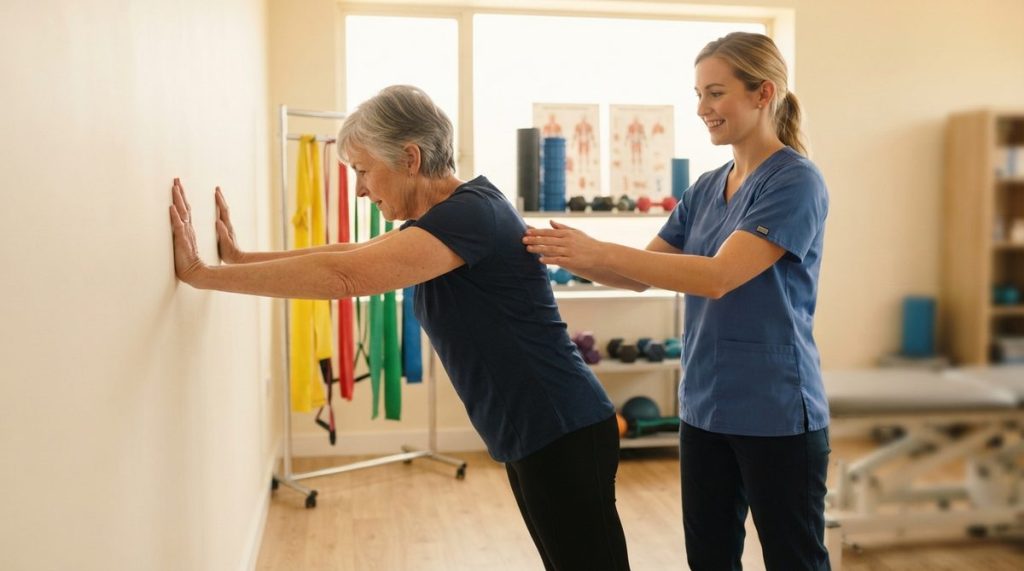
- Day 2 — Upper Body Push: Wall push-ups progressing to countertop push-ups, plus seated overhead press with light dumbbells or a resistance band. Two sets of 8–10 reps.
- Day 3 — Lower Body Pull: Standing hip hinges (modified deadlift pattern) using a kettlebell or gallon jug, plus standing calf raises on a step. Two sets of 8–10 reps.
- Day 4 — Upper Body Pull: Seated resistance band rows plus standing band pull-aparts. Two sets of 10 reps.
- Day 5 — Grip and Core: Farmer’s carry (walking while holding weights at sides) for 30-second intervals, plus standing pallof press with a band. Two rounds.
- Day 6 — Full Body Integration: Sit-to-stand from a chair (no hands) combined with a band-resisted step-up on a low platform. Three sets of 5 reps each.
- Day 7 — Active Recovery: Gentle stretching and balance work—single-leg stands near a counter, heel-to-toe walking.
Each session took Margaret between 3.5 and 5 minutes. She did a 90-second warm-up (marching in place, arm circles) beforehand. Total daily commitment: under seven minutes.
Margaret’s Results at 12 Weeks
At her reassessment, Margaret’s 30-second chair stand test improved from 8 reps to 14—a 75% improvement. Her grip strength increased by 22%. Her Timed Up and Go score dropped from 13.2 seconds to 9.8 seconds, moving her out of the “fall risk” category. She picked up her groceries without thinking about it.
If you’ve been curious about starting a strength program but felt overwhelmed, I’d recommend reading Resistance Training for Seniors: 5 Myths Holding You Back. It addresses common fears around joint damage and “being too old” that I hear in my clinic every single week.
How This Approach Helps Manage Chronic Conditions
What I see most often in my practice is that seniors come in focused on one problem—a sore knee, a stiff back—and don’t realize that strategic resistance training addresses multiple chronic conditions simultaneously. Here’s what the evidence shows:
| Chronic Condition | Impact of Regular Resistance Training | Evidence Strength |
|---|---|---|
| Type 2 Diabetes | Reduces HbA1c by 0.3–0.5% on average; improves insulin sensitivity within 6 weeks | Strong (meta-analyses) |
| Osteoporosis | Increases bone mineral density 1–3% at loaded sites; reduces fracture risk | Strong |
| Osteoarthritis | Reduces knee and hip pain by 35–40% in moderate cases; improves joint stability | Strong |
| Hypertension | Lowers systolic BP by 5–10 mmHg with consistent training | Moderate-Strong |
| Depression/Anxiety | Comparable to first-line SSRI medications in mild-moderate cases | Moderate |
| Cognitive Decline | Improves executive function and processing speed; may slow mild cognitive impairment | Moderate (growing) |
| Sarcopenia | Only proven intervention for reversing age-related muscle loss | Strong |
The Mayo Clinic confirms that resistance exercise is one of the most effective non-pharmacological interventions for managing multiple chronic conditions in older adults. Yet it remains the most under-prescribed form of exercise by primary care physicians.
For seniors managing rising healthcare costs alongside chronic conditions, there’s a real financial dimension too. Preventing a single fall-related hospital visit—averaging $35,000 for a hip fracture in 2024—dwarfs the cost of a set of resistance bands. If you’re watching your budget carefully, Inflation Draining Retirement Savings: A CFP’s Survival Plan offers practical strategies for protecting your finances while still investing in your health.
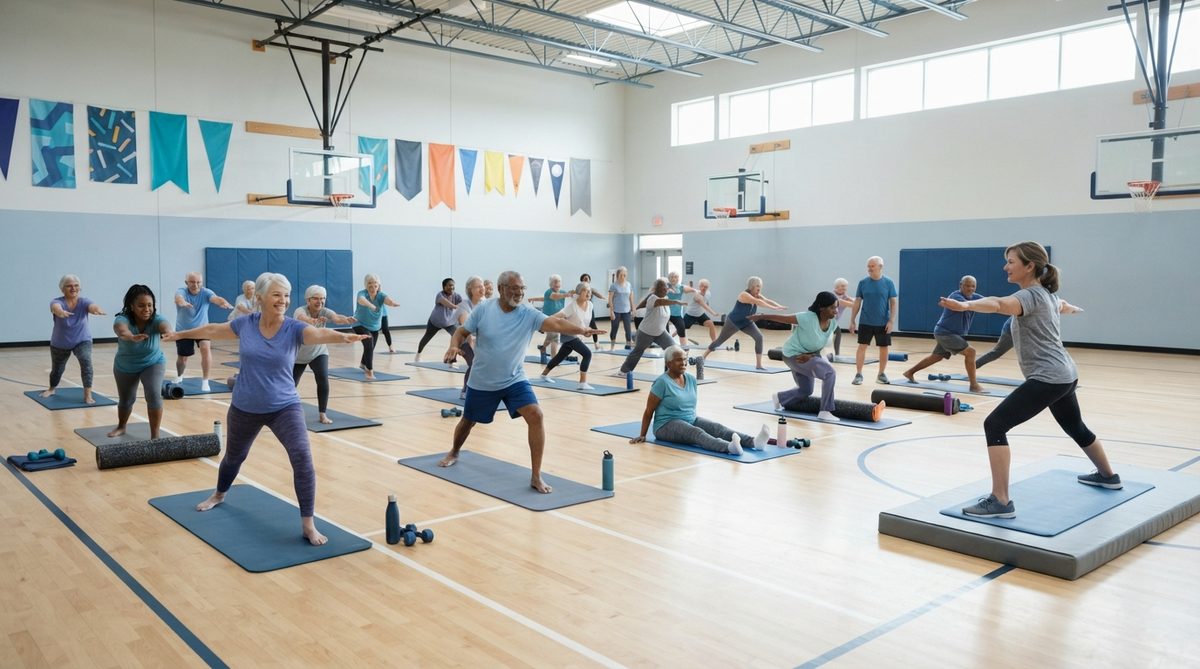
Getting Started Safely: What I Tell Every New Patient
I’d be doing you a disservice if I just said “go lift things” and left it there. Safety matters enormously, especially for adults managing heart conditions, joint replacements, or balance problems. Here’s my standard intake advice, refined over nearly two decades of working with seniors:
Step 1: Get Cleared, But Don’t Get Stalled
Talk to your doctor before starting. But here’s what I want you to know: most physicians will green-light resistance training for seniors. The American College of Sports Medicine, the CDC, and the National Institute on Aging all recommend it. If your doctor tells you “just walk,” ask specifically about resistance training. Many say “just walk” out of habit, not clinical reasoning.
Step 2: Start With Bodyweight
You don’t need a gym membership or expensive equipment. Chair squats, wall push-ups, standing hip hinges, and resistance band rows cover every major movement pattern. I started Margaret with zero external load for the first two weeks.
Step 3: Use the Talk Test for Intensity
During your working sets, you should be able to speak in short phrases but not carry on a full conversation. If you can chat easily, the effort isn’t high enough. If you can’t speak at all, back off. This simple gauge keeps most people in the right intensity zone.
Step 4: Track One Metric
Don’t try to measure everything. Pick one functional test—the 30-second chair stand is my favorite—and retest every four weeks. Watching your number climb is the single best motivator I’ve found. Margaret texted me a photo of her chart taped to her refrigerator. The numbers kept her going on days she didn’t feel like it.
Step 5: Build the Environment
Keep your resistance band on your kitchen counter, not in a drawer. Put your dumbbells next to the coffee maker. Habit research consistently shows that making the cue visible increases follow-through by over 40%. If you’re also modifying your home for safer aging, How to Set Up Your Home to Age in Place for Under $1,500 pairs well with a home-based exercise routine.
The Science Behind the Headline: What Researchers Are Finding
The four-minute daily resistance finding didn’t emerge in a vacuum. It’s part of a growing body of evidence suggesting that exercise “dose” for older adults has been miscalibrated for decades. We’ve been telling seniors to do too much, too infrequently, when the data increasingly supports doing a little, daily, at meaningful effort.
A 2024 systematic review in the Journal of Strength and Conditioning Research found that training frequency—how often you train—matters more than total weekly volume for adults over 60. Spreading the same amount of work across more days produced 18–27% greater strength gains compared to condensing it into two sessions.
Separately, emerging research into muscle protein synthesis in older adults shows that the “anabolic window” narrows with age. Younger adults can trigger muscle growth that lasts 24–48 hours after a session. In adults over 65, that response may last only 12–18 hours. More frequent training pulses keep the muscle-building signal elevated more consistently.
The Cognitive Connection
What excites me most as a clinician is the growing evidence linking resistance training to brain health. A landmark study from the University of Sydney showed that six months of progressive resistance training significantly improved cognitive function in adults with mild cognitive impairment. The benefits persisted for 12 months after the intervention ended.
Researchers believe the mechanism involves brain-derived neurotrophic factor (BDNF), a protein that supports neuron growth and survival. Resistance exercise spikes BDNF levels more reliably than aerobic exercise alone in older populations. Given that Alzheimer’s disease affects over 6.9 million Americans aged 65 and older as of 2024, this connection between daily resistance training for seniors and cognitive preservation deserves serious attention.
Common Mistakes I See (and How to Avoid Them)
After treating thousands of older adults, I’ve noticed predictable patterns in how people go wrong with resistance training. Here are the four most frequent mistakes:
1. Going too light forever. Progressive overload matters. If you’ve been using the same yellow resistance band for six months and it feels easy, you need to move up. Muscles adapt, and adaptation without progression leads to plateaus.
2. Skipping lower body. I understand—squats and lunges are harder and less fun than bicep curls. But lower body strength is what keeps you independent. Your legs carry you to the bathroom at 3 a.m. Your grip carries the groceries. Train both, but never skip legs.
3. Confusing soreness with injury. Mild muscle soreness 24–48 hours after a new exercise is normal and healthy. Sharp pain during an exercise is not. Learn the difference. If something hurts in the joint (not the muscle), stop and consult a professional.
4. Waiting for motivation. Margaret didn’t feel motivated most mornings. She did it anyway because it was four minutes and the coffee was still brewing. Motivation follows action, not the other way around. Make the habit so small that skipping it feels absurd.
Where Margaret Is Now
It’s been nine months since Margaret first walked into my clinic. Last week she sent me a video of herself doing a full bodyweight squat to pick up her grandson’s toy truck off the living room floor. No shaking. No hesitation. She popped back up like it was nothing.
She’s 72 now. She still does her four-minute daily sessions. She’s progressed to 10-pound dumbbells for her upper body work and uses a moderate resistance band for her rows. Her A1C dropped from 6.8 to 6.3—her endocrinologist was “pleasantly confused,” she told me.
Margaret’s story isn’t exceptional. It’s exactly what the research predicts. Daily resistance training for seniors works because it respects how older bodies adapt—gradually, consistently, and remarkably well when given the right stimulus.
Four minutes. Every day. That’s the prescription. Your muscles are waiting.
Frequently Asked Questions
Is four minutes of daily resistance training really enough for seniors to see results?
Yes, emerging research shows that four minutes of focused, near-maximal effort resistance exercise performed daily can produce significant strength and functional fitness improvements in older adults over 12 weeks. The key is intensity and consistency—each session must challenge the muscles meaningfully, not just go through the motions.
Can seniors with arthritis or joint replacements safely do resistance training?
In most cases, absolutely. The American College of Sports Medicine recommends resistance training for adults with osteoarthritis and those recovering from joint replacement. Modifications like limited range of motion, seated exercises, and resistance bands can reduce joint stress while still building muscle. Always get clearance from your physician or physical therapist first.
What equipment do seniors need to start a daily resistance training routine at home?
You can start with no equipment at all—bodyweight exercises like wall push-ups, chair squats, and standing hip hinges are highly effective. As you progress, a set of loop resistance bands (about $10–$15) and a pair of light dumbbells (5–10 pounds) cover nearly every movement pattern needed for a comprehensive home program.
About Michael Torres, DPT, Board-Certified Geriatric Specialist
Michael Torres is a Doctor of Physical Therapy and board-certified geriatric clinical specialist with 18 years of experience working with older adults. He has treated thousands of seniors recovering from hip replacements, managing arthritis, rebuilding strength after hospitalizations, and preventing dangerous falls. At Daily Trends Now, Michael writes practical guides on exercises, mobility, pain management, and the physical strategies that help seniors stay strong and independent.