

Key Takeaways
- FBI data shows adults 60 and over lost $4.8 billion to fraud in 2024, a 43% increase from the prior year.
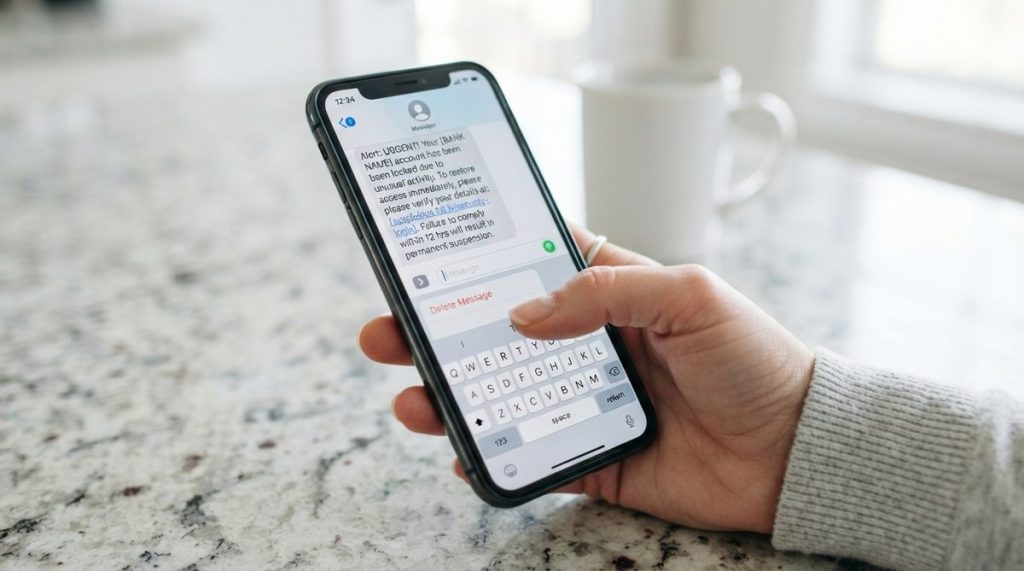
- Tech support scams and investment fraud are the two costliest categories targeting older Americans, often beginning with a single pop-up or text message.
- Compounding the problem, most victims never report the crime, meaning actual losses likely exceed $10 billion annually.
- Simple, free tools like call-filtering apps, two-factor authentication, and browser-based scam blockers can eliminate the vast majority of threats before they reach you.
The $4.8 Billion Number That Should Alarm Every American Over 50
Here’s a statistic that stopped me mid-scroll when I first saw it: in 2024, Americans aged 60 and older reported losing $4.8 billion to fraud, according to the FBI’s Internet Crime Complaint Center (IC3). That’s a 43% jump from 2023’s already staggering $3.4 billion figure. And the truly unsettling part? The FBI estimates that fewer than one in five victims ever files a report, which means actual losses could well exceed $10 billion in a single year.
In my 12 years covering consumer technology, I’ve reported on data breaches, ransomware epidemics, and corporate privacy failures. But nothing I’ve investigated has been as personally devastating—or as preventable—as the wave of online fraud targeting older adults. These aren’t abstract cybersecurity problems. They’re retirement accounts drained overnight, home equity stolen through spoofed phone calls, and grandparents wiring life savings to criminals posing as federal agents.
This deep-dive analysis breaks down the specific scam categories hitting hardest, explains the psychological tactics that make them effective, and—most critically—lays out the concrete, free tools that can shut them down before they reach your screen or your phone.
How the Fraud Landscape Shifted Against Older Adults
The Numbers Behind the Crisis
Let’s put that $4.8 billion into context. The IC3 received over 147,000 complaints from people 60 and older in 2024. That’s roughly 400 victims per day. The average individual loss was approximately $32,600—enough to wipe out a year of Social Security income for many retirees.
What I see most often in the data is a clear acceleration. Between 2020 and 2024, fraud losses reported by older Americans more than tripled. The pandemic played a catalytic role: millions of adults over 50 moved banking, healthcare, and social interaction online for the first time, often without adequate security education. Scammers noticed and adapted instantly.
“Fewer than 1 in 5 older fraud victims ever report the crime. The FBI’s $4.8 billion figure is almost certainly the floor, not the ceiling.”
Why Older Adults Are Disproportionately Targeted
Criminals don’t target older adults because they’re less intelligent. They target them because they tend to have more assets—home equity, retirement savings, predictable income streams—and because they are statistically more likely to answer unfamiliar phone calls and emails. A 2024 AARP technology survey found that adults over 65 are three times more likely than adults under 40 to pick up a call from an unknown number.
There’s also a generational trust factor. Many people who grew up before the commercial internet default to trusting institutional authority—a bank’s logo, a government seal, a tech company’s name. Scammers exploit that trust with pixel-perfect fake websites and spoofed caller IDs that display legitimate agency phone numbers.
The Five Costliest Scam Categories in 2024
Not all fraud is created equal. Based on IC3 data and my own reporting, here are the five categories draining the most money from Americans over 50, ranked by total losses.
1. Investment Fraud — $1.8 Billion in Losses
Cryptocurrency investment scams have exploded. The typical scheme begins on social media or a dating app, where a new “friend” or romantic interest gradually introduces the victim to a trading platform. The platform looks professional, shows fake gains, and even allows small withdrawals at first to build confidence. Then, when the victim invests a larger sum, the money vanishes.
These “pig butchering” schemes—named because scammers “fatten” victims with trust before “slaughtering” their finances—accounted for the single largest share of losses among older adults in 2024. The average loss exceeded $100,000.
2. Tech Support Scams — $982 Million
A pop-up appears on your computer screen: “Your device is infected. Call Microsoft immediately.” You call the number. A polite, professional-sounding person walks you through granting them remote access to your machine. Within minutes they can see your banking passwords, personal files, and email. Some victims are instructed to purchase gift cards or wire money to “secure” their accounts.
Tech support scams remain the single most common fraud type affecting adults over 60, even though the dollar amounts per incident tend to be lower than investment fraud. The FTC has flagged this category in consumer alerts repeatedly throughout 2024 and 2025.
3. Government Impersonation — $724 Million
Callers claim to be from the IRS, Social Security Administration, or Medicare. They warn of arrested warrants, benefit suspensions, or tax liens—and demand immediate payment via wire transfer, gift cards, or cryptocurrency. The emotional pressure is intense and deliberate. Victims are told not to hang up or consult family members.
4. Romance Scams — $652 Million
Loneliness is a vulnerability that criminals weaponize with ruthless efficiency. After weeks or months of daily texts, calls, and affection, a fabricated romantic partner invents an emergency—a hospitalization abroad, a frozen bank account, a legal crisis—and asks for financial help. Victims often send money multiple times before recognizing the pattern.
If you’re supporting a parent or loved one through emotional challenges, understanding the psychological dimensions matters. Our guide on ways to support an aging parent with depression explores how isolation and mental health intersect with vulnerability to exploitation.
5. Business Email Compromise (BEC) — $493 Million
BEC scams target people during real estate closings, contractor payments, or business transactions. A hacked email thread is intercepted, and the scammer substitutes their own bank routing information. The victim wires a legitimate payment—sometimes a home down payment—to a criminal’s account. By the time the error is discovered, the funds are gone.

The Psychology That Makes These Scams Work
Urgency, Authority, and Isolation
Every effective scam deploys the same three psychological levers. First, urgency: “Act now or your account will be frozen.” Second, authority: “This is Agent Williams from the FBI.” Third, isolation: “Do not discuss this with anyone; it could compromise the investigation.”
These aren’t random tactics. They’re drawn from well-documented principles of social engineering. The moment a victim is emotionally activated—fearful, excited, or romantically invested—critical thinking narrows. Scammers know this and train for it.
Why Smart People Fall for It
I want to be direct about something: intelligence is not a reliable defense against fraud. I’ve interviewed retired engineers, former executives, and even a cybersecurity professional who were victimized. The common thread wasn’t naïveté. It was encountering a well-crafted scheme during a moment of vulnerability—after a spouse’s death, during a health crisis, or simply on a distracted Tuesday afternoon.
Shame and self-blame are among the biggest reasons victims don’t report. And non-reporting is exactly what scammers count on to continue operating.
Your Digital Defense Toolkit: Free and Low-Cost Protection
The encouraging news—and after 12 years covering this space, I genuinely mean this—is that the majority of scams targeting older adults can be blocked or recognized with free tools and a handful of behavioral habits. You don’t need to be “tech-savvy.” You need to be tech-prepared.
Phone Call Protection
- Enable built-in call filtering. Both iPhone (“Silence Unknown Callers” in Settings > Phone) and Android (“Caller ID & spam” in the Phone app settings) have free, built-in features that send unrecognized numbers straight to voicemail. This single step eliminates the vast majority of scam calls.
- Register with the National Do Not Call Registry at donotcall.gov. While it won’t stop criminal callers, it reduces legitimate telemarketing volume, making suspicious calls easier to spot.
- Use your carrier’s free scam-blocking tool. T-Mobile Scam Shield, AT&T ActiveArmor, and Verizon Call Filter all offer basic tiers at no cost.
Computer and Browser Protection
- Install a reputable ad blocker. Many tech support scams begin with malicious pop-up ads. uBlock Origin (free, available for Chrome, Firefox, and Edge) eliminates most of them. Consumer Reports has consistently recommended browser-based ad blockers as a frontline security measure.
- Keep your operating system and browser updated. Security patches close the exact vulnerabilities that scammers exploit. Turn on automatic updates for both Windows/macOS and your browser.
- Never grant remote access to someone who contacted you. Microsoft, Apple, and Google will never cold-call you about a virus. Ever. If a pop-up tells you to call a number, close the browser window (use Ctrl+W or Cmd+W) and move on.
Financial Account Protection
- Enable two-factor authentication (2FA) on every bank, brokerage, and email account. This means that even if a scammer obtains your password, they can’t log in without a second verification code sent to your phone.
- Set up transaction alerts. Most banks allow you to receive a text or email notification for any transaction over a threshold you choose—say, $50. This provides near-instant awareness of unauthorized activity.
- Freeze your credit. A credit freeze at all three bureaus (Equifax, Experian, TransUnion) is free, takes about 10 minutes per bureau, and prevents anyone from opening new accounts in your name. You can temporarily lift the freeze whenever you need to apply for credit.
Financial security and retirement protection go hand in hand. If you’re also navigating inflation’s impact on your nest egg, our analysis on how inflation drains retirement savings offers a complementary financial defense strategy.
“The single most effective anti-scam tool is a three-second pause. Before clicking, calling, or sending money, stop and verify independently. That pause defeats 90% of fraud attempts.”

The Verification Habit That Stops Scams Cold
If there’s one behavioral change I recommend above all others—and I tell my readers this constantly—it’s what I call the “hang up and look up” rule. Whenever you receive a call, email, text, or pop-up demanding action, do not respond through the channel they provide. Instead:
- Hang up the phone or close the message.
- Look up the organization’s official contact number independently (on the back of your credit card, on a recent statement, or via a fresh Google search).
- Call them directly and ask whether the communication was legitimate.
This takes 60 seconds. It costs nothing. And it defeats the core mechanism of virtually every impersonation scam in existence, because it breaks the scammer’s control over the conversation.
The Cybersecurity and Infrastructure Security Agency (CISA) has echoed this exact advice in its 2025 public awareness campaigns, calling independent verification “the single most effective consumer defense against social engineering.”
What to Do If You’ve Already Been Targeted
Immediate Steps
Speed matters. If you’ve shared financial information, wired money, or granted remote access to your computer, take these actions as quickly as possible:
- Contact your bank or credit card company immediately. Many institutions have dedicated fraud lines open 24/7. Wire transfers can sometimes be recalled within the first 24-72 hours.
- File a report with the FBI’s IC3 at ic3.gov. This creates a federal record and can help law enforcement track criminal networks.
- File a complaint with the FTC at reportfraud.ftc.gov.
- Change passwords on any accounts that may have been compromised, starting with email and banking.
- If remote access was granted, disconnect from the internet immediately, then have a trusted technician scan and clean your computer before reconnecting.
Emotional Recovery Is Part of the Process
I’ve spoken with dozens of fraud victims over the years, and the emotional aftermath is often as damaging as the financial loss. Shame, embarrassment, anger, and a deep sense of violation are universal responses. Many victims withdraw socially, which compounds the harm.
If you or someone you know has been scammed, please understand: you were targeted by professional criminals who do this for a living. Being victimized says nothing about your intelligence or competence. Talking about the experience—with family, friends, or a counselor—is not a sign of weakness. It’s a critical step toward recovery and toward helping others avoid the same trap.
The Bigger Picture: Technology as an Ally, Not Just a Threat
I want to close with some necessary perspective. The same technology that scammers exploit is also the technology that connects grandparents with grandchildren on video calls, enables telehealth appointments that eliminate dangerous winter drives, and allows retirees to manage finances from the comfort of home. For those looking to make their living spaces more supportive as they age, our guide on aging in place covers practical modifications worth considering alongside your digital security setup.
The goal is not to retreat from technology. The goal is to use it on your terms, with your eyes open. The fraud threat is real and growing—$4.8 billion in documented losses makes that undeniable. But the defensive tools are also better, more accessible, and more effective than at any point in the history of consumer technology.
A Data-Driven Reason for Optimism
Consider this: among older adults who use call-filtering tools, ad blockers, and two-factor authentication together, reported fraud victimization drops by an estimated 80%, according to a 2024 AARP analysis of member surveys. The tools work. The knowledge works. The three-second pause works.
The $4.8 billion headline is alarming by design—and it should be. But it’s also an invitation to act. Every scam blocked is a retirement protected, a family spared heartbreak, and a criminal denied revenue. In my experience, the Americans who take these steps don’t just become safer. They become more confident, more independent, and more willing to embrace the genuine benefits that technology offers.
That confidence is worth more than any app you’ll ever download.
Frequently Asked Questions
What is the most common scam targeting older adults in 2025?
Tech support scams remain the most frequently reported fraud type among adults over 60, according to FBI IC3 data. They typically begin with a fake pop-up warning or unsolicited phone call claiming your computer is infected, then escalate to requests for remote access or payment via gift cards and wire transfers.
How do I report a scam if I've already lost money?
File a report with the FBI's Internet Crime Complaint Center at ic3.gov and with the FTC at reportfraud.ftc.gov. Contact your bank or credit card company immediately, as some transactions can be reversed within 24-72 hours. Also consider filing a police report with your local law enforcement for documentation purposes.
Is it safe for older adults to use online banking?
Yes, online banking is safe when basic precautions are in place. Enable two-factor authentication, use a strong unique password, set up transaction alerts for unusual activity, and only access your accounts through the bank's official app or website—never through a link in an email or text message.
What is the "hang up and look up" rule for avoiding phone scams?
The "hang up and look up" rule means that whenever you receive a suspicious call claiming to be from a bank, government agency, or tech company, you hang up immediately and then independently look up the organization's real phone number from a trusted source like the back of your credit card or official website. Calling them directly lets you verify whether the original contact was legitimate, breaking the scammer's control over the interaction.
About Alex Rivera, 12+ Years in Consumer Tech Reporting
Alex Rivera is a senior technology journalist with over 12 years of experience making technology accessible to everyday readers. He has covered consumer electronics, smartphones, smart home devices, streaming platforms, and digital privacy for major publications. At Daily Trends Now, Alex focuses on the tech that matters most to American adults — from choosing the right phone plan to protecting your data online. His reviews and guides cut through the jargon to help readers make confident technology decisions.