

Key Takeaways
- As little as four minutes of daily resistance training can dramatically improve strength and functional fitness in older adults.
- Proper protein intake (1.0–1.2 g per kilogram of body weight) is essential to support muscle recovery and growth after 50.
- Seniors should start with bodyweight exercises and progress gradually, focusing on consistency over intensity.
- Combining resistance training with targeted nutrition strategies can help manage chronic conditions like diabetes, osteoporosis, and heart disease.
Why Four Minutes a Day Could Change Everything After 50
A striking new study has fitness and medical communities buzzing: just four minutes of daily resistance training can quadruple functional fitness in older adults. When I first reviewed the research, even with 15 years of experience working with aging clients, the magnitude of improvement surprised me. We’re not talking about grueling gym sessions — we’re talking about brief, intentional effort that fits into almost anyone’s day.
Sarcopenia — the age-related loss of muscle mass — begins as early as age 30 and accelerates after 60. According to the National Institute on Aging, adults can lose 3–5% of muscle mass per decade after 30, with the rate climbing sharply past 60. That translates to weaker bones, higher fall risk, slower metabolism, and worsening chronic conditions.
But here’s the encouraging part: muscle responds to stimulus at any age. Resistance training for seniors isn’t just possible — it’s one of the most evidence-backed interventions for healthy aging. Below, I’m sharing seven practical, nutrition-informed tips to help you start building real strength, even if you’ve never picked up a weight in your life.
1. Start With What You Already Have: Your Own Body
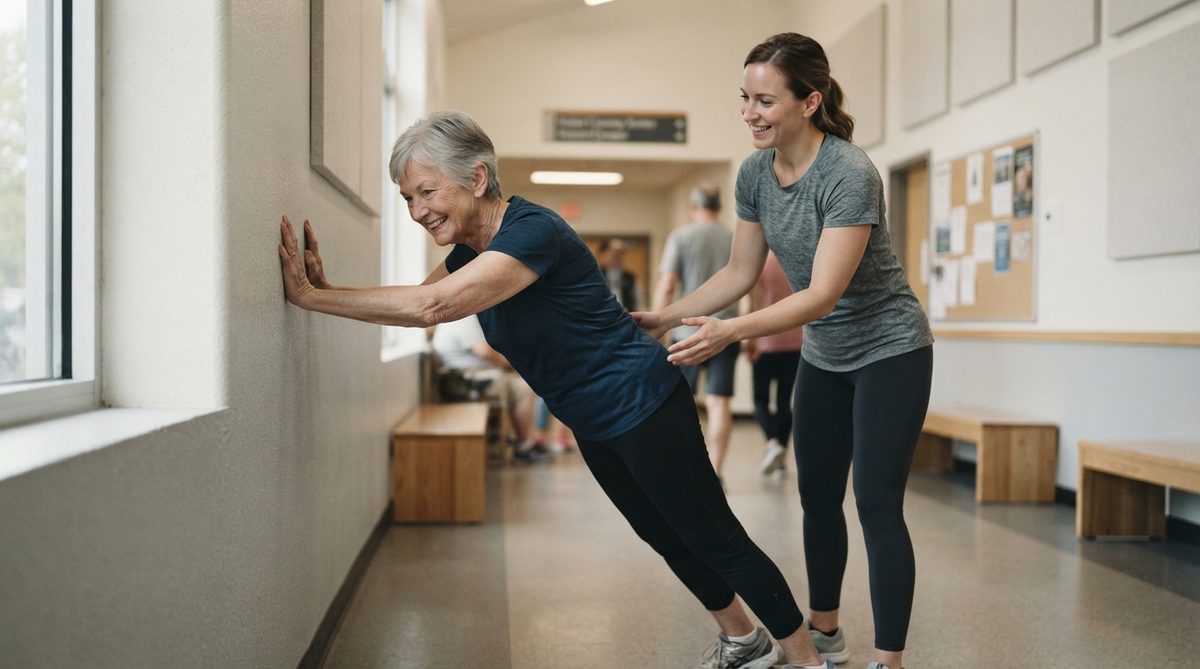
I often tell my clients that the best piece of equipment they own is themselves. Bodyweight exercises — wall push-ups, chair squats, standing calf raises, and modified planks — build foundational strength without requiring a gym membership or expensive gear.
A 2023 systematic review in the British Journal of Sports Medicine confirmed that bodyweight resistance exercises produce meaningful strength gains in adults over 65 when performed consistently. The key word is consistently. You don’t need to be perfect; you need to show up.
A Simple Starter Routine (Under 5 Minutes)
- Wall push-ups — 2 sets of 8 repetitions
- Chair-assisted squats — 2 sets of 8 repetitions
- Standing calf raises (holding a counter for balance) — 2 sets of 12 repetitions
- Seated leg extensions — 2 sets of 10 per leg
- Isometric bicep hold (press palms together at chest level for 20 seconds) — 2 rounds
That sequence takes roughly four minutes. Do it daily, and within six to eight weeks, you’ll notice real differences in how you move, how you feel getting out of a chair, and how steady you are on your feet. If you’re looking for ways to stay active during warmer months, our guide on 7 Summer Health Tips for Seniors to Stay Safe and Strong pairs well with this routine.
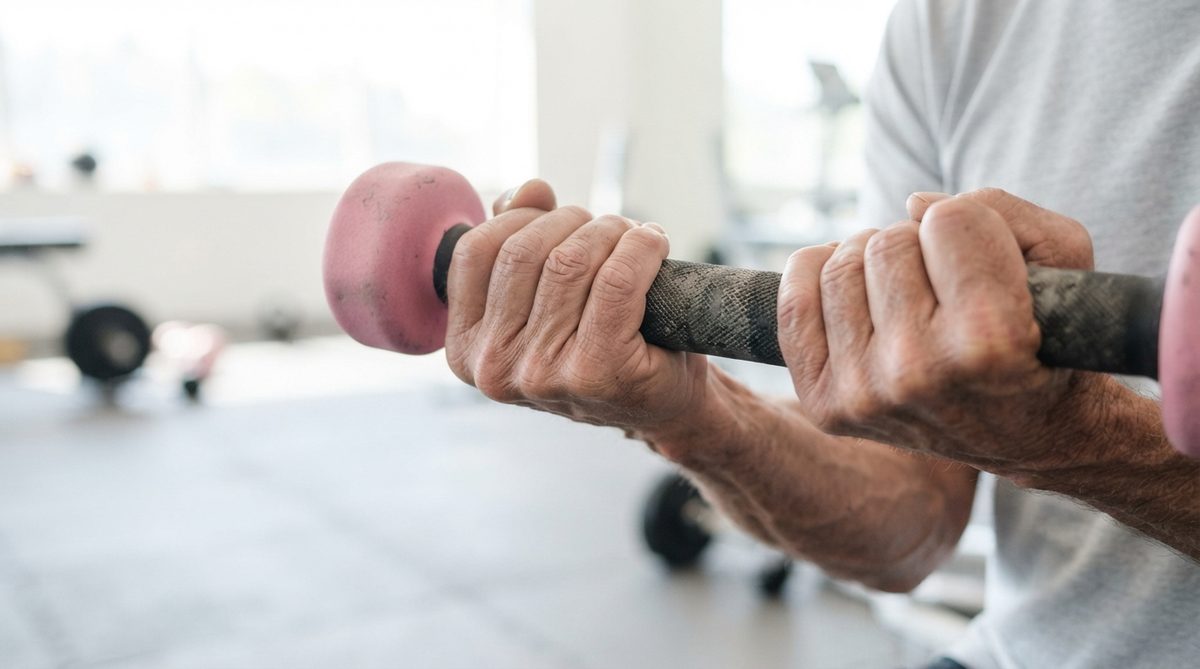
2. Fuel Your Muscles With Enough Protein — Most Seniors Don’t
This is where my nutrition expertise intersects directly with exercise science, and honestly, it’s the area where I see the most missed opportunities. The current Recommended Dietary Allowance (RDA) for protein is 0.8 grams per kilogram of body weight, but that number was set for minimum needs in sedentary adults. For seniors doing any form of resistance training, research increasingly supports 1.0–1.2 grams per kilogram daily.
For a 160-pound adult, that’s roughly 73–87 grams of protein per day. What I see most often in my practice is seniors eating around 45–55 grams — well below what’s needed for muscle protein synthesis. Without adequate protein, your muscles can’t repair and grow after training, no matter how consistent you are.
Quick Protein-Boosting Strategies
Add a palm-sized portion of lean protein to every meal. Think Greek yogurt at breakfast (15–17 g per cup), a chicken breast at lunch (26 g per 3 oz), and fish at dinner (22 g per 3 oz). If chewing is an issue, protein-fortified smoothies, scrambled eggs, and cottage cheese are excellent alternatives.
The Mayo Clinic recommends distributing protein intake evenly across meals rather than loading it all at dinner, which improves how efficiently your body uses it for muscle repair.
3. Prioritize the “Big Four” Movement Patterns
Not all exercises are created equal when you’re training for functional independence. In my 15 years of advising older adults, I’ve narrowed daily movement down to four essential patterns that translate directly to real-life tasks:
- Push — wall push-ups, chest presses (getting up from the floor, pushing a grocery cart)
- Pull — resistance band rows, doorway pulls (opening doors, pulling weeds)
- Squat/Hinge — chair squats, deadlift variations (sitting down, picking up grandchildren)
- Carry — farmer’s walks with light dumbbells or water jugs (carrying bags, walking with stability)
If you hit each of these patterns at least twice a week — even in that four-minute window — you’re training your body for the movements that keep you independent. The research on daily resistance training for seniors consistently shows that functional movement patterns produce better real-world outcomes than isolation exercises like bicep curls alone.
4. Use Progressive Overload — Safely
Progressive overload simply means gradually increasing the challenge your muscles face. Without it, your body adapts and progress stalls. But for adults over 50 — especially those managing arthritis, joint replacements, or cardiovascular conditions — the progression must be thoughtful.
How to Progress Without Getting Hurt
Week 1–2: Master the movement with bodyweight only. Focus on form and breathing. Week 3–4: Add one extra repetition per set or hold positions one second longer. Week 5–6: Introduce light resistance bands or 2–3 pound dumbbells. Week 7–8: Increase band resistance or dumbbell weight by one increment.
Never increase weight and repetitions simultaneously. The CDC’s physical activity guidelines recommend that adults aged 65 and older perform muscle-strengthening activities involving all major muscle groups at least two days per week — but they also emphasize that the intensity should be “moderate to high for the individual.” Your moderate is not your neighbor’s moderate. Listen to your body.
5. Don’t Skip the Nutrients That Protect Your Joints and Bones
Resistance training for seniors delivers tremendous bone-density benefits — a 2020 meta-analysis published in Osteoporosis International found that resistance exercise reduced fracture risk by up to 30% in postmenopausal women. But training without nutritional support is like building a house without cement.
Key nutrients I emphasize with every client over 50:
- Calcium: 1,200 mg/day for women over 50 and men over 70. Dairy, fortified plant milks, sardines with bones, and leafy greens are top sources.
- Vitamin D: 600–800 IU daily (many experts, including myself, recommend 1,000–2,000 IU for seniors, especially those with limited sun exposure). Vitamin D is critical for calcium absorption.
- Magnesium: 320–420 mg/day. Supports muscle contraction and relaxation. Nuts, seeds, and whole grains are your friends here.
- Omega-3 fatty acids: Found in salmon, mackerel, walnuts, and flaxseed. These help manage inflammation in aging joints, making training more comfortable over time.
If rising food costs are making nutrition harder to manage, you’re not alone. Our resource on Inflation Draining Retirement Savings: A CPA’s Survival Guide offers strategies that can free up budget for better nutrition.
6. Track What Matters: Function, Not Just Reps
I see too many fitness programs that measure success by weight lifted or repetitions completed. For adults over 50, the metrics that actually matter are functional: How quickly can you stand from a chair without using your hands? How confidently can you carry a bag of groceries from the car? Can you climb a flight of stairs without feeling winded?
The 30-Second Chair Stand Test
This is one of the simplest, most validated assessments of lower-body strength in older adults. Sit in a sturdy chair, arms crossed over your chest, and stand up fully then sit back down as many times as you can in 30 seconds. For adults aged 60–64, the average is 14–19 stands for men and 12–17 for women. For ages 70–74, it’s 12–17 for men and 11–16 for women.
Test yourself on day one, then retest every four weeks. You’ll likely be astonished by how quickly those numbers climb with consistent daily resistance training. And that kind of measurable progress is motivating — a recent Yale study found that nearly half of older adults actually improve with age, a finding that challenges the narrative that aging is only about decline.
7. Make Recovery a Non-Negotiable Part of Your Routine
Here’s something that younger exercisers can get away with but seniors cannot: skimping on recovery. After 50, your muscles need more time and better resources to repair. Ignoring recovery doesn’t make you tougher — it increases injury risk and sabotages your gains.
Recovery Essentials for Seniors
- Sleep: Aim for 7–8 hours. Growth hormone — critical for muscle repair — is released primarily during deep sleep. The National Institute on Aging reports that sleep disruption is one of the most underappreciated factors in age-related muscle loss.
- Hydration: Dehydration impairs muscle function and recovery. Older adults often have a blunted thirst mechanism. I recommend keeping a 32-ounce water bottle visible and finishing it by mid-afternoon, then drinking another 16–24 ounces through the evening.
- Post-workout nutrition: Within 30–60 minutes of training, consume 20–30 grams of protein with a small amount of carbohydrate. A glass of milk and a banana, a handful of trail mix with jerky, or a protein smoothie all work beautifully.
- Active rest days: On days you don’t do resistance work, walk for 15–20 minutes or do gentle stretching. Complete inactivity slows recovery more than light movement does.
If you’re making modifications to your home to support safer exercise and daily living, consider reading our guide on Aging in Place: Why Most Homes Aren’t Ready and How to Fix Yours — it covers practical changes that make training at home more realistic.
Putting It All Together: Your First 30-Day Action Plan
I’ve seen hundreds of clients over 50 transform their strength, confidence, and chronic disease management with resistance training. But the ones who succeed long-term share one trait: they start small and build systems rather than relying on motivation alone.
- Days 1–7: Perform the 4-minute bodyweight starter routine daily. Focus entirely on form. Increase protein intake to hit at least 70 grams per day.
- Days 8–14: Add one repetition per set. Begin taking a vitamin D supplement if you aren’t already. Do the 30-second chair stand test and record your baseline.
- Days 15–21: Introduce a resistance band for pull exercises. Add a post-workout protein snack within 60 minutes of training.
- Days 22–30: Retest the chair stand. Review your sleep quality and hydration habits. Decide whether to add a second short training session later in the day or increase resistance.
After 30 days, reassess. Most of my clients report noticeably better balance, easier stair climbing, and improved energy. Some report reduced joint pain — a counterintuitive benefit that occurs because stronger muscles absorb more shock, protecting cartilage and tendons.
The Bottom Line on Resistance Training for Seniors
The science is clear: daily resistance training for seniors is one of the highest-return investments you can make in your health after 50. It protects against falls (the leading cause of injury death in adults over 65, per the CDC), preserves bone density, improves metabolic health, and supports independence. And it doesn’t require a gym, a personal trainer, or hours of your time.
Four minutes. Every day. Paired with smart nutrition. That’s the formula. In my experience, the seniors who thrive aren’t the ones with the best genetics — they’re the ones who stopped waiting for the perfect moment and started with what they had. Today is that moment for you.
Frequently Asked Questions
Is resistance training safe for seniors with high blood pressure or heart disease?
Yes, in most cases. The American Heart Association recognizes resistance training as beneficial for cardiovascular health when performed correctly. However, seniors with uncontrolled hypertension or recent cardiac events should get medical clearance first. Avoid holding your breath during exercises (the Valsalva maneuver), which can spike blood pressure, and focus on controlled, moderate-intensity movements.
How quickly will I see results from daily resistance training after 50?
Most older adults notice functional improvements — like easier chair stands, better balance, and increased energy — within three to four weeks of consistent daily training. Visible muscle changes typically take six to eight weeks. Neurological adaptations (your brain getting better at activating muscles) actually happen within the first two weeks, which is why early strength gains often outpace visible changes.
Can resistance training help manage type 2 diabetes in seniors?
Absolutely. Research published in Diabetes Care shows that resistance training improves insulin sensitivity and can reduce HbA1c levels by 0.3–0.5% in adults with type 2 diabetes — comparable to some oral medications. Muscle tissue is a primary site for glucose uptake, so increasing muscle mass through resistance training directly helps regulate blood sugar. Pairing exercise with adequate protein and fiber intake maximizes these benefits.
About Dr. Linda Park, PhD, RD (Registered Dietitian)
Dr. Linda Park is a Registered Dietitian with a PhD in Nutritional Science and 15 years of clinical and research experience focused on older adults. She has published peer-reviewed research on the role of nutrition in managing diabetes, cardiovascular health, and cognitive decline in seniors. At Daily Trends Now, Dr. Park writes evidence-based articles on senior nutrition, supplement safety, meal planning, and the foods that truly make a difference for aging well.