

Key Takeaways
- Most older adults want to age in place, but fewer than half feel confident they can do so safely without proper planning.
- Proactive fall prevention, including strength training and home modifications, can reduce fall-related injuries by up to 40%.
- Building a "wellness team" of healthcare providers, community resources, and technology tools is essential for safe aging in place.
- Starting mobility and balance work in your 50s and 60s—not waiting until a crisis—dramatically improves long-term independence.
Why Aging in Place Demands More Than Wishful Thinking
According to a 2024 AARP survey, roughly 77% of adults over 50 say they want to remain in their current home as they age. But here’s the gap that concerns me as a geriatric physical therapist: fewer than half of those same respondents felt “very confident” they’d actually be able to do it. That disconnect between desire and preparation is something I see in my clinic every single week.
Aging in place safely isn’t just about wanting to stay home. It requires deliberate, sometimes uncomfortable planning across multiple areas—physical fitness, home environment, healthcare coordination, finances, and social connection. After 18 years of working with older adults recovering from falls, joint replacements, and deconditioning, I can tell you that the people who thrive at home are the ones who started preparing years before they “needed” to.
This article breaks down seven concrete strategies to help you age in place after 60—not as vague advice, but as actionable steps grounded in clinical evidence and real-world outcomes. Whether you’re 55 and planning ahead or 75 and reassessing your setup, every one of these tips can shift the odds in your favor.
1. Prioritize Balance and Strength Training—Starting Now
Falls are the leading cause of injury-related death among Americans 65 and older, according to the CDC. Every year, roughly 36 million falls occur among older adults, resulting in approximately 32,000 deaths and 3 million emergency department visits. Those numbers aren’t meant to scare you—they’re meant to motivate you, because the majority of these falls are preventable.
In my practice, I often tell patients that balance isn’t a trait you either have or don’t. It’s a skill, and like any skill, it responds to training. The research backs this up: a meta-analysis published in the British Medical Journal found that exercise programs emphasizing balance, functional training, and resistance work reduced fall rates by 23% and fall-related injuries by up to 40%.
What Effective Balance Training Actually Looks Like
I’m not talking about standing on one foot while brushing your teeth—though that’s a fine start. A comprehensive program for aging in place safely should include:
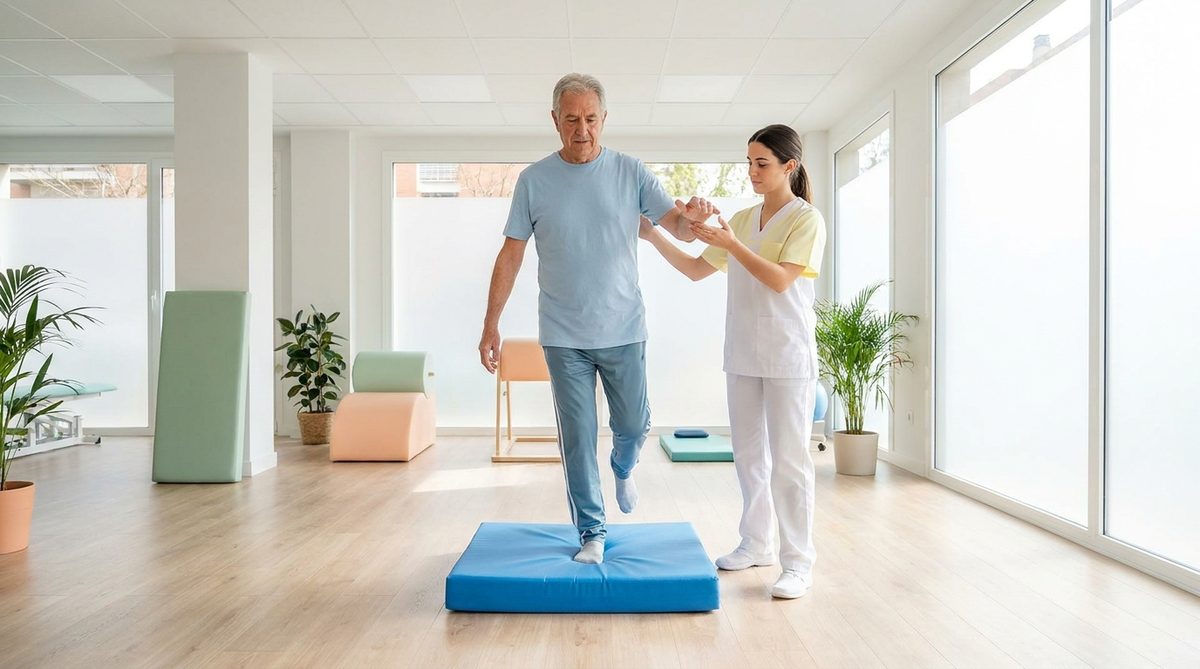
- Single-leg stance progressions — Start with 10-second holds near a counter, then advance to unstable surfaces like a foam pad.
- Heel-to-toe walking — Walk a straight line for 20 feet, placing one foot directly in front of the other, three times per session.
- Sit-to-stand exercises — Aim for 10 repetitions from a standard chair without using your hands. This mimics the functional strength needed to get on and off the toilet independently.
- Lateral stepping with resistance bands — Strengthens the hip abductors, which are critically important for side-to-side stability and preventing sideways falls.
- Tai chi or yoga — Both have strong evidence for fall reduction. A landmark study from AIIMS found that regular yoga practice significantly improved balance, flexibility, and joint health in adults over 60.
I recommend a minimum of 150 minutes of moderate activity per week—consistent with National Institute on Aging guidelines—with at least two sessions dedicated specifically to strength and balance. For a deeper look at building healthy routines after 60, check out 5 Healthy Habits for Aging Well in Your 60s, 70s, and Beyond.
2. Conduct a Ruthlessly Honest Home Safety Audit
Your home is either your greatest asset or your biggest liability when it comes to aging in place. What I see most often is a house that was perfect for a 40-year-old family but has become an obstacle course for a 70-year-old with arthritic knees and bifocals.
The National Council on Aging estimates that home modifications can reduce the risk of falls by as much as 26%. Yet most older adults don’t make a single change until after a fall or a hospitalization. That’s reactive, and it’s expensive—both financially and physically.
Your Room-by-Room Checklist
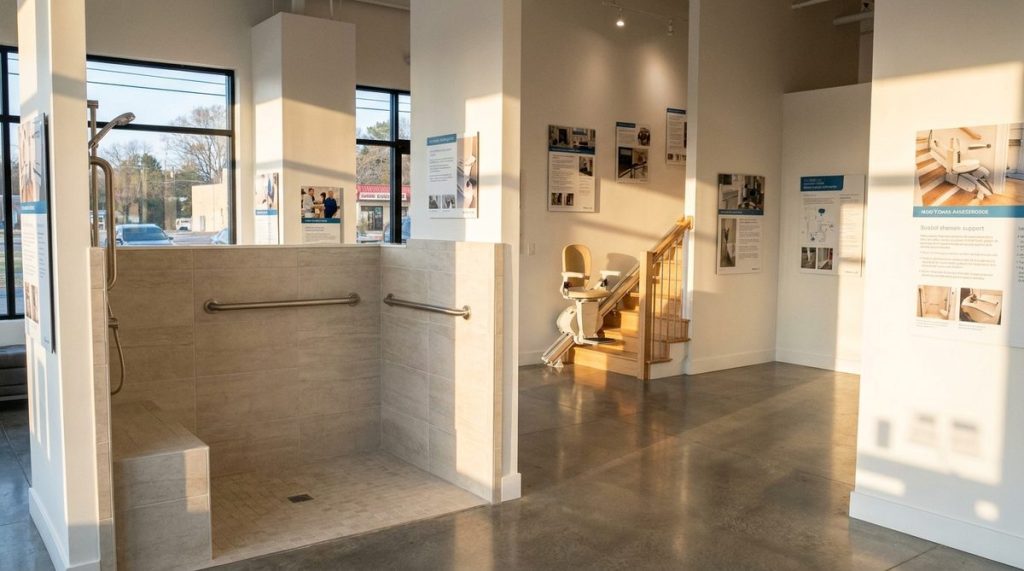
Bathroom: Install grab bars next to the toilet and inside the shower (not suction-cup types—bolt them into studs). Add a non-slip mat or adhesive strips inside the tub. Consider a walk-in shower conversion if you can afford it; the average cost ranges from $2,500 to $7,000, but it’s one of the highest-impact modifications you can make.
Bedroom: Your bed height matters more than you think. When you sit on the edge, your hips should be slightly higher than your knees. If the bed is too low, a set of bed risers ($15–$40) can make getting up dramatically easier on arthritic joints.
Kitchen: Move frequently used items to counter height or the lowest overhead shelf. A reaching tool ($10–$20) eliminates the need to climb step stools—one of the most common fall scenarios I treat.
Stairs and hallways: Every stairway needs sturdy handrails on both sides. Add motion-sensor night lights in hallways and near the bathroom. If stairs are becoming a barrier, consider whether a first-floor bedroom conversion makes sense. There are many misconceptions about what aging in place actually costs, and I recommend reading 7 Aging-in-Place Myths That Could Cost You Thousands before assuming you can’t afford modifications.
3. Build a Healthcare Team That Communicates
One of the most underappreciated risks of aging in place is fragmented healthcare. You might see a cardiologist, an endocrinologist, a primary care physician, and a physical therapist—all operating in their own silos. When nobody is coordinating, medications get duplicated, warning signs get missed, and you end up in the emergency room for something that was entirely preventable.
I strongly advocate for identifying a “quarterback”—usually your primary care provider—who has a complete picture of your medications, diagnoses, and functional status. Bring a printed medication list to every appointment. Ask your doctors to send notes to each other. It sounds basic, but in my 18 years of practice, medication mismanagement and poor care coordination are behind at least a third of the preventable hospitalizations I see in my older patients.
Annual Wellness Visits Are Non-Negotiable
Medicare covers an Annual Wellness Visit at no cost to you. This isn’t a standard physical exam—it’s a forward-looking prevention plan that includes cognitive screening, fall risk assessment, and a review of your advance directives. Only about 50% of eligible Medicare beneficiaries take advantage of this benefit. If you’re not one of them, schedule yours this month.
Understanding how your healthcare costs interact with your income is also critical for long-term planning. If your retirement income spikes in a given year—say, from a Roth conversion or home sale—it can trigger higher Medicare premiums. Learn more about that in How to Manage Retirement Income to Avoid Higher Medicare IRMAA.
4. Address Nutrition as Medicine, Not an Afterthought
Sarcopenia—the age-related loss of muscle mass—accelerates after 60 and can reduce your strength by 3–5% per decade. The primary countermeasures are resistance exercise (covered above) and adequate protein intake. Yet data from the National Health and Nutrition Examination Survey (NHANES) consistently shows that adults over 65 consume less protein than they need.
The current recommended dietary allowance (RDA) for protein is 0.8 grams per kilogram of body weight, but growing evidence—including guidelines from the PROT-AGE Study Group—suggests older adults need 1.0 to 1.2 grams per kilogram to maintain muscle mass. For a 160-pound person, that’s roughly 73 to 87 grams of protein daily.
Practical Protein Strategies
I don’t expect my patients to become amateur dietitians. Instead, I give them a simple framework: aim for 25–30 grams of protein at each of three meals. That looks like a 4-ounce chicken breast (about 28 grams), a cup of Greek yogurt (15–20 grams), or two eggs with a glass of milk (roughly 20 grams combined).
Hydration is equally critical. Dehydration is one of the top 10 reasons for hospitalization in seniors, according to the Mayo Clinic. The sensation of thirst diminishes with age, so relying on “feeling thirsty” isn’t reliable. I recommend keeping a 32-ounce water bottle visible at all times and finishing two of them each day. For more detailed nutritional guidance, see Healthy Aging Habits for Seniors: A Dietitian’s Deep Dive.

5. Leverage Technology Without Being Overwhelmed by It
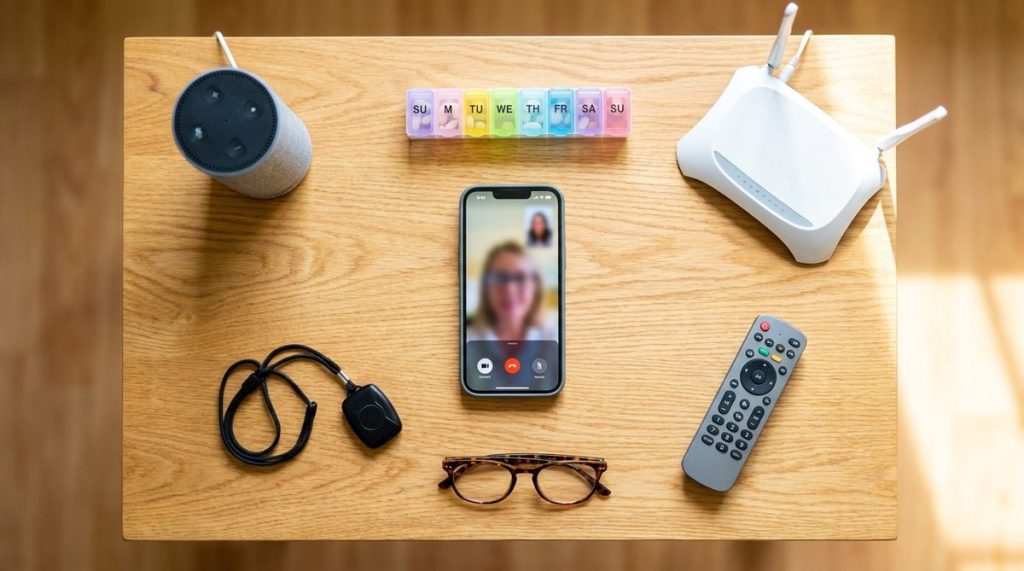
Technology for aging in place has advanced light-years beyond the old “I’ve fallen and I can’t get up” pendant. Today’s tools include wearable fall-detection devices (like the Apple Watch’s fall detection feature, which automatically calls emergency services), smart home sensors that track movement patterns and alert family members to deviations, medication management apps with alarm reminders, and telehealth platforms that eliminate the need to drive to routine appointments.
What I see most often is a complete technology avoidance or a haphazard adoption of gadgets that don’t actually solve the right problems. The key is matching the tool to the specific challenge. If your biggest barrier is medication adherence, a $25 automatic pill dispenser may be more valuable than a $300 smartwatch.
A 2023 study in the Journal of the American Geriatrics Society found that older adults who used remote patient monitoring had 25% fewer emergency department visits over a 12-month period compared to those receiving standard care alone. That’s a meaningful reduction, both in cost and in the physical trauma of unnecessary hospital trips. For a comprehensive overview, see 7 Ways Technology Helps Older Adults Stay Independent.
6. Combat Social Isolation Before It Becomes a Health Crisis
Social isolation isn’t just lonely—it’s dangerous. The National Institute on Aging reports that social isolation and loneliness are associated with a 50% increased risk of dementia, a 29% increased risk of heart disease, and a 32% increased risk of stroke. Those numbers rival the health risks of smoking 15 cigarettes a day.
When I evaluate an older patient who has recently declined in mobility or cognition, one of my first questions is about their social engagement. In many cases, the spiral started not with a physical problem but with a social one—a spouse passed away, a friend moved into assisted living, a church group disbanded. Without those touchpoints, people stop moving, stop eating well, and stop taking care of themselves.
Practical Ways to Stay Connected
This doesn’t mean you need a packed social calendar. Even one or two meaningful weekly interactions can be protective. Consider volunteering, which research links to lower mortality rates in older adults. Join a walking group at your local recreation center. Enroll in a community education class. Many Area Agencies on Aging (find yours at eldercare.acl.gov) offer free or low-cost social programs specifically designed for older adults.
Video calls count, too. A 2021 study in The Gerontologist found that regular video communication reduced feelings of loneliness comparably to in-person visits, especially for homebound older adults. The key word is “regular”—a sporadic FaceTime call every few months doesn’t move the needle.
7. Create a Written Aging-in-Place Action Plan
The biggest mistake I see people make about aging in place is treating it as a passive default rather than an active strategy. “I’ll just stay home” isn’t a plan. A plan has timelines, budgets, contingencies, and accountability.
Here’s a framework I walk my patients and their families through. I call it the 5-Year Readiness Plan:
- Year 1 — Assess and audit. Complete a home safety audit (see Tip #2). Schedule your Annual Wellness Visit. Get a baseline physical therapy evaluation to identify mobility risks before they become crises.
- Year 2 — Modify and adapt. Make the top-priority home modifications. Begin or intensify a structured exercise program. Establish telehealth access with your primary care provider.
- Year 3 — Coordinate care. Ensure all healthcare providers are communicating. Review your medication list for polypharmacy risks. Update legal documents: advance directive, healthcare power of attorney, POLST form if appropriate.
- Year 4 — Stress-test your setup. Simulate a recovery scenario. If you had knee surgery tomorrow and couldn’t drive for six weeks, could you manage at home? Identify the gaps—grocery delivery, transportation services, in-home help—and line them up now.
- Year 5 — Reassess and recalibrate. Repeat the home audit. Retest your balance and strength. Adjust the plan based on any new diagnoses, life changes, or financial shifts.
Writing this plan down and sharing it with a trusted family member or friend creates accountability. It also prevents the crisis-driven decision-making that leads to premature placement in care facilities—a move that, for many older adults, could have been delayed or avoided entirely with better preparation.
The Bottom Line: Aging in Place Is a Practice, Not a Wish
Every day in my clinic, I work with people who are fiercely determined to stay in their own homes. That determination is admirable. But determination without strategy is just stubbornness, and stubbornness doesn’t prevent hip fractures or catch medication interactions.
The seven strategies above aren’t exotic or expensive. They’re practical, evidence-backed, and within reach for most adults over 50. The common thread? They all require you to act before you’re forced to react. Start with one item on this list this week—schedule a balance assessment, install a grab bar, write down your medication list, call a friend you haven’t spoken to in months. Momentum builds on itself.
Recent research continues to affirm that aging doesn’t have to mean decline—and the data increasingly shows that the choices you make in your 50s, 60s, and 70s directly shape your quality of life in your 80s and beyond. Read more about what the latest science reveals in New Study: Aging Doesn’t Mean Decline—What the Data Reveals.
The best time to start planning was ten years ago. The second-best time is today.
Frequently Asked Questions
What is the most important home modification for aging in place safely?
Bathroom grab bars and non-slip surfaces are the single highest-impact modification. The bathroom is the most common location for falls among older adults, and properly installed grab bars (bolted into wall studs, not suction-cup models) can dramatically reduce fall risk during transfers in and out of the shower or on and off the toilet.
How much does it cost to make a home safe for aging in place?
Basic modifications like grab bars, handrails, improved lighting, and bed risers can cost as little as $500–$1,500 total. More extensive changes—such as walk-in shower conversions, stair lifts, or first-floor bedroom additions—can range from $3,000 to $25,000 or more, depending on scope. Many Area Agencies on Aging offer grants or low-interest loans for qualifying seniors.
At what age should I start planning to age in place?
Ideally, start in your 50s or early 60s—well before any health crisis forces reactive decisions. Early planning gives you time to build strength, make gradual home modifications, coordinate healthcare, and establish community connections that will support you for decades.
Does Medicare cover physical therapy for fall prevention?
Yes. Medicare Part B covers outpatient physical therapy when it is deemed medically necessary by a physician. A fall risk assessment and subsequent balance and strength training program typically qualify. There is no annual cap on medically necessary therapy under current Medicare rules, though prior authorization may be required in some Medicare Advantage plans.
About Michael Torres, DPT, Board-Certified Geriatric Specialist
Michael Torres is a Doctor of Physical Therapy and board-certified geriatric clinical specialist with 18 years of experience working with older adults. He has treated thousands of seniors recovering from hip replacements, managing arthritis, rebuilding strength after hospitalizations, and preventing dangerous falls. At Daily Trends Now, Michael writes practical guides on exercises, mobility, pain management, and the physical strategies that help seniors stay strong and independent.