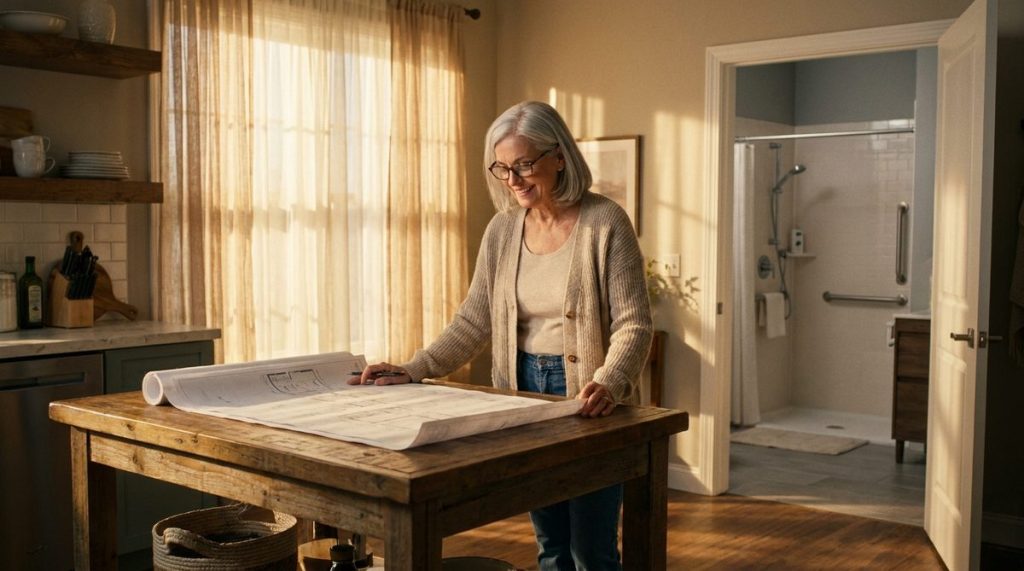


The Dream of Staying Home—and the Myths That Derail It
Nearly 90% of Americans over 65 say they want to remain in their current home as they age, according to AARP‘s 2024 Home and Community Preferences Survey. It’s a powerful, deeply personal goal. And after 16 years of covering lifestyle and active aging stories, I can tell you that wanting to age in place and actually being prepared to do it are two very different things.
The problem isn’t ambition—it’s misinformation. Aging in place myths circulate endlessly among friend groups, online forums, and even some outdated financial planning guides. These misconceptions lead retirees to either overspend on modifications they don’t need or, worse, skip critical preparations that could prevent a crisis later.
I wrote this piece because I keep hearing the same wrong assumptions repeated by smart, capable people who deserve better information. Let’s dismantle the biggest aging in place myths one by one, replace them with evidence, and give you a concrete action plan that actually works.
Myth #1: Aging in Place Is Always Cheaper Than Moving to a Senior Community
This is the granddaddy of aging in place myths, and it’s the one I encounter most often in reader emails. The logic seems airtight: you already own your home, so staying put must be the budget-friendly choice. But the math tells a different story for many households.
A 2024 report from the National Council on Aging found that the average annual cost of aging in place—including home maintenance, property taxes, insurance, utilities, and necessary modifications—runs between $18,000 and $48,000, depending on the homeowner’s health status and the home’s condition. For someone who needs even part-time in-home care, that figure can spike past $60,000 annually.
Compare that to assisted living, which the Genworth 2024 Cost of Care Survey pegs at a national median of roughly $64,200 per year. The gap narrows far more than most people expect, especially once you factor in the hidden costs of maintaining an older property. I’ve covered this reality in depth before—8 Aging in Place Costs That Surprise Most Retirees breaks down the specific line items that catch people off guard.
The Truth
Aging in place can be more affordable, but only if you plan proactively and honestly assess your home’s readiness. Ignoring a crumbling roof or outdated electrical system doesn’t save money—it defers cost until it becomes an emergency.
“The retirees who save the most by staying home are the ones who invested in modifications before they needed them—not the ones who waited until after a fall or a health scare forced their hand.”
Myth #2: You Only Need Grab Bars and a Walk-In Shower
Grab bars and curbless showers are excellent starting points. But I often tell my readers that treating home accessibility like a bathroom-only project is one of the most dangerous oversimplifications in the aging-in-place conversation.
Occupational therapists—the professionals who actually evaluate homes for safety—look at dozens of factors most homeowners never consider. Doorway widths (a standard wheelchair needs 32 inches of clearance, and many older homes have 28-inch interior doors). Light switch heights. The distance between the bedroom and the nearest bathroom. The grade of the driveway. Whether the kitchen stove has front-mounted controls or rear-mounted ones that force you to reach over open flames.
The Truth
A comprehensive aging-in-place assessment covers lighting, flooring transitions, stairway access, kitchen ergonomics, emergency egress, and technology integration. The National Institute on Aging recommends a room-by-room safety evaluation that goes well beyond the bathroom. A Certified Aging-in-Place Specialist (CAPS), credentialed through the National Association of Home Builders, can conduct this assessment for typically $200 to $500—an investment that can prevent modifications you don’t need and flag ones you do.
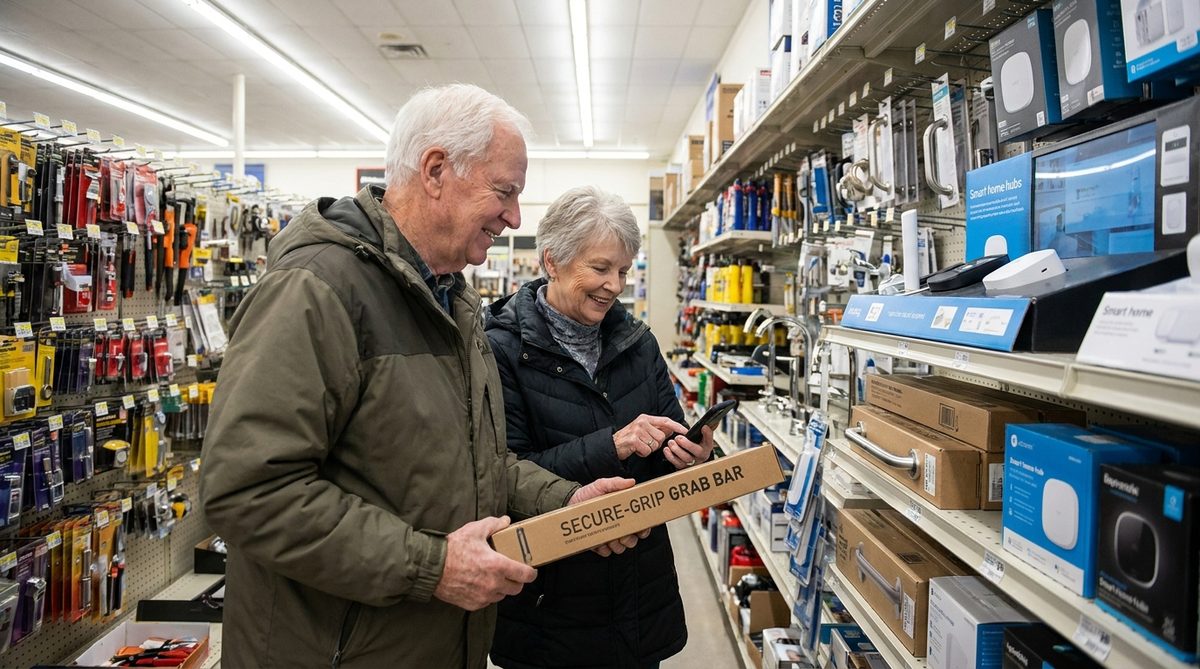
Myth #3: Smart Home Technology Is Too Complicated for Older Adults
This myth frustrates me more than almost any other because it’s rooted in a stereotype that simply doesn’t hold up. In my 16 years covering this beat, I’ve watched the technology adoption curve among adults 50 and older accelerate dramatically. AARP’s 2024 Tech Trends report found that 72% of adults over 50 now own a smartphone, and 44% of those over 70 use a voice assistant like Alexa or Google Home at least weekly.
Smart home devices designed for aging in place aren’t the same as trying to program a VCR in 1997. Today’s systems include automatic stove shutoffs, motion-sensor lighting, medical alert wearables that detect falls without a button press, and video doorbells that let you see who’s outside without getting up. Many of these devices install in minutes and require zero technical expertise.
The Truth
The real barrier isn’t complexity—it’s awareness. Most older adults don’t know these products exist, or they assume the technology is more expensive than it actually is. A basic smart home safety kit (smart plugs, motion-sensor lights, a video doorbell, and a voice assistant) can cost under $300 and be operational in an afternoon. The key is starting with one or two devices and building comfort gradually.
Of course, technology also introduces new risks. If you’re exploring connected devices, make sure you understand the security landscape—7 Online Scam Myths Older Adults Still Believe in 2025 is essential reading before you connect anything to your home Wi-Fi network.
Myth #4: If You’re Healthy Now, You Don’t Need to Plan Yet
What I see most often is a version of this: “I’m 62 and I feel great—this is a problem for 80-year-olds.” I understand the sentiment. Planning for physical limitations when you’re currently hiking five miles a week feels almost morbid. But the data is unforgiving on this point.
The Centers for Disease Control and Prevention reports that one in four Americans over 65 falls each year, and falls are the leading cause of injury-related death in that age group. The average hospital stay for a fall-related hip fracture costs over $30,000, and roughly 40% of people hospitalized for a hip fracture never return to independent living.
The Truth
The best time to make your home safer is while you’re still healthy enough to make thoughtful decisions without time pressure. Renovating under duress—say, two weeks before a hospital discharge—is more expensive, more stressful, and produces worse outcomes than planning ahead. Think of it like insurance: you don’t buy it because you expect a disaster tomorrow, but because you want to be covered when the unexpected happens.
This principle extends beyond the physical home. Building a foundation of overall wellness now pays dividends for decades—6 Pillars of Healthy Aging After 60 That Experts Swear By outlines exactly what that foundation looks like.
Myth #5: Medicare Will Cover Your Home Modifications
I wish I could tell you otherwise, but this is flatly incorrect—and it’s one of the aging in place myths that causes the most financial damage because people build it into their retirement budget assumptions.
Original Medicare (Parts A and B) does not cover home modifications like ramp installations, bathroom renovations, stairlifts, or widened doorways. Period. Some Medicare Advantage plans (Part C) have begun offering limited home safety benefits—typically a modest annual allowance of $500 to $2,500—but these vary wildly by plan and region, and they rarely cover major structural changes.
The Truth
Funding home modifications typically requires a patchwork approach. Here are the most common legitimate funding sources:
- Medicaid HCBS Waivers: For those who qualify based on income and care needs, state Medicaid Home and Community-Based Services waivers can cover certain modifications. Eligibility varies by state.
- Veterans Affairs Grants: The VA’s Specially Adapted Housing (SAH) and Home Improvements and Structural Alterations (HISA) grants provide substantial funding for eligible veterans.
- USDA Rural Development Loans: Low-interest loans and grants for homeowners in rural areas who are 62 and older with income below certain thresholds.
- Nonprofit and Community Programs: Organizations like Rebuilding Together and local Area Agencies on Aging often provide free or low-cost modifications for qualifying seniors.
- Home Equity: A home equity line of credit or reverse mortgage can fund modifications, though both carry financial risks that require careful analysis.
The bottom line: don’t assume any single program will foot the bill. Start researching funding at least two to three years before you anticipate needing significant changes.
“According to AARP’s 2024 data, 77% of adults over 50 have done nothing to prepare their homes for aging—yet 89% say they want to stay in their current home long-term. That gap is where financial and safety crises are born.”
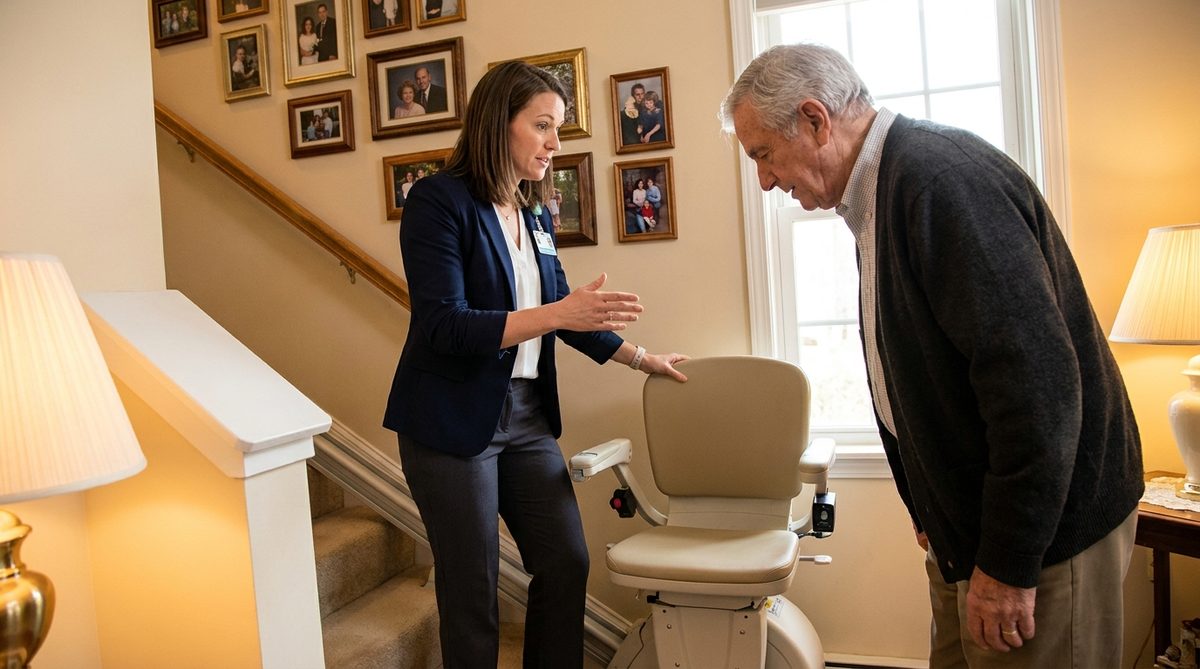
Myth #6: Living Alone Means You Can’t Age in Place
About 16 million Americans over 65 live alone, according to the U.S. Census Bureau’s 2023 American Community Survey. The assumption that solo living automatically disqualifies you from aging in place is not only wrong—it’s harmful, because it discourages millions of capable people from even trying to plan.
Yes, living alone requires more intentional safety planning. But with the right systems—regular check-in routines with neighbors or family, medical alert devices, telehealth access, meal delivery services, and periodic professional home assessments—many solo agers thrive independently well into their 80s and beyond.
The Truth
The critical factor isn’t whether you live alone; it’s whether you have a support network and a plan for escalating needs. Solo agers who build a “care team” of trusted friends, neighbors, a geriatric care manager, and local service providers can age in place just as successfully as those living with a spouse or partner. The key is being proactive rather than reactive—and being honest with yourself about when your needs outpace your setup.
Your Aging-in-Place Action Plan: 8 Steps to Take This Year
Debunking aging in place myths is only useful if it leads to action. Here’s the step-by-step plan I recommend to every reader who’s serious about staying home safely and affordably:
- Schedule a professional home assessment. Hire a Certified Aging-in-Place Specialist (CAPS) or request an occupational therapy home evaluation through your primary care physician. Do this even if you feel perfectly healthy today.
- Prioritize modifications by impact. Address fall risks first: lighting, flooring, bathroom safety, and stairway access. These are the changes most likely to prevent a costly emergency.
- Get three quotes for any renovation over $1,000. Aging-in-place contractors know that urgency drives up prices. Planning ahead gives you leverage and time to compare.
- Research funding sources now. Contact your local Area Agency on Aging (find yours at the Eldercare Locator: 1-800-677-1116) and ask about grants, low-interest loans, and community programs available in your state.
- Invest in two or three smart home safety devices. Start with motion-sensor night lights, a medical alert system, and a smart smoke/CO detector. Add complexity only as you grow comfortable.
- Build or strengthen your support network. Identify three to five people—family, friends, or professionals—who can check in regularly and respond in an emergency. Exchange spare keys and emergency contact information.
- Review your insurance and financial plan. Confirm what your Medicare or Medicare Advantage plan does and does not cover. If you haven’t explored long-term care insurance, talk to a fee-only financial planner about whether it makes sense for your situation. And while you’re reviewing finances, make sure you understand upcoming tax changes—Social Security Tax Cliff 2026: 5 Steps to Protect Your Income covers a shift that could affect your bottom line.
- Reassess annually. Your needs at 65 will differ from your needs at 75. Build a yearly “home health checkup” into your routine, just like an annual physical. Revisit your plan every January and adjust as circumstances evolve.
The Biggest Myth of All: That Aging in Place Means Going It Alone
If there’s one overarching misconception I’d love to retire permanently, it’s the idea that choosing to stay in your home means refusing help. The most successful aging-in-place stories I’ve covered over 16 years share a common thread: they involve people who embraced support early, adapted their environments thoughtfully, and treated their home as a living system that needed regular updates—not a static fortress.
Aging in place isn’t about stubbornness. It’s about independence supported by smart planning. When you strip away the aging in place myths—the false assumptions about cost, the oversimplified checklists, the belief that Medicare will magically cover everything—what remains is a genuinely achievable goal for millions of Americans over 50.
But it requires work. It requires honesty. And it requires starting before you think you need to. The best time to future-proof your home was five years ago. The second-best time is right now.
Frequently Asked Questions
What is the average cost of aging in place per year?
According to the National Council on Aging, aging in place costs between $18,000 and $48,000 annually depending on health status and home condition. This includes property taxes, maintenance, insurance, utilities, and modifications—and can exceed $60,000 per year if part-time in-home care is needed.
Does Medicare pay for home modifications like grab bars or ramps?
Original Medicare (Parts A and B) does not cover home modifications. Some Medicare Advantage (Part C) plans offer limited home safety benefits, typically between $500 and $2,500 per year, but coverage varies significantly by plan and region. Always verify benefits with your specific insurer.
When should I start making my home safer for aging in place?
Experts recommend beginning home safety modifications while you are still healthy and mobile, ideally in your late 50s or early 60s. Planning ahead gives you time to research contractors, compare costs, and access funding programs without the pressure of a health emergency.
What does a Certified Aging-in-Place Specialist (CAPS) do?
A CAPS professional conducts a comprehensive room-by-room evaluation of your home to identify safety risks and recommend modifications. They are credentialed through the National Association of Home Builders and typically charge between $200 and $500 for a full assessment.
Can I age in place if I live alone?
Yes. About 16 million Americans over 65 live alone and many age in place successfully. The key is building a reliable support network, using medical alert devices, establishing regular check-in routines, and planning for how your needs may escalate over time so you can add services when necessary.
About Jennifer Adams, 16 Years in Lifestyle Journalism
Jennifer Adams is a lifestyle journalist with 16 years of experience writing about travel, hobbies, relationships, home life, and the art of aging well. She has contributed to national publications focused on the interests and aspirations of adults over 50 — from budget-friendly travel destinations to rediscovering hobbies in retirement. At Daily Trends Now, Jennifer writes warm, practical articles that celebrate life after 50 and help readers make the most of every chapter.