


Why Financial Scams Targeting Seniors Have Reached Crisis Levels
In 2023, Americans aged 60 and older reported losing more than $3.4 billion to fraud, according to the FBI’s Internet Crime Complaint Center (IC3). That figure represented a 10.3% increase over the previous year — and the real number is almost certainly higher, since the FBI estimates only a fraction of victims ever file a report.
In my 14 years working in cybersecurity and digital privacy research, I’ve watched the sophistication of these schemes accelerate dramatically. The scammers targeting older adults in 2025 aren’t the clumsy email spammers of a decade ago. They use artificial intelligence to clone voices, they spoof legitimate phone numbers, and they build fake websites that are nearly indistinguishable from the real thing.
This article breaks down eight of the most dangerous financial scams targeting seniors right now, with specific, actionable defenses for each one. I’m writing this not to scare you — but because knowledge is your single strongest shield. If you’ve already taken steps to protect yourself from online scams, consider this a deeper dive into the financial threats that matter most in 2025.
1. The Grandparent Scam — Now Powered by AI Voice Cloning
This is the scam that keeps me up at night professionally. A caller contacts you, panicked, sounding exactly like your grandchild. “Grandma, I was in an accident — please don’t tell Mom and Dad.” They beg you to wire money or buy gift cards immediately.
What’s changed: scammers now use AI voice-cloning tools that can replicate a person’s voice from just a few seconds of audio scraped from social media. A 2024 McAfee study found that 77% of AI voice-cloning victims lost money, with one in ten losing more than $5,000.
How to Protect Yourself
- Establish a family “safe word” — a code phrase only your family knows. If the caller can’t provide it, hang up immediately.
- Always verify by calling your grandchild (or their parent) directly at a number you already have saved.
- Never send money via wire transfer, cryptocurrency, or gift cards based on a single phone call, no matter how urgent it sounds.
- Encourage younger family members to set their social media profiles to private so scammers can’t harvest audio or personal details.
2. Tech Support Scams: The Pop-Up That Freezes Your Screen
You’re browsing the web when suddenly a full-screen warning appears: “Your computer has been compromised! Call Microsoft Support immediately at 1-800-XXX-XXXX.” The screen looks locked. An alarm may even blare from your speakers.
This is entirely fake. Microsoft, Apple, and Google will never display a phone number in a pop-up alert. The FTC reports that tech support scams accounted for over $900 million in reported losses in 2023, with the median individual loss for victims over 60 sitting at roughly $1,000.
How to Protect Yourself
- If your screen appears locked, press Ctrl+Alt+Delete (Windows) or Command+Q (Mac) to force-close the browser. If that doesn’t work, hold down the power button to restart.
- Never call a number displayed in a browser pop-up.
- Never give remote access to your computer to anyone who contacts you unsolicited.
- Keep your browser and operating system updated — these updates patch the vulnerabilities scammers exploit.
3. Impersonation Scams: Fake Government Agents
Scammers impersonate the IRS, Social Security Administration (SSA), or Medicare. They call or email claiming your Social Security number has been “suspended” due to suspicious activity, or that you owe back taxes and face immediate arrest.
I often tell my readers: no legitimate government agency will ever threaten you with arrest over the phone. The SSA confirmed in 2024 that impersonation calls remain the number-one fraud scheme reported to their Office of the Inspector General, with over 725,000 complaints filed that year alone.
How to Protect Yourself
- Hang up immediately. If you’re worried, call the agency directly using the number on their official website (ssa.gov, irs.gov).
- The IRS always contacts taxpayers by physical mail first — never by phone, email, or text demanding immediate payment.
- Never provide your Social Security number, bank account details, or Medicare ID over the phone to an inbound caller.
- Register your number at donotcall.gov and use your phone’s built-in call-screening features.
4. Romance Scams: Emotional Manipulation at Scale
Romance scams are devastatingly effective and deeply personal. According to the FTC, Americans lost $1.14 billion to romance scams in 2023, with adults over 60 reporting the highest median losses — often exceeding $9,000 per victim.
The pattern is consistent: someone contacts you on a dating app, social media platform, or even a faith-based community site. The relationship develops over weeks or months. They build trust before the financial requests begin — a medical emergency, a business opportunity, a plane ticket to come visit you.
How to Protect Yourself
- Be cautious of anyone who professes deep feelings quickly but cannot meet in person or on a live video call.
- Use Google reverse image search on their profile photos — scammers frequently steal photos from other people’s social media.
- Never send money to someone you haven’t met in person, regardless of how long you’ve been communicating online.
- Talk to a trusted friend or family member about the relationship. Isolation is the scammer’s most powerful tool.
5. Investment and Cryptocurrency Fraud
What I see most often in my research right now is a surge in fake investment platforms, particularly those involving cryptocurrency. The FBI’s IC3 data shows that investment fraud was the costliest category in 2023, with total losses exceeding $4.57 billion — and adults over 60 lost $1.24 billion of that total.
The pitch varies: a “guaranteed” high-return investment, an exclusive cryptocurrency trading platform, or a tip from a new acquaintance (often someone met through a romance scam — a combination the FBI calls “pig butchering”). The fraudulent platforms often show fake gains to encourage you to invest more before the site vanishes.
How to Protect Yourself
- Verify any investment opportunity through FINRA’s BrokerCheck tool (brokercheck.finra.org) or the SEC’s EDGAR database.
- Be deeply skeptical of any “guaranteed” returns. Legitimate investments always carry risk, and anyone who says otherwise is lying.
- Never invest based on pressure or urgency. Legitimate opportunities don’t disappear if you take a week to research them.
- If you’re considering financial decisions that could affect your retirement savings, make sure your overall plan is solid — here’s a helpful guide on protecting your retirement savings.
6. Fake Recovery and Refund Scams
This one is especially cruel. After you’ve already been victimized by a scam, a new contact reaches out — sometimes claiming to be a lawyer, a government recovery agent, or even part of a “fraud victims’ fund.” They promise to recover your lost money for an upfront fee.
A heartbreaking 2025 investigation revealed a case where a man’s father lost his life savings, and a scammer posing as a lawyer offered to help recover the funds — only to steal thousands more. The Cybersecurity and Infrastructure Security Agency (CISA) warns that recovery scams frequently target known victims whose information is traded on dark web databases.
How to Protect Yourself
- No legitimate recovery service requires you to pay upfront fees.
- If you’ve been a fraud victim, report it to the FTC (reportfraud.ftc.gov) and your local FBI field office. These services are free.
- Verify any attorney through your state bar association’s online directory before engaging their services.
- Be aware that if you’ve been scammed once, your contact information may be circulating among criminal networks — stay extra vigilant about unsolicited calls and emails.

7. Medicare and Health Insurance Fraud
Every year during open enrollment season (October 15 through December 7), scam activity related to Medicare surges. Fraudsters call posing as Medicare representatives, offering “free” genetic testing kits, back braces, or updated Medicare cards — all designed to harvest your Medicare ID, Social Security number, and banking information.
In 2024, the Department of Health and Human Services estimated that Medicare fraud costs taxpayers roughly $60 billion annually. But the individual cost to victims goes far beyond financial loss — fraudulent claims filed under your Medicare number can disrupt your actual medical care and create billing nightmares that take months to resolve.
How to Protect Yourself
- Medicare will never call you unsolicited to ask for your Medicare number or personal information.
- Guard your Medicare card like a credit card. Don’t share your number with anyone who contacts you first.
- Review your Medicare Summary Notices carefully for services you didn’t receive.
- If you’re navigating Medicare costs alongside Social Security adjustments, understanding the Medicare Part B premium and COLA dynamics can help you spot unexpected charges that may signal fraud.
8. Online Shopping and Package Delivery Scams
As more adults over 50 embrace online shopping — Pew Research reported in 2024 that 75% of Americans aged 50-64 now shop online regularly — scammers have followed. The two most common variants: fake online stores advertising impossibly low prices, and phishing texts claiming a package couldn’t be delivered with a link to “update your address.”
That link leads to a convincing-looking form that collects your name, address, and credit card number. The fake stores, meanwhile, either ship counterfeit goods or nothing at all, and they now have your payment information.
How to Protect Yourself
- Only shop on well-known, established websites. If you find a deal on a site you’ve never heard of, check Consumer Reports or search “[site name] reviews” before purchasing.
- Look for “https://” and a padlock icon in your browser’s address bar before entering payment details.
- Track packages directly through the retailer’s website or the carrier’s official app — never through a link in an unexpected text message.
- Use a credit card rather than a debit card for online purchases. Federal law limits your liability for fraudulent credit card charges to $50, while debit card protections are weaker.
Building a Scam-Proof Foundation: Your Digital Safety Checklist
Beyond defending against individual scams, there are foundational steps that dramatically reduce your overall risk. In my cybersecurity practice, I recommend these measures to every client over 50 — and frankly, to everyone regardless of age.
Strengthen Your Passwords and Enable Two-Factor Authentication
Use a password manager like 1Password, Bitwarden, or the one built into your iPhone or Android device. Every account should have a unique, complex password. Then enable two-factor authentication (2FA) on your email, bank, and social media accounts. This single step blocks the vast majority of unauthorized access attempts.
Freeze Your Credit
Contact all three major credit bureaus — Equifax, Experian, and TransUnion — and request a credit freeze. This is free, takes about 10 minutes per bureau, and prevents anyone from opening new accounts in your name. You can temporarily lift the freeze whenever you legitimately need to apply for credit.
Keep Your Devices Updated
I cannot overstate this: when your phone or computer prompts you to install a software update, do it as soon as possible. These updates patch security vulnerabilities that criminals actively exploit. Set your devices to update automatically if the option is available.
Talk About It Openly
Shame is the scammer’s greatest ally. Many victims don’t report fraud because they feel embarrassed. If something feels off — a suspicious call, a too-good-to-be-true offer, an unusual request for money — talk to someone you trust before taking action. There is no shame in asking for a second opinion, and there is no shame in having been targeted. These criminals are professionals.
What to Do If You’ve Already Been Scammed
If you suspect you’ve fallen victim to a financial scam targeting seniors, act immediately. Speed matters in limiting the damage.
- Contact your bank or credit card company right away. Many institutions can freeze or reverse transactions if reported quickly.
- File a report with the FTC at reportfraud.ftc.gov.
- File a complaint with the FBI’s IC3 at ic3.gov.
- Contact your local Adult Protective Services if you or someone you know is being financially exploited.
- Place a fraud alert on your credit reports by contacting any one of the three major credit bureaus (they’re required to notify the other two).
- Change passwords on any accounts that may have been compromised.
If you’re also thinking broadly about protecting your independence and financial security as you age, exploring your options for aging in place is a smart parallel step — staying safe digitally and physically go hand in hand.
Staying One Step Ahead in 2025 and Beyond
Financial scams targeting seniors will continue to evolve. AI tools are making fake voices, fake videos, and fake websites cheaper and easier to produce. But the core tactics — urgency, fear, isolation, and impersonation — haven’t changed in decades. Once you learn to recognize those emotional triggers, you become exponentially harder to deceive.
In my experience, the most scam-resilient people aren’t necessarily the most tech-savvy. They’re the ones who pause before acting, verify independently, and aren’t afraid to say “let me call you back” or simply hang up. That two-second pause is worth more than any antivirus software on the market.
You deserve to use technology confidently — to video-call your grandkids, manage your finances, shop, and stay connected. Don’t let fear of scams keep you offline. Let awareness keep you safe while you’re on it.
Frequently Asked Questions
What is the most common financial scam targeting seniors in 2025?
According to the FBI's Internet Crime Complaint Center, investment fraud (including cryptocurrency scams) caused the highest dollar losses for adults over 60 in recent years, exceeding $1.24 billion in 2023. However, tech support scams and government impersonation scams are the most frequently reported by volume.
Should I answer calls from unknown numbers?
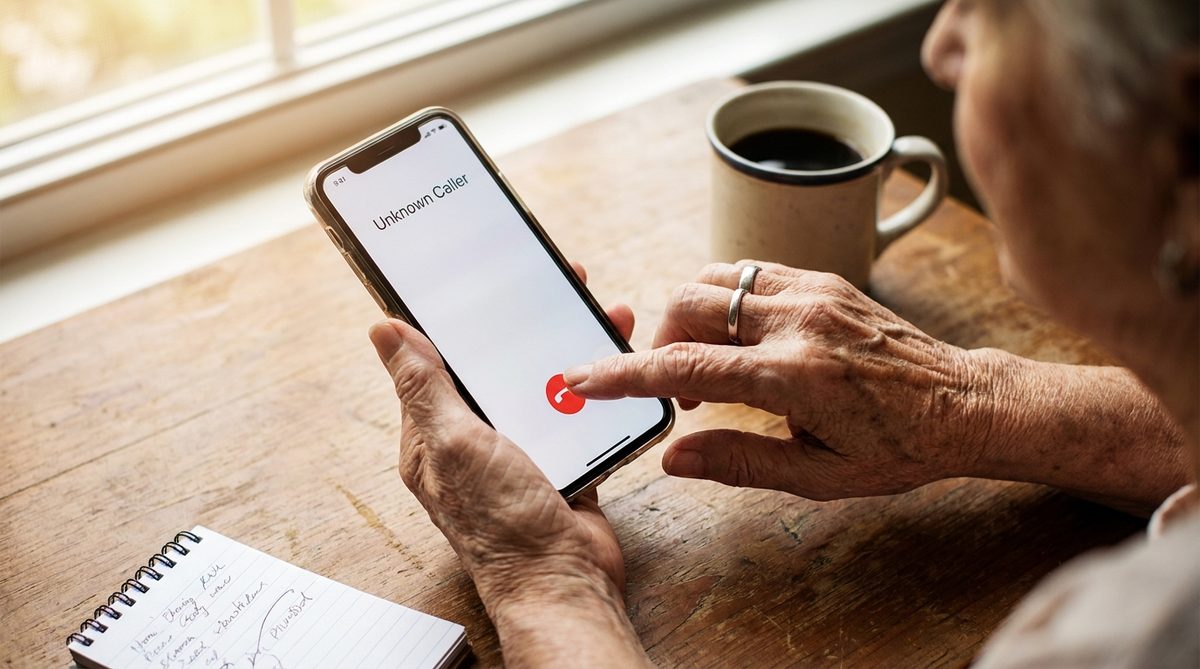
In general, no. Let unknown calls go to voicemail. Legitimate callers will leave a message. Scammers often spoof local numbers to appear trustworthy, so even a familiar area code doesn't guarantee the call is safe. You can return the call after verifying the number independently.
What should I do if a scammer already has my Social Security number?
Immediately place a fraud alert or credit freeze with all three major credit bureaus (Equifax, Experian, and TransUnion). Monitor your credit reports through annualcreditreport.com, file an identity theft report at identitytheft.gov, and notify the Social Security Administration. Consider using an identity monitoring service for ongoing protection.
Are gift cards really used in scams?
Yes — gift cards are one of the most common payment methods scammers demand because they're nearly impossible to trace or reverse. No legitimate business, government agency, or law enforcement entity will ever ask you to pay with gift cards. If anyone requests payment via gift card, it is a scam 100% of the time.
About Dr. Priya Sharma, PhD in Computer Science, CISSP
Dr. Priya Sharma is a cybersecurity expert with a PhD in Computer Science and a Certified Information Systems Security Professional (CISSP) credential. She has spent 14 years researching digital privacy, online fraud, and data protection — with a particular focus on the risks facing older internet users. At Daily Trends Now, Dr. Sharma writes about online scams, password security, smartphone privacy, and the practical steps readers can take to stay safe in an increasingly connected world.