

Key Takeaways
- The best small towns for retirees balance affordability, healthcare access, walkability, and genuine community connection.
- Cost of living in top retirement towns can run 15–30% below the national average, stretching fixed incomes significantly.
- Proximity to a mid-size city with a major hospital system is a non-negotiable factor most retirees overlook until it's too late.
- Social infrastructure—clubs, volunteer networks, farmers' markets, and arts scenes—matters just as much as housing costs when choosing where to retire.
The Phone Call That Changed Everything
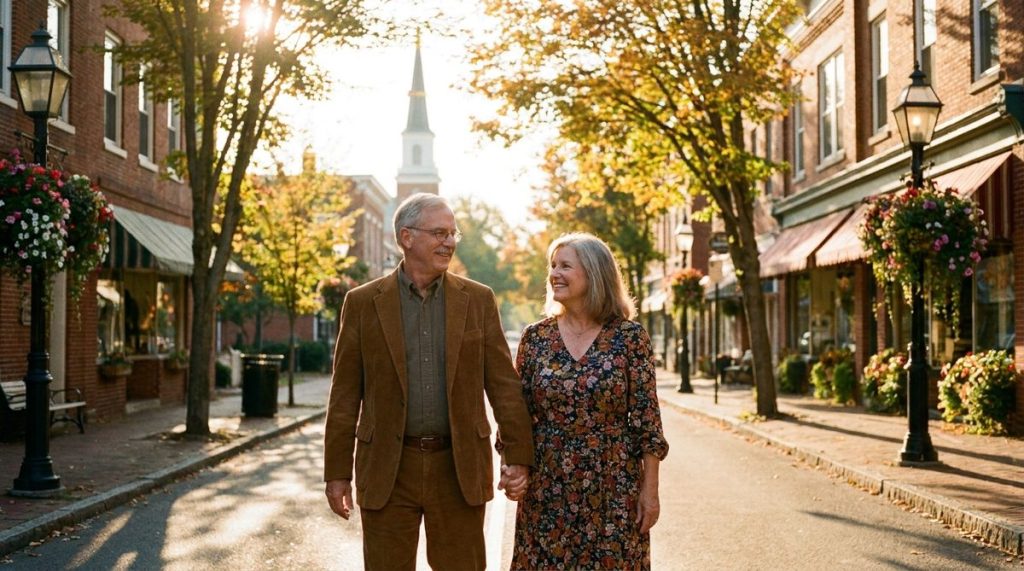
Last March, I got a call from my college friend Diane—a 62-year-old former marketing director in suburban Chicago—who was in tears. Not sad tears. Relieved ones. She and her husband, Greg, had just closed on a three-bedroom craftsman bungalow in Brevard, North Carolina, for $285,000. Their combined monthly expenses, including property taxes and health insurance, had dropped by nearly $1,400 compared to their old life in the suburbs.
“We can actually breathe,” she told me. “We walk to the farmers’ market on Saturday mornings. Greg joined a bluegrass jam group. I volunteer at the library. I didn’t know retirement could feel like this.”
Diane’s story isn’t unusual. In my 16 years covering lifestyle topics for American adults over 50, I’ve watched the “small-town retirement” movement shift from a niche curiosity to a full-blown trend. According to AARP, 53% of adults aged 50-plus say they’d consider relocating to a smaller community if it meant better quality of life and lower costs. And the 2024 U.S. Census migration data backs it up: counties with populations under 50,000 saw net in-migration from adults 55 and older for the fourth consecutive year.
So I decided to do what I do best—dig in, talk to real people, consult the data, and build a list of the best small towns for retirees that goes beyond pretty photos and Chamber of Commerce brochures.
What Actually Makes a Small Town Great for Retirement
Before I share the towns, let me walk you through the framework I use when readers ask me where they should retire. I call it the “Five-Pillar Check,” and I’ve refined it over more than a decade of reporting and interviewing gerontologists, financial planners, and—most importantly—retirees themselves.
Affordability That Works on a Fixed Income
This isn’t just about cheap housing. It’s about the full picture: property taxes, grocery costs, state income tax treatment of Social Security and pensions, and utility bills. A town with $200,000 homes but sky-high property taxes can cost you more monthly than a $260,000 home in a low-tax state. If you’re mapping out your finances for the long haul, our guide on Social Security COLA 2027: Your Step-by-Step Retirement Plan is a solid companion to this article.
Healthcare Within Reach
The National Institute on Aging emphasizes that access to geriatric-trained physicians, emergency care, and specialists becomes increasingly critical after age 65. I look for towns within 30 to 45 minutes of a hospital system rated three stars or higher by CMS.
Walkability and Getting Around
Can you walk to a coffee shop, a pharmacy, a park? What about public transit or ride-share availability for the day you decide to stop driving? These questions matter more than most people realize at 58—but they matter enormously at 78.
Social Infrastructure
Loneliness is a health crisis for older Americans. The Surgeon General’s 2023 advisory equated chronic loneliness with smoking 15 cigarettes a day. The best small towns for retirees have vibrant volunteer networks, active senior centers, arts councils, faith communities, and regular community events that make it easy for newcomers to plug in.
Climate and Outdoor Access
This one is deeply personal. Some retirees want four seasons; others want to never shovel snow again. But what I see most often is that people underestimate how much time they’ll spend outdoors once they stop working. Towns with trails, parks, lakes, or coastline consistently rank higher in retiree satisfaction surveys.
10 Best Small Towns for Retirees in 2025
I’ve visited seven of these towns personally and interviewed residents in all ten. Every pick meets at least four of my five pillars. They’re listed in no particular order, because the “best” town ultimately depends on what matters most to you.
1. Brevard, North Carolina
Population: ~8,100. Diane’s pick—and for good reason. Tucked in the Blue Ridge Mountains, Brevard offers a walkable downtown with independent bookshops, a thriving music scene (the Brevard Music Center hosts world-class summer concerts), and over 250 waterfalls within the county. Median home price sits around $365,000 as of early 2025, and North Carolina doesn’t tax Social Security benefits. Transylvania Regional Hospital is right in town, and the larger Mission Hospital system in Asheville is 35 minutes away.
2. Fredericksburg, Texas
Population: ~11,500. This Hill Country gem blends German heritage, a booming wine scene, and a genuinely neighborly culture. Texas has no state income tax, which is a massive draw for retirees on fixed incomes. The main drag—lined with local restaurants, galleries, and a gorgeous old courthouse—is flat and very walkable. Hill Country Memorial Hospital serves the community, and San Antonio’s major hospital networks are about 90 minutes south. Median home prices hover around $410,000, though surrounding areas offer more affordable options.
3. Beaufort, South Carolina
Population: ~13,500. If you want coastal living without Charleston or Hilton Head prices, Beaufort delivers. Spanish-moss-draped streets, a lively waterfront, and a cost of living about 8% below the national average make it magnetic. Beaufort Memorial Hospital is well-regarded, and the town has a robust arts community anchored by the Pat Conroy Literary Center. South Carolina offers favorable tax treatment for retirees, with a $10,000 retirement income deduction for those 65 and older.
4. Grand Junction, Colorado
Population: ~67,000 (larger than some on this list, but it functions like a small town). With 300 days of sunshine, stunning red-rock canyon landscapes, and a walkable downtown with craft breweries and farm-to-table restaurants, Grand Junction has quietly become a retiree magnet. Colorado exempts Social Security from state income tax for residents 65 and older. St. Mary’s Medical Center and Community Hospital provide solid healthcare, and the outdoor recreation—hiking, cycling the Palisade Rim Trail, wine tasting in Colorado’s wine country—is unmatched.
5. Ashland, Oregon
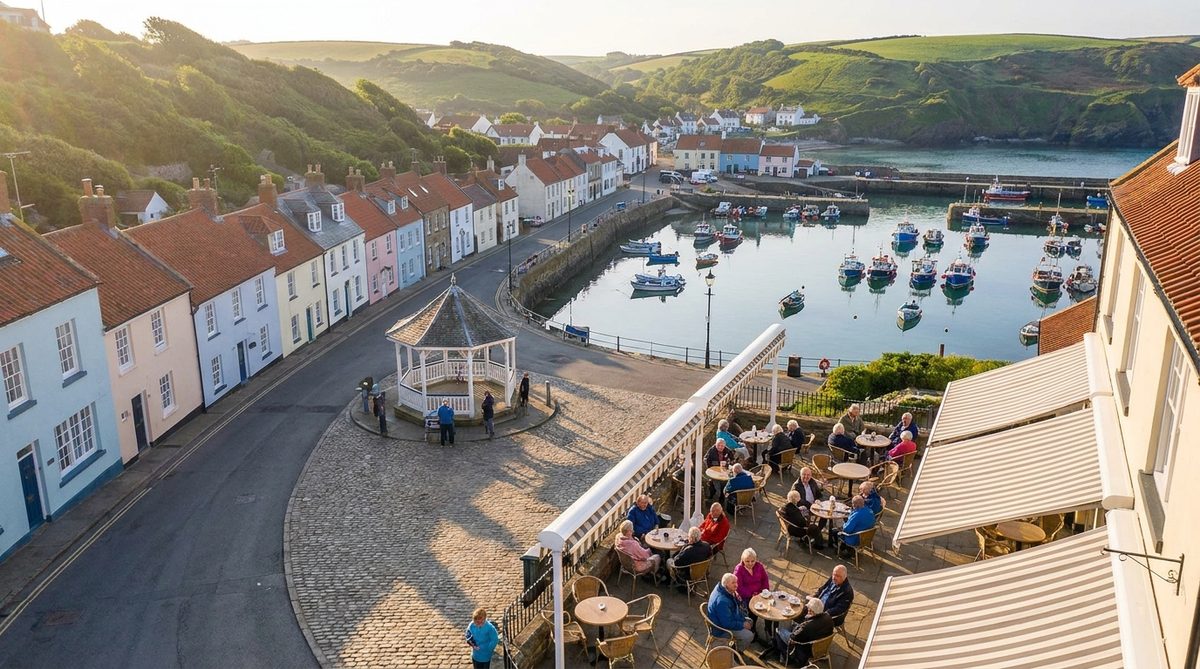
Population: ~21,500. Known globally for the Oregon Shakespeare Festival, Ashland is a cultural powerhouse disguised as a mountain town. Lithia Park offers 93 acres of trails and gardens right downtown. Oregon has no sales tax, which saves retirees money on every purchase. Asante Ashland Community Hospital anchors healthcare, and Medford’s larger Rogue Regional Medical Center is just 15 minutes north. The median home price is approximately $475,000—higher than others on this list, but the cultural richness and temperate climate justify it for many.
6. Hot Springs, Arkansas
Population: ~38,000. This is the pick I most often recommend to readers watching their budget carefully. The median home price is around $195,000. Arkansas exempts the first $6,000 of retirement income from state tax, and property taxes are among the lowest in the nation. The town wraps around a national park—Hot Springs National Park, with its historic Bathhouse Row—giving you federal-park-level beauty without leaving city limits. CHI St. Vincent Hot Springs provides quality hospital care.
7. Traverse City, Michigan
Population: ~16,000. If you love four true seasons, cherry orchards, and world-class freshwater coastline, Traverse City is hard to beat. The downtown is highly walkable with a year-round farmers’ market, independent cinemas, and excellent restaurants. Munson Medical Center is a Level II trauma center right in town. Michigan exempts some pension and retirement income from state tax. Median home prices are around $380,000. Winter is real here—but so is the community that comes with it.
8. Las Cruces, New Mexico
Population: ~115,000 (metro), but the pace and feel are small-town. With over 350 days of sunshine, the Organ Mountains as a backdrop, and a cost of living roughly 12% below the national average, Las Cruces consistently shows up on “best retirement value” lists. New Mexico exempts Social Security and offers generous retirement income tax breaks. Memorial Medical Center serves the area, and El Paso’s major hospital networks are 45 minutes south. The vibrant mix of Native American, Hispanic, and Western cultures creates a social fabric unlike anywhere else on this list.
9. Woodstock, Vermont
Population: ~3,200. This is the New England postcard come to life—covered bridges, a village green, the Billings Farm & Museum, and fiercely loyal local businesses. It’s not the cheapest option (median home prices top $500,000), but for retirees with a healthy nest egg who want quintessential charm, it’s peerless. Dartmouth-Hitchcock Medical Center, one of the nation’s top academic medical centers, is just 20 minutes away in Lebanon, New Hampshire. Vermont also exempts Social Security benefits from state income tax as of 2025.
10. Dunedin, Florida
Population: ~37,000. I include Dunedin because it proves that “small-town Florida” doesn’t have to mean sprawling retirement complexes. This Gulf Coast town has a walkable, craft-beer-loving downtown, the stunning Pinellas Trail for biking, and Honeymoon Island State Park just minutes away. Florida’s lack of state income tax is a well-known draw. BayCare’s Mease Dunedin Hospital is in town, and Tampa’s extensive medical infrastructure is 25 minutes east. Median home price is around $400,000.
A Step-by-Step Plan for Choosing Your Retirement Town
Feeling inspired but overwhelmed? Here’s the process I walk readers through. I’ve distilled it into eight actionable steps:
- List your non-negotiables. Write down the three to five things you absolutely cannot live without—proximity to grandchildren, warm weather, affordable housing, cultural events, whatever they are. Be honest, not aspirational.
- Run the numbers on your retirement income. Calculate your total monthly income from Social Security, pensions, investments, and any part-time work. Then subtract your current fixed expenses. The gap between what you have and what you need tells you how much affordability matters in your search.
- Research state tax treatment. Nine states have no income tax. Others exempt Social Security or pension income. This single factor can save or cost you thousands annually. The National Council on Aging maintains helpful resources on state-by-state benefits for older adults.
- Check the healthcare map. Use Medicare’s Hospital Compare tool to evaluate hospitals near any town you’re considering. Look for at least one facility within 30 minutes that scores well on patient experience and readmission rates.
- Do a “test drive” visit of at least two weeks. Don’t just visit during peak season. If you’re eyeing Traverse City, go in February. If you’re considering Las Cruces, visit in August. You need to experience the town at its most challenging.
- Attend local events and talk to actual retirees. Go to the farmers’ market, the library book club, a community board meeting. Ask retirees who’ve moved there in the last five years: “What surprised you?”
- Evaluate the housing stock for aging in place. Look for single-story homes or properties that can easily accommodate home modifications for aging in place. A charming Victorian with steep stairs might be perfect now but problematic in a decade.
- Make a 90-day transition plan. Rent before you buy, if possible. Set up your new healthcare providers before the move. Join one community group within your first two weeks. Isolation in a new town can undo all the excitement fast.

The Hidden Factor Nobody Talks About: Purpose
Here’s something I’ve learned after interviewing hundreds of retirees over the years: the town matters less than you think if you don’t bring a sense of purpose with you. I often tell my readers that a beautiful small town won’t fix the existential restlessness of suddenly having unstructured time after decades of work.
The retirees I’ve seen thrive—people like Diane and Greg—arrived in their new town with a plan. Greg already knew he wanted to play music. Diane had researched volunteer opportunities before they signed the closing paperwork. They didn’t just move to Brevard. They moved into Brevard.
Research from the Stanford Center on Longevity shows that retirees who engage in regular volunteer work report 25% higher life satisfaction and have measurably lower rates of depression. Finding your purpose doesn’t require a grand plan. It might be mentoring at the local high school, joining a Master Gardener program, starting a small business, or simply becoming a regular at the community center.
If you’ve been told that slowing down is just “what happens” when you age, I’d encourage you to read our piece on 7 Aging Myths Debunked: New Science Says Decline Isn’t Inevitable. The data is clear: engagement, not withdrawal, is what leads to vibrant aging.
Money Matters: What This Move Really Costs
Let’s be practical for a moment. Moving to a small town isn’t free, and I don’t want to romanticize the financial picture without being honest.
According to the American Moving & Storage Association, the average cost of an interstate move for a three-bedroom household is between $4,000 and $7,500. Then there’s the potential cost of home modifications—grab bars, wider doorways, improved lighting—which can run $2,000 to $25,000 depending on scope.
On the savings side, the math can be compelling. Moving from a high-cost metro (think Chicago, Boston, or the San Francisco Bay Area) to a town like Hot Springs or Las Cruces could save you $12,000 to $24,000 per year in combined housing, tax, and cost-of-living reductions. Over a 20-year retirement, that’s potentially $240,000 to $480,000 in preserved wealth.
For retirees worried about making their savings last, our guide on 8 Steps to Protect Your Money pairs well with the decision to relocate strategically.
What Diane Would Tell You Now
I called Diane again last week while writing this article. She and Greg have been in Brevard for just over a year. She laughed when I asked if she had any regrets.
“My only regret is that we waited so long,” she said. “We spent two years researching, overthinking, and being scared. And then we got here and realized—this was always the plan. We just didn’t know it yet.”
She paused, then added something I think every reader considering this move needs to hear: “The town doesn’t have to be perfect. It just has to be right for you. And you won’t know that from a website. You have to go and feel it.”
That’s advice I’d echo after 16 years of covering this beat. The best small towns for retirees aren’t objectively “best.” They’re the ones where you can picture yourself waking up on a Tuesday morning with somewhere to go, someone to see, and something that makes you glad you made the leap.
Start with the list. Run the numbers. Then go visit. Your next chapter might be in a town you’ve never even heard of yet—and that’s the most exciting part.
Frequently Asked Questions
What is the cheapest small town in the U.S. to retire in?
Hot Springs, Arkansas, consistently ranks among the most affordable, with a median home price around $195,000 and property taxes among the lowest in the nation. Combined with Arkansas's retirement income tax exemptions and a cost of living well below the national average, retirees can live comfortably on modest fixed incomes there.
How do I know if a small town has good enough healthcare for retirement?
Use Medicare's Hospital Compare tool (medicare.gov/care-compare) to check hospital quality ratings within 30 to 45 minutes of any town you're considering. Look for facilities rated three stars or higher with strong patient-experience and readmission scores, and confirm that specialists you may need—such as cardiologists or orthopedic surgeons—practice in the area.
Should I rent before buying a home in a retirement town?
Absolutely. Most relocation experts and financial planners recommend renting for at least three to six months before purchasing. This gives you time to experience different seasons, explore neighborhoods, test your commute to healthcare providers, and confirm the community truly fits your lifestyle before committing.
What states don't tax Social Security or retirement income?
As of 2025, nine states have no state income tax at all: Alaska, Florida, Nevada, New Hampshire, South Dakota, Tennessee, Texas, Washington, and Wyoming. Additionally, many other states—including North Carolina, Colorado (for those 65+), and Vermont—exempt Social Security benefits from state income tax, though rules vary on pensions and 401(k) withdrawals.
How much money do I need to retire comfortably in a small town?
It varies significantly by location, but a general benchmark from AARP suggests that retirees in affordable small towns can live comfortably on $40,000 to $55,000 per year for a couple, covering housing, healthcare, food, transportation, and modest entertainment. Towns like Hot Springs or Las Cruces fall on the lower end, while places like Woodstock, Vermont, require considerably more.
About Jennifer Adams, 16 Years in Lifestyle Journalism
Jennifer Adams is a lifestyle journalist with 16 years of experience writing about travel, hobbies, relationships, home life, and the art of aging well. She has contributed to national publications focused on the interests and aspirations of adults over 50 — from budget-friendly travel destinations to rediscovering hobbies in retirement. At Daily Trends Now, Jennifer writes warm, practical articles that celebrate life after 50 and help readers make the most of every chapter.