
Key Takeaways
- Nearly 90% of older adults want to age in place, but outdated myths prevent many from taking the right steps to make it happen safely.
- Aging in place is often significantly cheaper than assisted living, which averages over $64,000 per year in the U.S.
- Smart home technology and simple modifications—not major renovations—can make most homes senior-friendly for under $10,000.
- Staying in your own home doesn't have to mean isolation; community engagement and digital tools are closing the loneliness gap.
Why Almost Everything You’ve Heard About Aging in Place Is Wrong
A 2024 survey from AARP confirmed what those of us in lifestyle journalism have observed for years: nearly 90% of adults over 65 want to remain in their own homes as they age. That number hasn’t budged much in over a decade. The desire is overwhelming. The execution? That’s where things fall apart—and not because of the reasons most people think.
Over the past 16 years of coverage on lifestyle and active aging topics, a consistent pattern has emerged: well-meaning family members talk their parents out of staying home based on fears that simply don’t match reality. Retirees delay simple modifications for years because they assume the cost will be astronomical. And the loneliness argument gets deployed so often it’s become a reflexive talking point rather than a nuanced conversation.
The truth is, aging in place in 2025 looks nothing like it did even a decade ago. Technology has evolved. Home modification costs have dropped. Community support networks have expanded. Yet the myths persist, and they’re costing seniors their independence, their savings, and their peace of mind.
Let’s dismantle the biggest aging in place myths one by one—with real numbers, current research, and practical advice you can actually use.
Myth #1: Aging in Place Is More Expensive Than Moving to a Facility
This is the myth encountered most frequently, and it’s the one that causes the most damage. Families often assume that staying home will drain retirement savings faster than a managed care environment. The data tells a dramatically different story.
According to the National Council on Aging, the median annual cost of assisted living in the United States hit $64,200 in 2024. A private room in a nursing home? That figure climbs above $108,000. Meanwhile, the average cost of home modifications plus in-home care for seniors who need moderate assistance runs between $20,000 and $55,000 annually—and for those who are largely independent, it’s a fraction of that.
“The average senior spends less adapting their home for a full decade of aging in place than they would spend on a single year in a nursing facility. The math isn’t even close.”
Not every person can or should age in place. Some medical conditions require round-the-clock skilled nursing. But for the majority of adults over 50 who are planning ahead, the financial case for staying home is overwhelming. If you’re worried about how these costs fit into your broader retirement picture, you should read 7 Big Expenses Seniors Must Plan for in Retirement 2026 to get a complete view.
What the Real Costs Look Like
Let’s break down what aging in place actually costs for a typical homeowner in their mid-60s who wants to prepare their home for the next 15 to 20 years:
- Home safety assessment: $200–$500 for a certified aging-in-place specialist (CAPS) to evaluate your home and recommend modifications.
- Bathroom modifications: $2,000–$8,000 for grab bars, a walk-in shower conversion, non-slip flooring, and an elevated toilet. This is the single most impactful investment.
- First-floor living conversion: $1,500–$5,000 if you need to relocate a bedroom or laundry to the main level.
- Smart home technology: $300–$2,000 for voice-activated systems, medical alert devices, smart lighting, and automated locks.
- Ongoing maintenance and lawn care: $2,400–$6,000 per year if you hire help for tasks you can no longer manage.
- In-home care (if needed): $15–$35 per hour for a home health aide, used as needed rather than 24/7.
Add those up over a decade and compare it to $642,000 for ten years of assisted living. The myth collapses under its own weight.
Myth #2: Your Home Needs a Complete Renovation to Be Safe
Here’s a misconception that stops people before they even start. They picture ripping out staircases, widening every doorway, and installing an elevator. In reality, the modifications that make the biggest difference are surprisingly modest.
The National Institute on Aging identifies falls as the leading cause of injury among older adults, with one in four Americans over 65 experiencing a fall each year. But the interventions that prevent those falls aren’t architectural overhauls—they’re targeted, affordable changes.
The Five Modifications That Matter Most
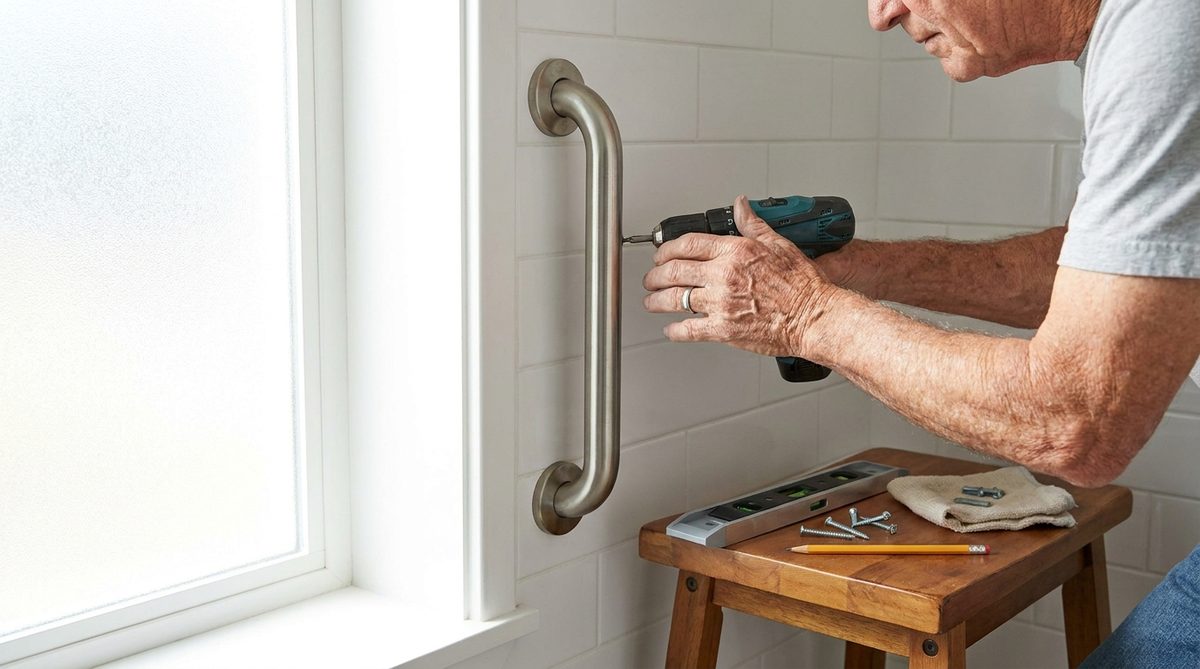
Grab bars in the bathroom. This single addition prevents more injuries than almost any other home modification. Professional installation costs $100–$300 per bar, and most bathrooms need two to four.
Improved lighting. Poor lighting is a silent contributor to falls. Motion-activated LED lights in hallways, staircases, and bathrooms cost under $50 each and can be installed without an electrician.
Non-slip surfaces. Replacing slick bath mats, adding textured strips to stairs, and applying anti-slip coatings to tile floors costs a few hundred dollars total.
Lever-style door handles and faucets. Round knobs become difficult to grip with arthritis. Swapping to lever handles is a $20-per-door upgrade that makes a daily difference.
Stair railings on both sides. If your staircase only has one railing, adding a second one costs $200–$600 and dramatically improves stability.
None of these changes require permits, contractors, or weeks of construction. What’s most often observed is that people conflate “aging in place preparation” with “major home renovation” and use the perceived hassle as an excuse to do nothing. That inaction is far more dangerous than any staircase.
Myth #3: Technology Is Too Complicated for Seniors to Use
This myth deserves particular attention, because it’s rooted in a stereotype that doesn’t hold up. Adults over 65 are the fastest-growing demographic of smartphone users in the U.S. A 2024 Pew Research study found that 76% of Americans aged 65 and older now own a smartphone, up from just 18% in 2013.
The age-tech industry has responded to this shift with products specifically designed for intuitive use. Medical alert systems no longer look like clunky pendants from a 1990s infomercial. Today’s devices are sleek wearables that detect falls automatically, monitor heart rate, and connect to emergency services with GPS precision.
Smart speakers like Amazon Echo and Google Nest have become surprisingly powerful aging-in-place tools. They can remind you to take medication, call family members hands-free, control thermostats and lights, and even detect unusual sounds like smoke alarms or glass breaking. Setup takes under 15 minutes.
For a deeper look at how these technologies are evolving, check out 5 Myths About Age Tech That Stop Seniors From Aging in Place. The landscape is changing faster than most people realize.
Practical Tech for Every Comfort Level
If you’re tech-hesitant, start small. A single smart plug that turns a lamp on and off by voice command costs $12 and takes three minutes to set up. Once you experience that convenience, the resistance tends to evaporate. The key: you don’t need to become a tech expert. You just need one device that solves one problem. The rest follows naturally.
For those who are more adventurous, video doorbells, robotic vacuums, and app-connected pill dispensers add layers of safety and convenience that genuinely extend independent living by years.

Myth #4: Aging in Place Means Aging in Isolation
This is the argument that carries the most emotional weight, and the concern is understandable. Social isolation is a legitimate health risk. The U.S. Surgeon General’s 2023 advisory on loneliness called it an epidemic, comparing its health effects to smoking 15 cigarettes a day. Family members rightfully worry that a parent living alone will become disconnected.
But here’s what the data actually shows: moving to a facility doesn’t automatically solve loneliness, and staying home doesn’t automatically cause it. A 2023 study published in the Journal of the American Geriatrics Society found that seniors who moved to assisted living reported similar or even higher rates of loneliness compared to those who aged in place with community support.
“Loneliness isn’t about where you live—it’s about whether you have meaningful connections. A senior with two close friends and a weekly volunteer commitment at home is far less isolated than someone surrounded by strangers in a facility dining room.”
The key phrase is “with community support.” Aging in place works best when it’s paired with intentional social engagement. That means maintaining hobbies, joining local groups, volunteering, and using technology to stay in touch with family. If you’re looking for ideas on staying active and connected, 7 Myths About Hobbies for Seniors That Hold Retirees Back is a great starting point.
Building Your Social Infrastructure at Home
Think of social connection as something you build, not something that happens to you. Here are strategies that work:
Village-to-village networks. These are grassroots, membership-based organizations that connect older adults in a neighborhood for mutual support—rides to appointments, shared meals, social outings. There are now over 350 such networks across the U.S.
Senior centers and community colleges. Many offer free or low-cost classes, from art to fitness to language learning. The structured schedule creates natural social rhythms.
Faith communities and volunteer organizations. Regular participation in a group with shared purpose is one of the strongest predictors of well-being in older adults.
Scheduled video calls. A weekly FaceTime with grandchildren or a monthly Zoom book club creates reliable touchpoints that combat the drift of isolation.
Myth #5: You Should Wait Until You “Need” to Make Changes
This one is quietly the most dangerous myth on the list. Dozens of older adults have shared some version of the same story: “I was fine until I wasn’t.” A fall. A sudden illness. A winter storm that made the front steps impassable. The crisis hits, and suddenly you’re making rushed decisions from a hospital bed instead of thoughtful choices from your kitchen table.
The best time to prepare your home for aging in place is before you need to. Ideally, start in your 50s or early 60s, when modifications feel like upgrades rather than concessions. A walk-in shower isn’t just safer—it’s a luxury. A main-floor bedroom isn’t just practical—it’s convenient. Reframing these changes as lifestyle improvements rather than medical necessities removes the psychological barrier that keeps people from acting.
A Timeline for Smart Preparation
- Ages 50–55: Get a professional home assessment. Identify your home’s strengths and weaknesses for long-term living. Start a dedicated savings fund for modifications.
- Ages 55–60: Complete bathroom upgrades and improve lighting throughout the house. Research smart home devices and begin integrating the ones that appeal to you.
- Ages 60–65: Address accessibility—first-floor living options, wider pathways, exterior ramp or zero-step entry if needed. Build relationships with local in-home care providers so you have options if the need arises.
- Ages 65–70: Formalize your plan. Discuss preferences with family. Set up a network of neighbors, friends, or village members who can provide casual check-ins.
- Ages 70+: Reassess annually. Needs evolve, and the plan should evolve with them. What worked at 70 may need adjustment at 78.
Research consistently shows that proactive planners maintain independence longer than reactive ones. As we covered in New Study Says Aging Doesn’t Mean Decline—Here’s Proof, aging well isn’t about luck—it’s about strategy.
Myth #6: Aging in Place Is Bad for the Environment
This one surprises people, but it’s been raised in online forums and even by financial advisors who advocate downsizing. The assumption is that maintaining a full-sized home as a senior is wasteful—too much space, too much energy, too much maintenance.
The reality is the opposite. A 2024 analysis from Better Homes & Gardens highlighted that aging in place is actually one of the greenest housing choices an older adult can make. Building a new assisted living facility requires enormous amounts of concrete, steel, and energy. Moving to a new, smaller home generates construction waste, transportation emissions, and the carbon cost of furnishing a new space.
Staying in an existing home—especially one you’ve already maintained and updated with energy-efficient windows, insulation, or appliances—keeps your carbon footprint remarkably low. Add solar panels or a smart thermostat, and you’re living more sustainably than most new construction residents.
For seniors who care about environmental legacy—and their numbers are growing—this is a compelling and underappreciated argument for staying put.
Myth #7: Medicare or Insurance Will Cover Everything if You Move to a Facility
This is perhaps the most financially dangerous misconception. Many families assume that if a parent moves to assisted living or a nursing home, Medicare will foot the bill. It won’t—at least not in the way most people expect.
Medicare covers short-term skilled nursing care after a qualifying hospital stay (up to 100 days, with copays starting on day 21). It does not cover long-term assisted living. Medicaid may cover nursing home costs, but only after you’ve spent down nearly all of your assets—a process that can devastate a surviving spouse’s finances.
Long-term care insurance helps, but only about 7.5 million Americans currently hold such policies, according to the American Association for Long-Term Care Insurance. Premiums have risen sharply, and many people over 65 find themselves either priced out or unable to qualify due to health conditions.
Aging in place, by contrast, allows you to control costs incrementally. You choose which modifications to make and when. You hire in-home help only as needed. You maintain ownership of your largest asset—your home—which can be leveraged through a reverse mortgage or sold later if circumstances change. If you’re concerned about protecting your retirement finances, Inflation Depleting Retirement Savings: How to Protect Yours offers strategies worth reviewing.
The Bottom Line: Aging in Place Is a Plan, Not a Default
Here’s what you should take away from this piece. Aging in place isn’t about stubbornly refusing to leave your house. It’s not about denial or avoidance. Done right, it’s a deliberate, well-funded, socially connected strategy for maintaining the independence, dignity, and quality of life you’ve earned.
The myths we’ve covered—that it’s too expensive, that your home needs a complete overhaul, that technology is too complex, that you’ll end up lonely, that you should wait, that it’s wasteful, that facilities are financially safer—are all either outdated or flat-out wrong. They persist because change is scary and because the senior living industry has a $475 billion annual incentive to keep you believing them.
Start with a home assessment. Make one modification this month. Set up one piece of smart home technology. Call one friend you haven’t spoken to in a while. These small steps compound into something powerful: a life lived on your own terms, in your own home, for as long as you choose.
That’s not a myth. That’s a plan.