

Key Takeaways
- Most homes can be modified for aging in place for far less than the cost of assisted living, often starting under $2,000.
- Aging in place doesn't mean aging alone — technology, community programs, and smart design can keep you connected and safe.
- Waiting until after a fall or health crisis to modify your home is the most expensive and dangerous mistake seniors make.
- A successful aging in place plan addresses not just physical accessibility but also nutrition, social engagement, and fraud prevention.
The Dangerous Gap Between What People Believe and What Actually Works
Nearly 90% of adults over 65 say they want to remain in their current home as they age, according to AARP‘s 2024 Home and Community Preferences Survey. That number has barely budged in a decade. What has changed — dramatically — is how much misinformation now surrounds the topic of aging in place.
In my 14 years as a Certified Aging-in-Place Specialist, I’ve walked through hundreds of homes with clients who were either paralyzed by myths or had already made costly mistakes based on outdated beliefs. The consequences aren’t abstract. A misplaced assumption about grab bars, a stubborn refusal to modify a staircase, or a misunderstanding about what Medicare covers can result in a fall, a hospitalization, or an unnecessary move to a facility.
This article isn’t a gentle overview. It’s a myth-busting guide built on what I see in the field every week — the five most persistent aging in place myths that put seniors’ safety, finances, and independence at real risk.
Myth #1: Aging in Place Is Only for People Who Can’t Afford Assisted Living
This is the myth I encounter most often, and it drives me up the wall. There’s a persistent cultural assumption that staying home is a consolation prize — the option you settle for because you can’t afford a “nice” retirement community. The truth is exactly the opposite for the vast majority of older adults.
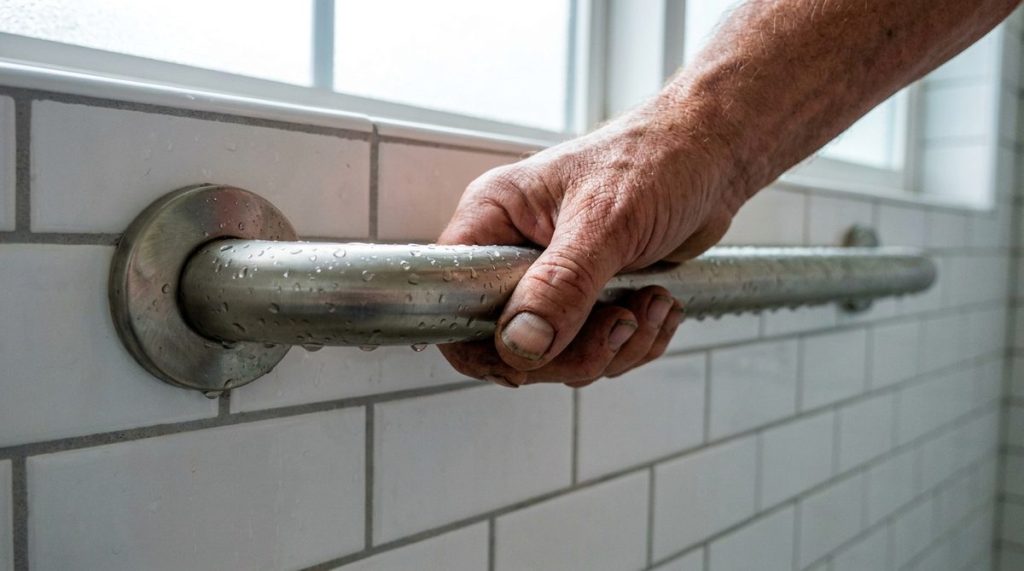
The median annual cost of assisted living in the United States hit $64,200 in 2024, according to Genworth’s Cost of Care Survey. A private room in a nursing home now averages over $108,000 per year. Compare that with comprehensive home modifications — grab bars, a curbless shower, lever-handle hardware, improved lighting, and a stair lift — which typically run between $5,000 and $25,000 as a one-time investment.
I often tell my clients: aging in place isn’t the budget option. It’s the strategic option. You’re investing in an asset you already own, in a community where you already have relationships, using resources you can control. That’s not cutting corners — that’s smart planning.
The Real Cost Comparison
When I sit down with families, I walk through a basic five-year projection. Even if you factor in part-time home health aide visits (averaging $30/hour nationally), home-delivered meals, and a robust set of modifications, the total rarely approaches a single year of facility-based care. For a detailed breakdown of affordable modifications, check out How to Set Up Your Home to Age in Place: A Step-by-Step Guide.
The financial myth persists partly because the senior living industry spends billions marketing its services. There’s nothing wrong with assisted living for those who need or want it. But framing aging in place as the lesser option is factually wrong and financially misleading.
Myth #2: You Should Wait Until You “Need” Modifications to Make Them
This is the myth that sends the most people to the emergency room. The logic sounds reasonable on the surface: “I’m fine right now, so why spend money on grab bars and ramps I don’t need yet?” The problem is that falls don’t send a calendar invite.
The National Council on Aging reports that one in four Americans aged 65 and older falls each year, and falls are the leading cause of fatal and non-fatal injuries in that age group. The CDC estimates that fall-related medical costs exceeded $50 billion in 2023. What I see most often is a family scrambling to make modifications after a parent breaks a hip — at which point the changes are urgent, the options are limited, and the costs are inflated by emergency timelines.
The Preventive Approach Saves Everything
Installing a grab bar before you need it costs about $150, including professional installation. Installing one after a hospital discharge, when you need a contractor available within 48 hours and potentially need to reconfigure the bathroom simultaneously? That can run $800 to $2,000, not counting the hospital bill that preceded it.
I recommend what I call the “decade-ahead” rule: modify your home for the person you’ll be in 10 years, not the person you are today. If you’re 58 and healthy, that means thinking about lighting, flooring transitions, and bathroom safety now. If you’re 68, it means evaluating stair access, kitchen ergonomics, and entry points before any of them become crisis points.
- Replace round doorknobs with lever handles — easier to operate with arthritic hands and costs under $15 per door
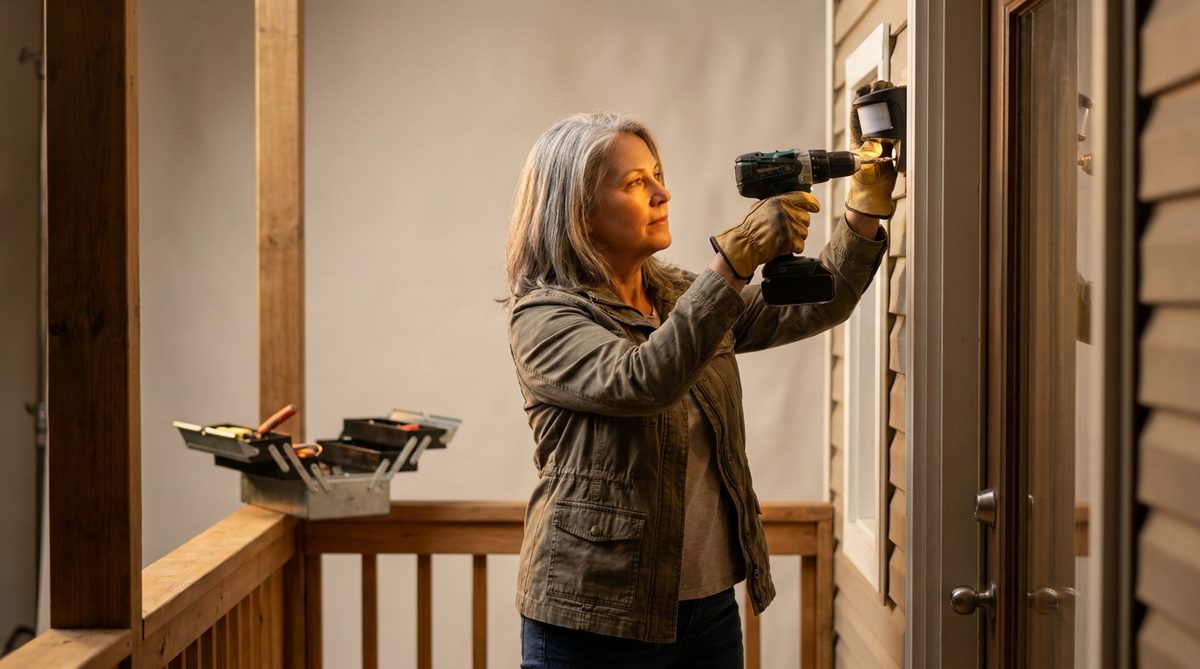
- Add motion-sensor lighting along hallways and staircases — eliminates fumbling for switches at night
- Remove throw rugs or secure them with non-slip backing — throw rugs are involved in a staggering number of in-home falls
- Install a second handrail on staircases — most building codes only require one, but two provides vastly more stability
- Raise toilet seat height with a simple riser — reduces strain on knees and hips for under $40
None of these modifications require a renovation. All of them reduce risk immediately. And every single one is cheaper done proactively than reactively.
Myth #3: Aging in Place Means Aging Alone
This might be the most emotionally damaging myth on the list. Families — especially adult children — often resist the idea of a parent staying home because they equate it with isolation. “Mom will be all alone in that big house.” It’s a valid concern expressed through an invalid assumption.
Social isolation is a real health risk. The National Institute on Aging has linked prolonged loneliness to increased risks of dementia, heart disease, stroke, and depression. But the solution to isolation isn’t relocation to a facility — it’s intentional connection, regardless of where you live.
Technology Has Changed the Equation
When I started in this field in 2011, the technology available for aging in place was limited to medical alert pendants and maybe a basic video call setup. Today, the landscape is unrecognizable. Smart home sensors can detect unusual movement patterns and alert family members. Telehealth platforms connect seniors with physicians without leaving the living room. Video doorbells and smart locks allow trusted visitors while keeping out strangers.
And the connection tools go beyond safety. Tablet-based programs like GrandPad and apps designed for older adults make daily video calls, photo sharing, and even multiplayer games effortless. I’ve seen clients who moved from near-total isolation to daily contact with grandchildren, church groups, and old friends — all without leaving home. For more on how technology supports seniors specifically around safety concerns, How Technology Helps Older Adults Stay Safe From Fraud is an excellent resource.
Community Programs Most People Don’t Know About
Beyond technology, most metro and suburban areas now have robust programs specifically designed to combat senior isolation. Area Agencies on Aging coordinate meal delivery programs that include wellness check-ins. Many libraries offer homebound delivery services and virtual book clubs. Villages — member-driven, neighborhood-based organizations — connect aging-in-place residents with volunteers for rides, home repairs, and companionship.
Aging in place without a social plan is risky. Aging in place with one is often more socially rich than life in a facility where you didn’t choose your neighbors.
Myth #4: Your Home Needs a Complete Renovation to Be Safe
The home renovation industry has a vested interest in making you believe that aging in place requires a $50,000 gut job. And look — some homes do need significant work. A 1920s Colonial with steep stairs, narrow doorways, and a bathtub-only second floor presents real challenges. But the idea that every home needs a massive overhaul is simply not true.
In my experience, about 70% of the homes I assess can be made substantially safer with modifications costing under $3,000. The remaining 30% usually need one major project — typically a bathroom conversion or a first-floor bedroom addition — but even those rarely approach the costs people fear.
The High-Impact, Low-Cost Changes
What surprises most of my clients is how much safety improvement comes from inexpensive, unglamorous changes. Better lighting alone — not fancy fixtures, just higher-wattage LED bulbs and strategically placed nightlights — can reduce fall risk significantly. Contrast striping on stair edges costs pennies and makes each step visible to aging eyes. A handheld showerhead with a slide bar costs under $50 and transforms bathing safety.
The modifications that matter most aren’t the ones that look impressive on a home renovation show. They’re the ones that address how a human body actually moves through a space as it ages — wider turning radii, reduced bending, fewer transitions between floor surfaces, and consistent lighting levels from room to room.
If you’re working within a budget, prioritize the bathroom first (where the majority of in-home injuries occur), then the bedroom-to-bathroom path, then entryways. Kitchen modifications, while valuable, can often wait unless there are specific mobility issues. And keeping your nutrition on track while aging at home is its own important challenge — 7 Nutrition Tips for a Healthy Senior Lifestyle This Summer offers practical guidance on that front.
Myth #5: Medicare or Insurance Will Cover Everything You Need
I wish this were true. I genuinely do. But the gap between what people assume Medicare covers for aging in place and what it actually covers is one of the widest misconception gaps I encounter.
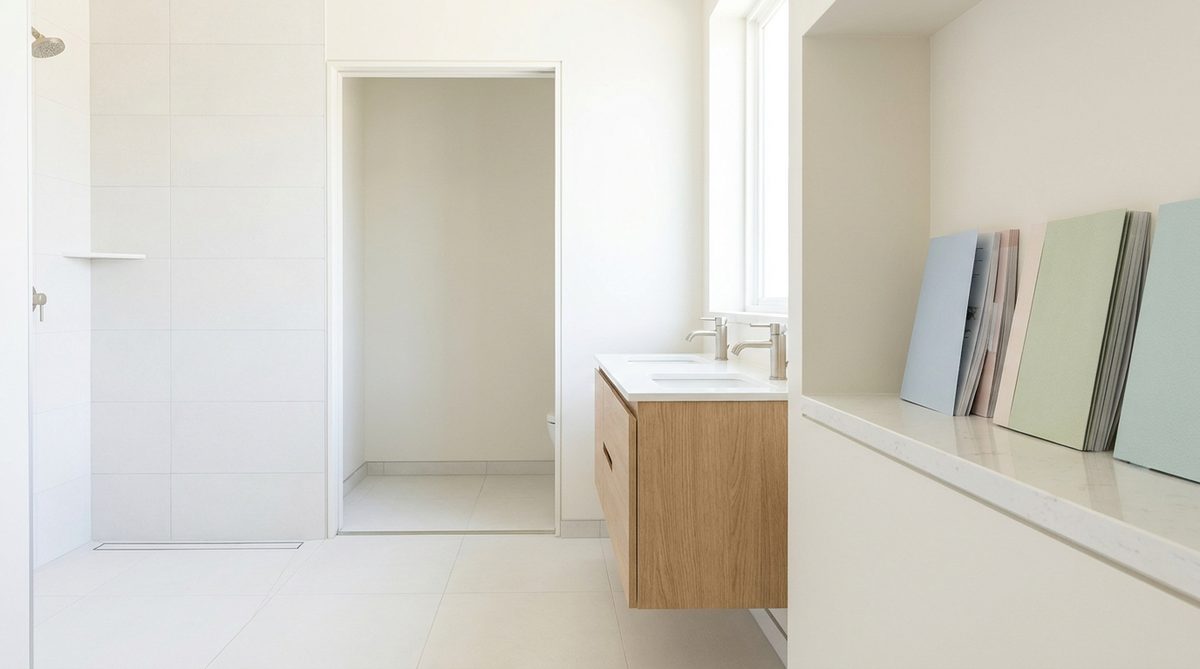
Traditional Medicare (Parts A and B) does not cover home modifications. Period. It doesn’t pay for grab bars, ramp installations, stair lifts, walk-in tubs, or widened doorways. It will cover some durable medical equipment — like a hospital bed or wheelchair — if a physician prescribes it, but the structural changes to your home that make aging in place feasible? Those come out of pocket.
What Actually Helps Financially
There are legitimate funding sources, but you have to know where to look:
- Medicaid Home and Community-Based Services (HCBS) waivers — available in most states for qualifying low-income seniors, these can cover some modifications and in-home care
- Veterans Affairs grants — the VA offers the SHA (Specially Adapted Housing) and SAH grants, as well as the HISA (Home Improvements and Structural Alterations) grant for eligible veterans
- USDA Rural Development loans — available for homeowners 62+ in rural areas, offering grants up to $10,000 for home repairs and modifications
- State and local programs — many states run their own home modification assistance programs through Area Agencies on Aging; availability varies significantly by location
- Medicare Advantage plans — some MA plans have begun including limited home modification benefits as supplemental coverage, though these tend to be modest (often $1,000–$3,000 lifetime caps)
The critical point is this: none of these resources find you. You have to seek them out, apply, and often navigate waiting lists. Starting this process early — before you urgently need modifications — gives you the time to access programs that can meaningfully offset costs. And while you’re reviewing your financial picture, understanding how your income decisions affect Medicare premiums matters too. How Retirees Can Avoid Higher Medicare IRMAA Premiums in 2026 covers that side of the equation.
The Myth Underneath All the Myths: That Aging in Place Is Passive
If there’s a single thread running through all five of these myths, it’s the assumption that aging in place means simply staying put and hoping for the best. That couldn’t be more wrong. Successful aging in place is an active, ongoing process. It requires assessment, planning, investment, and adaptation over time.
The homeowners I’ve worked with who thrive — and I mean genuinely thrive, not just survive — in their homes as they age are the ones who treat their living environment as a dynamic system. They reassess annually. They adopt new technologies as they emerge. They build social infrastructure intentionally. They don’t wait for a crisis to act.
A Realistic Timeline for Planning
Based on what I’ve seen work best across hundreds of clients, here’s a general framework for when to address different aspects of aging in place:
- Ages 50–60: Assessment phase — have a CAPS professional evaluate your home, research funding options, make low-cost lighting and flooring changes
- Ages 60–70: Major modification phase — address bathroom safety, entryway accessibility, and first-floor living capability if your bedroom is upstairs
- Ages 70–80: Technology and support phase — integrate smart home monitoring, establish relationships with in-home care providers, connect with local aging-in-place community programs
- Ages 80+: Reassessment phase — evaluate whether current setup still matches your needs, adjust care levels, consider whether a move has become genuinely necessary
These aren’t rigid categories. Someone with early-onset mobility challenges might accelerate the timeline. Someone in excellent health at 80 might still be in the technology phase. The point is that aging in place has phases, and each one benefits from proactive rather than reactive planning.
The Bottom Line: Your Home Can Work for You If You Let It
The American housing stock was largely not built with aging in mind. Only about 10% of homes in the U.S. have accessibility features that would qualify as “aging-ready,” according to a 2024 Joint Center for Housing Studies report from Harvard. That’s a real problem — but it’s a solvable one.
The myths I’ve outlined here — that aging in place is a budget fallback, that you should wait to modify, that it means isolation, that it requires a fortune, and that insurance handles it — collectively form a barrier that keeps millions of older Americans from taking the steps that would let them stay safely in the homes they love.
Aging in place isn’t a fantasy. It’s an engineering problem with known solutions. The question isn’t whether your home can support you as you age. The question is whether you’ll start making it happen before a crisis forces your hand.
In my experience, the people who act early almost always stay home longer, spend less, and report higher satisfaction with their living situation. The people who wait almost always wish they hadn’t.
Don’t let a myth make that decision for you.
Frequently Asked Questions
How much does it really cost to modify a home for aging in place?
Most homes can be made significantly safer for $1,500 to $5,000, covering grab bars, improved lighting, lever-handle hardware, non-slip flooring, and bathroom modifications. Major projects like curbless showers or stair lifts can add $3,000 to $15,000, but even comprehensive modifications typically cost far less than a single year of assisted living, which averaged $64,200 nationally in 2024.
Does Medicare pay for home modifications like grab bars or ramps?
Traditional Medicare (Parts A and B) does not cover home modifications such as grab bars, ramps, stair lifts, or walk-in tubs. Some Medicare Advantage plans offer limited home modification benefits, typically with lifetime caps of $1,000 to $3,000. Other funding sources include Medicaid HCBS waivers, VA grants for eligible veterans, and USDA Rural Development loans for homeowners 62 and older in rural areas.
When should I start making home modifications for aging in place?
The ideal time to begin is in your 50s or early 60s, well before any health crisis or mobility limitation arises. Starting early allows you to make changes affordably on your own timeline, access financial assistance programs without urgency, and prevent falls and injuries rather than react to them. A Certified Aging-in-Place Specialist (CAPS) can conduct a home assessment to help you prioritize modifications based on your specific layout and needs.
About Marcus Bell, Certified Aging-in-Place Specialist (CAPS)
Marcus Bell is a Certified Aging-in-Place Specialist (CAPS) with 14 years of experience helping American seniors create safer, more comfortable living environments. He has consulted on hundreds of home modifications — from bathroom safety upgrades to smart home installations — and writes extensively about the products, services, and strategies that help older adults live independently for longer. At Daily Trends Now, Marcus covers home improvement, aging-in-place solutions, gardening, and practical lifestyle tips for seniors.