


We’ve Been Telling Seniors the Wrong Story About Aging
For decades, the prevailing narrative about growing older has sounded like a slow-motion catastrophe: your body breaks down, your mind fades, your metabolism grinds to a halt, and the best you can do is manage the decline. I’ve heard this defeatist script repeated in doctor’s offices, at family dinner tables, and even in the questions my own clients ask me during consultations.
But here’s the truth that 15 years of clinical nutrition practice and a growing body of peer-reviewed research have taught me: aging and decline are not synonymous. A landmark 2024 study published in JAMA Network Open, tracking over 180,000 adults aged 51 and older across 20 years, found that nearly 20 percent of participants actually improved in physical function over time—not just maintained, but got better. That finding should reshape how every person over 50 thinks about their future.
The problem isn’t aging itself. The problem is the myths we’ve accepted as gospel—myths that lead to passivity, poor dietary choices, unnecessary medical interventions, and a resignation that robs people of their best decades. As a registered dietitian and nutritional scientist, I want to dismantle the five most damaging of these myths with hard evidence and practical guidance you can use starting today.
Myth #1: “Your Metabolism Slows Dramatically After 50, So Weight Gain Is Inevitable”
What Most People Believe
This is arguably the most pervasive myth I encounter. Clients in their 60s sit across from me, resigned, saying, “My metabolism has crashed—there’s nothing I can do.” The assumption is that once you pass 50, your body burns far fewer calories, and weight gain is a biological inevitability.
What the Science Actually Shows
A groundbreaking 2021 study published in Science by Pontzer et al. analyzed metabolic data from over 6,400 people ranging from 8 days old to 95 years old. The finding stunned even the research community: metabolic rate holds remarkably steady from ages 20 to 60, declining only about 0.7 percent per year after that. Between ages 60 and 90, the total decline is roughly 20 percent—far less dramatic than the “metabolism cliff” most people imagine.
So what’s actually happening? The real culprit is the gradual loss of lean muscle mass—a condition called sarcopenia—which reduces the number of metabolically active tissue in your body. The National Institute on Aging estimates that adults lose 3 to 5 percent of their muscle mass per decade after age 30, but this process accelerates after 60 if you remain sedentary.
Here’s the empowering flip side: sarcopenia is not destiny. Resistance training, even modest amounts two to three times per week, can reverse muscle loss in older adults. A 2019 meta-analysis in Medicine & Science in Sports & Exercise showed that adults aged 65 and older who engaged in progressive resistance training gained an average of 1.1 kg of lean mass over 12 to 20 weeks.
What I Tell My Clients
I often tell my clients that the “metabolism excuse” is the single biggest barrier to reclaiming their health after 50. Instead of slashing calories—which can actually accelerate muscle loss—I focus on protein timing and adequacy. Current evidence suggests adults over 50 need at least 1.0 to 1.2 grams of protein per kilogram of body weight daily, compared to the general recommendation of 0.8 g/kg. For a 160-pound person, that’s roughly 73 to 87 grams of protein per day, distributed across meals.
If you’re looking for a broader framework of daily habits that support this approach, I recommend reading 6 Healthy Habits for Aging Well in Your 60s, 70s and Beyond.

Myth #2: “Older Adults Need Less Nutrition Because They’re Less Active”
The Dangerous Half-Truth
Yes, caloric needs may decrease slightly with age—approximately 200 fewer calories per day for sedentary adults over 60 compared to their 30-year-old selves, according to the Mayo Clinic. But here’s the critically important nuance that gets lost: while calorie needs dip modestly, nutrient needs often increase.
This is what I call the “nutrition density gap,” and it’s one of the most underappreciated challenges in geriatric nutrition. Older adults need more of several key micronutrients at the exact time they tend to eat less food overall.
Where the Real Deficiencies Hide
The CDC reports that over 90 percent of Americans fail to meet recommended fruit and vegetable intakes, but the consequences are magnified after 50. Here are the nutrients I see most frequently lacking in my older clients:
- Vitamin D: The skin’s ability to synthesize vitamin D from sunlight drops by roughly 50 percent between ages 20 and 70. The recommended intake jumps from 600 IU to 800 IU daily after age 70, but many clinicians now advocate for 1,000–2,000 IU based on blood levels.
- Vitamin B12: Up to 30 percent of adults over 50 have reduced stomach acid, which impairs B12 absorption from food. Deficiency mimics dementia symptoms—fatigue, confusion, memory problems—and is frequently misdiagnosed.
- Calcium: Requirements increase to 1,200 mg/day for women over 51 and men over 71, yet the average American adult consumes only about 900 mg.
- Potassium: Adequate intake (2,600–3,400 mg/day) supports blood pressure regulation, but fewer than 2 percent of Americans meet this target.
- Fiber: The recommended 21–30 grams daily helps manage cholesterol, blood sugar, and gut health, yet average intake hovers around 15 grams.
The Practical Fix
I don’t tell my clients to eat more food—I tell them to eat more strategically. Every meal should earn its place. A breakfast of white toast and juice can be transformed into scrambled eggs with spinach and a small portion of berries for roughly the same calories but dramatically more protein, fiber, vitamin K, and antioxidants.
| Nutrient | Adults Under 50 | Adults Over 50 | Common Deficiency Risk |
|---|---|---|---|
| Protein | 0.8 g/kg/day | 1.0–1.2 g/kg/day | Moderate (increases with age) |
| Vitamin D | 600 IU/day | 800–2,000 IU/day | High (especially in northern states) |
| Vitamin B12 | 2.4 mcg/day | 2.4 mcg/day (supplement form preferred) | High (30% have impaired absorption) |
| Calcium | 1,000 mg/day | 1,200 mg/day (women 51+, men 71+) | Moderate |
| Fiber | 25–34 g/day | 21–30 g/day | Very high (avg intake ~15 g) |
| Potassium | 2,600–3,400 mg/day | 2,600–3,400 mg/day | Very high (<2% meet goal) |
Myth #3: “Cognitive Decline Is an Unstoppable Part of Getting Older”
The Fear That Shapes Behavior
In my experience, no myth causes more anxiety among adults over 50 than the belief that mental sharpness will inevitably fade. Every forgotten name or misplaced key becomes evidence of a terrifying trajectory. But the data paints a far more nuanced picture.
What Neuroscience Has Learned Recently
Research from the recent longitudinal studies on aging populations demonstrates that while processing speed may slow after 60, other cognitive domains—vocabulary, general knowledge, emotional regulation, and pattern recognition—often remain stable or even improve well into the 70s and 80s.
A 2023 study from Columbia University found that healthy older adults continue to generate new neurons in the hippocampus (the brain’s memory center) at rates that surprised researchers. The key word there is “healthy.” The study subjects who maintained neurogenesis shared several lifestyle characteristics: regular physical activity, a nutrient-dense diet, strong social connections, and adequate sleep.
Nutrition’s Role in Brain Health
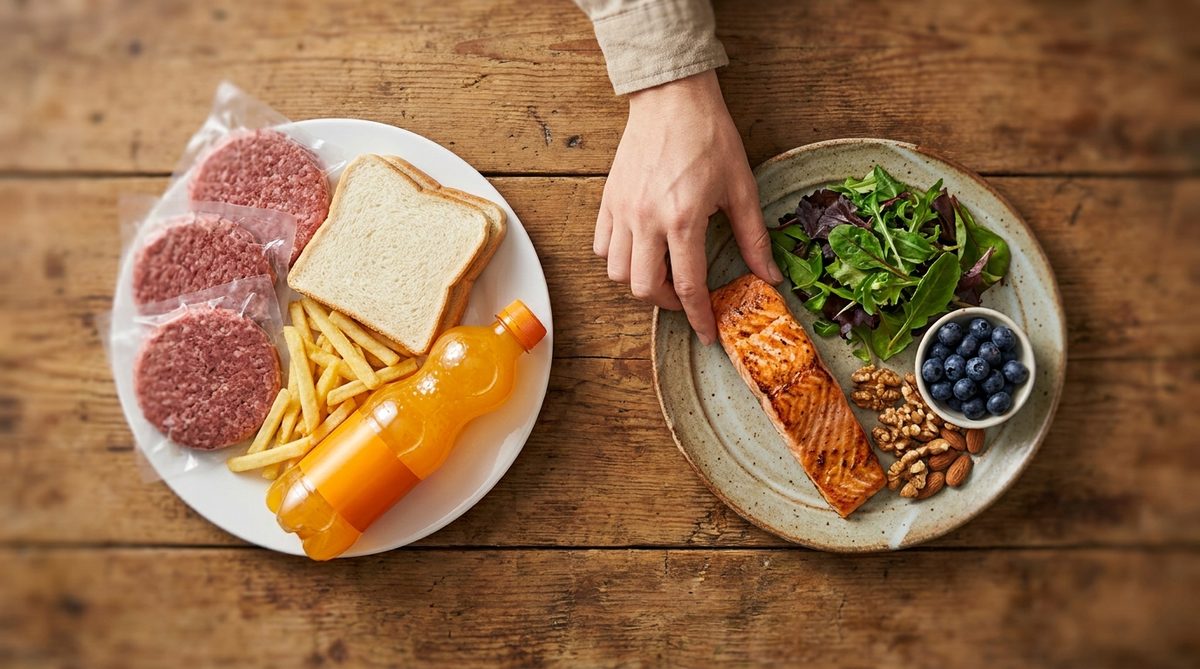
The MIND diet—a hybrid of Mediterranean and DASH eating patterns—has been associated with a 53 percent reduced risk of Alzheimer’s disease in those who follow it rigorously, according to data from Rush University. The diet emphasizes:
- Leafy greens: at least 6 servings per week
- Berries: at least 2 servings per week (blueberries specifically studied)
- Nuts: 5 servings per week
- Fatty fish: at least 1 serving per week
- Olive oil as the primary cooking fat
- Limited red meat, butter, cheese, pastries, and fried food
What I see most often is that my clients think “brain health” requires exotic supplements or expensive nootropics. In reality, the most powerful neuroprotective interventions are dietary patterns, physical movement, and sleep—all within your control and budget.
Myth #4: “If You Haven’t Exercised in Years, It’s Too Late to Start”
The “Damage Is Done” Fallacy
I can’t count how many times a new client in their late 60s or 70s has told me, “I haven’t exercised in 20 years—starting now wouldn’t make a difference.” This belief is not just wrong; it’s dangerously wrong. And it keeps people sedentary during the exact years when movement matters most.
The Evidence Is Unequivocal
A 2019 study published in Frontiers in Physiology examined adults aged 60 to 80 who had never consistently exercised. After just 6 weeks of supervised resistance training, participants showed measurable increases in muscle mass, strength, and functional capacity. Some gains were comparable to those seen in much younger populations.
The National Institute on Aging recommends that older adults aim for at least 150 minutes of moderate-intensity aerobic activity per week, plus muscle-strengthening activities on two or more days. But even 10-minute bouts of walking confer meaningful cardiovascular benefits, according to their 2024 guidelines update.
One of the most compelling statistics I share with hesitant clients: a 2022 British Journal of Sports Medicine meta-analysis found that previously inactive adults over 60 who adopted regular exercise reduced their all-cause mortality risk by 28 to 35 percent within 3 to 5 years. That’s a return on investment no financial portfolio can match.
Practical Starting Points
The biggest mistake I see is the all-or-nothing approach. You don’t need a gym membership or a personal trainer to begin. Here’s what I recommend for clients who haven’t been active:
- Week 1–2: Two 10-minute walks daily, plus bodyweight squats using a chair for support (2 sets of 8)
- Week 3–4: Increase walks to 15 minutes, add resistance bands for upper body exercises
- Week 5 onward: Build toward 30-minute continuous walks and structured resistance work 2–3 times weekly
Of course, exercise requires energy—and if finances are tight, nutrition can suffer. Many retirees don’t realize how much their health budget is squeezed by rising premiums and hidden costs. If you’re feeling that pinch, it’s worth understanding whether your Medicare Part B premium is eating your Social Security raise.
Myth #5: “Aging in Place Is Only About Physical Modifications to Your Home”
The Incomplete Picture
When most people think about aging in place—remaining in your own home safely as you grow older—they think about grab bars, walk-in showers, and stairlifts. Those modifications matter, absolutely. But in my work with older clients managing chronic conditions like diabetes, hypertension, or osteoporosis, I’ve learned that the invisible infrastructure of aging in place is just as critical.
Nutritional Independence Is Non-Negotiable
One of the most overlooked threats to aging in place is the gradual erosion of nutritional self-sufficiency. A 2023 Administration for Community Living report found that nearly 1 in 4 adults over 60 living alone skip meals regularly—not because of financial hardship alone, but due to fatigue, diminished appetite, limited mobility for grocery shopping, or simply not wanting to cook for one person.
This leads to what geriatricians call “anorexia of aging”—a progressive loss of appetite that results in unintentional weight loss, frailty, and increased fall risk. Falls remain the leading cause of injury-related death in adults 65 and older, according to the CDC, and malnutrition doubles the risk of falling.
What I tell my clients is this: your ability to feed yourself well is as essential to aging in place as any bathroom renovation. Meal delivery services, community nutrition programs (like those funded through the Older Americans Act), and even strategic use of frozen vegetables and canned proteins can make the difference between thriving at home and a preventable hospitalization.
For a deeper look at the financial side of staying independent, including costs many retirees overlook, see 8 Aging in Place Costs That Surprise Most Retirees.
The Bigger Picture: Aging and Decline Are Not the Same Thing
Every myth I’ve addressed shares a common thread—the assumption that aging is a passive experience, something that happens to you rather than something you actively shape. The emerging science tells a fundamentally different story.
The 2024 longitudinal data showing that nearly one in five older adults improved over time isn’t an anomaly. It reflects what happens when people maintain purposeful habits around nutrition, movement, social connection, and preventive care. These aren’t extraordinary people with extraordinary genetics. They’re people who rejected the myth of inevitable decline and made consistent, evidence-based choices.
Three Principles I Come Back to Again and Again
- Nutrient density over calorie restriction: Eat fewer empty calories, but more nutrients per bite. Prioritize protein, colorful produce, healthy fats, and fiber at every meal.
- Movement as medicine: Any movement is better than none. Resistance training is non-negotiable for preserving independence. Walking is underrated and profoundly effective.
- Proactive monitoring over reactive treatment: Don’t wait for a crisis. Track your vitamin D levels, get your B12 checked, discuss your protein intake with a dietitian—not just your physician.
Rewriting Your Own Aging Story
After 15 years of working with adults navigating life after 50, I can tell you with certainty that the most transformative moment for many of my clients is when they stop believing the myths. When a 72-year-old discovers she can still build muscle. When a 68-year-old man with type 2 diabetes realizes that strategic nutrition changes—not just medication—can meaningfully improve his A1C. When a couple in their late 70s starts walking together daily and finds their energy, sleep, and mood all improve within weeks.
These aren’t miracles. They’re the predictable outcomes of replacing misinformation with evidence and passivity with action.
The science is clear: aging and decline are not interchangeable terms. Decline is influenced by what you eat, how you move, what you believe, and whether you have access to accurate information. You’re reading this, which means you’ve already taken the first step. Now it’s time to take the next one.
Frequently Asked Questions
At what age does metabolism actually start to slow down?
According to a large-scale 2021 study published in Science, metabolism remains relatively stable from ages 20 to 60, declining only about 0.7 percent per year after 60. The perceived slowdown earlier in life is more likely due to muscle loss from inactivity than a true metabolic shift.
How much protein do adults over 50 really need each day?
Current research supports 1.0 to 1.2 grams of protein per kilogram of body weight daily for adults over 50, which is higher than the standard 0.8 g/kg recommendation. For a 160-pound person, that translates to roughly 73 to 87 grams per day, ideally spread across all meals.
Can you still build muscle in your 60s and 70s?
Yes. Studies show that adults aged 60 to 80 who begin resistance training can gain measurable muscle mass and strength in as little as 6 weeks. The key is progressive resistance training performed at least two to three times per week, combined with adequate protein intake.
What is the MIND diet and does it really help prevent dementia?
The MIND diet combines elements of the Mediterranean and DASH diets, emphasizing leafy greens, berries, nuts, fish, and olive oil while limiting red meat, butter, and processed foods. Research from Rush University found that strict adherence was associated with a 53 percent lower risk of Alzheimer's disease.
What are the most common nutritional deficiencies in older adults?
The most frequently seen deficiencies in adults over 50 include vitamin D (due to reduced skin synthesis), vitamin B12 (due to decreased stomach acid absorption), calcium, potassium, and fiber. Many of these deficiencies mimic or worsen symptoms commonly attributed to aging itself, such as fatigue, confusion, and bone loss.
About Dr. Linda Park, PhD, RD (Registered Dietitian)
Dr. Linda Park is a Registered Dietitian with a PhD in Nutritional Science and 15 years of clinical and research experience focused on older adults. She has published peer-reviewed research on the role of nutrition in managing diabetes, cardiovascular health, and cognitive decline in seniors. At Daily Trends Now, Dr. Park writes evidence-based articles on senior nutrition, supplement safety, meal planning, and the foods that truly make a difference for aging well.