
The Statistic That Should Change How You Think About Getting Older
Here’s a number that stopped me mid-reading when I first encountered it: according to a 2024 longitudinal study published in The Lancet Healthy Longevity, nearly 30% of adults tracked between ages 60 and 90 actually improved in at least one major health domain over a 12-year follow-up period. Not maintained. Improved.
That finding flies in the face of the deeply embedded cultural assumption that aging is a one-way conveyor belt toward frailty, cognitive fog, and dependence. In my 18 years of clinical practice as a board-certified geriatric physical therapy specialist, I’ve watched this assumption do more damage than almost any disease. When people believe decline is inevitable, they stop trying — and that’s when decline actually accelerates.
The new study challenges the notion that aging means decline, and it arrives at a critical moment. The U.S. Census Bureau projects that by 2030, every single Baby Boomer will be older than 65, creating the largest cohort of older adults in American history. How this generation understands its own trajectory — as one of inevitable deterioration or one of adaptive potential — will shape public health outcomes for decades.
Let me walk you through what the research actually says, where the real opportunities are, and what specific actions you can take starting this week.
What the New Research Actually Found
The Study Design That Makes This Different
Most aging research relies on cross-sectional snapshots — comparing a group of 60-year-olds to a group of 80-year-olds at one point in time. The problem? Those groups grew up in different eras with different nutrition, medical care, pollution exposure, and physical demands. You’re not measuring aging; you’re measuring generational differences.
This new wave of longitudinal research, including the study that made headlines this month, follows the same individuals over time. Researchers at multiple institutions tracked participants across physical function, cognitive performance, emotional well-being, and social engagement. The results shattered the linear-decline model.
The Three Key Findings
First, physical function trajectories were far more variable than expected. While some participants did experience steady decline, a substantial subset maintained or improved grip strength, walking speed, and balance — metrics I use every day in my clinic. The National Institute on Aging has been funding similar longitudinal work through its Baltimore Longitudinal Study of Aging, the longest-running scientific study of human aging in the world, and its data increasingly supports this variability thesis.
Second, cognitive trajectories showed a similar pattern. Roughly 20-25% of participants demonstrated stable or improved scores in processing speed and executive function between their 60s and late 70s. This doesn’t mean everyone can stave off cognitive decline — but it does mean the popular narrative of universal, inevitable mental deterioration is scientifically inaccurate.
Third — and this is the finding I find most clinically significant — emotional well-being and life satisfaction actually increased with age in the majority of participants. Psychologists call this the “paradox of aging,” and the data behind it is now robust across dozens of studies.
Why the “Decline Narrative” Is Actively Harmful
What I see most often in my practice is what I call “premature surrender.” A 67-year-old comes in after a fall, and somewhere in the conversation says, “Well, I guess this is just what happens at my age.” That statement, as benign as it sounds, is a clinical red flag.
Research from the Yale School of Public Health, led by Dr. Becca Levy, demonstrated that older adults who hold negative age beliefs live, on average, 7.5 years less than those with positive age beliefs. Let that number sink in — 7.5 years. That’s a larger effect size than what you’d get from not smoking, maintaining a healthy weight, or exercising regularly, each measured independently.
The decline narrative also drives overtesting and overtreatment. When both patients and physicians assume every ache is the beginning of the end, it leads to unnecessary imaging, aggressive interventions, and a cycle of medicalization that can paradoxically reduce quality of life. If you’re curious about which medical routines may actually be doing more harm than good after a certain age, I’d recommend reading this breakdown of medical routines older adults may not need.
The Five Domains Where Improvement Is Actually Happening
Based on the convergence of recent studies — including three major exercise-and-aging papers published in early 2025 — here’s where the data shows older adults are genuinely capable of measurable improvement, not just maintenance.
1. Muscular Strength and Power
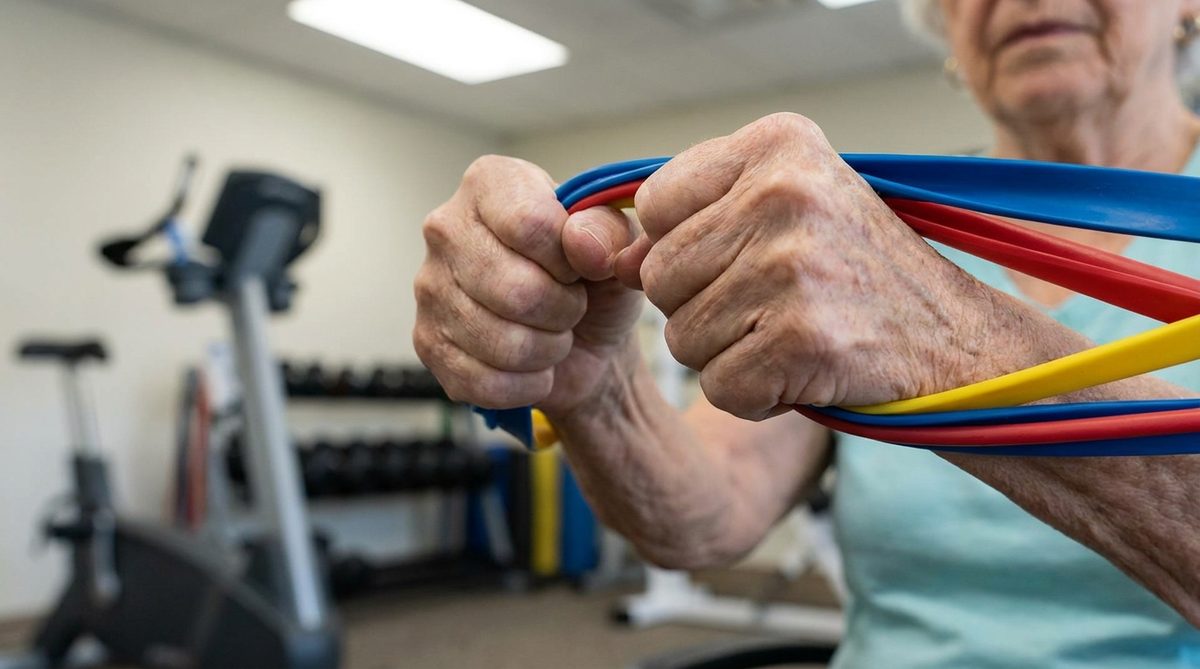
The American College of Sports Medicine’s 2024 position stand confirmed that adults in their 70s and 80s can increase muscle strength by 25-30% within 8-12 weeks of progressive resistance training. I’ve seen this firsthand hundreds of times. A 78-year-old patient of mine increased her chair-stand repetitions from 4 to 11 over three months — a clinically meaningful change that took her from “fall risk” to “functionally independent.”
The CDC now recommends muscle-strengthening activities at least two days per week for all adults, with specific emphasis on balance training for those 65 and older. Yet only 27% of adults over 65 currently meet this guideline.
2. Cardiovascular Endurance
VO2 max — the gold-standard measure of cardiovascular fitness — does decline with age, approximately 10% per decade after 30. But here’s the critical nuance: a sedentary 55-year-old who begins a structured aerobic program can improve their VO2 max by 15-20%, effectively reversing a decade or more of cardiovascular aging. The Mayo Clinic has published extensively on this, noting that even moderate-intensity walking programs produce meaningful gains.
3. Balance and Fall Prevention
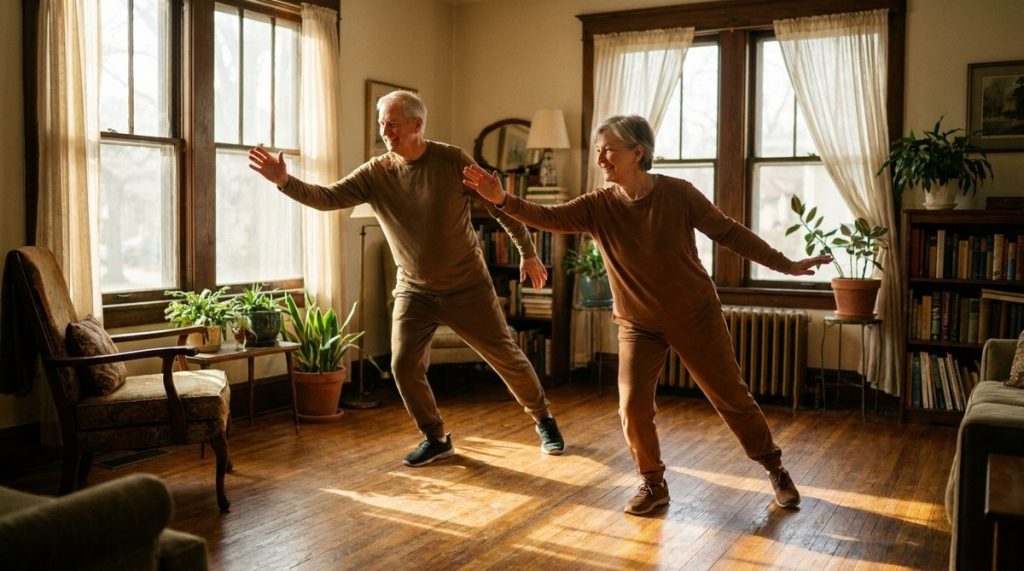
Falls are the leading cause of injury death among adults 65 and older in the United States — roughly 36 million falls occur each year, resulting in approximately 32,000 deaths, according to 2023 CDC data. But balance is profoundly trainable. Tai chi, for example, has been shown in meta-analyses to reduce fall risk by 20-40%. I often tell my patients: your balance isn’t something that just deteriorates — it’s a skill, and like any skill, it responds to practice.
4. Cognitive Flexibility
The ACTIVE study (Advanced Cognitive Training for Independent and Vital Elderly), one of the largest cognitive training trials ever conducted, showed that targeted brain training produced improvements in processing speed that persisted for up to 10 years. Participants who received booster sessions showed a 48% reduction in dementia risk. While the cognitive training industry has its share of hype, the underlying science on neuroplasticity in older brains is legitimate and growing.
5. Emotional Regulation and Well-Being
This may be the most counterintuitive domain. Multiple large-scale studies — including data from the Gallup World Poll covering 1.7 million respondents — show that self-reported well-being follows a U-shaped curve, bottoming out in the mid-40s to early 50s and then rising steadily into the 70s and beyond. Older adults show better emotional regulation, less reactivity to negative stimuli, and greater savoring of positive experiences. The aging brain, it turns out, gets selectively better at happiness.
A Clinical Framework: 8 Evidence-Based Steps to Improve as You Age
Based on the current evidence and my own clinical experience, here is what I recommend to patients who want to be in that improving 30% rather than the declining cohort. These aren’t generic “eat well and exercise” platitudes — they’re specific, sequenced, and prioritized.
- Get a baseline functional assessment. Ask your primary care provider or a geriatric-certified physical therapist to measure your grip strength, gait speed, chair-stand time, and single-leg balance. You can’t improve what you don’t measure. These four metrics are stronger predictors of longevity than most blood tests.
- Start progressive resistance training twice weekly. Begin with bodyweight exercises (squats to a chair, wall push-ups, step-ups) and progress to resistance bands or light weights. The key word is “progressive” — you must systematically increase the challenge. A 2025 study in JAMA Network Open showed that even once-weekly resistance training reduced all-cause mortality risk by 15% in adults over 60.
- Add dedicated balance training three times per week. This can be as simple as standing on one foot while brushing your teeth, heel-to-toe walking in your hallway, or attending a tai chi class. Ten minutes per session is sufficient to trigger neurological adaptation.
- Walk for cardiovascular health — but add intervals. Steady walking is beneficial, but interspersing 30-60 second bursts of faster walking (or uphill walking) produces significantly greater cardiovascular adaptations. Aim for 150 minutes per week total, with at least 2 sessions including intervals.
- Prioritize protein intake. Adults over 50 need more protein than younger adults — current research supports 1.0-1.2 grams per kilogram of body weight daily, compared to the standard 0.8 g/kg RDA. Distribute it across meals: 25-30 grams per meal supports optimal muscle protein synthesis. For deeper guidance on nutrition and other habits, this resource on healthy habits for aging well in your 60s, 70s, and beyond is worth your time.
- Protect your sleep architecture. Sleep quality, not just quantity, changes with age. Slow-wave (deep) sleep decreases, which impairs memory consolidation and tissue repair. Strategies that help: consistent wake times, morning light exposure within 30 minutes of rising, avoiding alcohol within 3 hours of bedtime, and keeping bedroom temperature at 65-68°F. For a deeper dive, explore these sleep habits linked to healthy aging after 50.
- Engage in novel cognitive challenges. Not brain games on your phone — actual novel learning. Take a language class. Learn an instrument. Study a subject you know nothing about. Novelty, not repetition, drives neuroplastic change. The hippocampus — the brain’s memory center — can generate new neurons well into old age, but it requires genuine cognitive demand.
- Cultivate at least one reciprocal social relationship. Loneliness increases mortality risk by 26%, comparable to smoking 15 cigarettes per day, according to meta-analytic data. But the key word is “reciprocal” — relationships where you both give and receive. Volunteering, mentoring, and participating in group activities produce stronger health benefits than passive social contact.
The Financial Dimension: Why Health Is a Retirement Strategy
I’d be remiss not to address the financial reality that shapes health decisions for many of my patients. Medicare out-of-pocket costs, supplemental insurance premiums, and medication expenses are real barriers to healthy aging. When your Social Security increase gets absorbed by premium hikes — a phenomenon well documented in this analysis of Medicare Part B premiums eating into Social Security raises — it’s understandable that gym memberships or physical therapy copays feel like luxuries.
But the math strongly favors prevention. The average cost of a hip fracture in the United States exceeds $30,000 in direct medical costs, with additional long-term care costs that can reach six figures. A fall prevention program — including physical therapy, home modifications, and medication review — costs a fraction of that. Fidelity’s 2024 Retiree Health Care Cost Estimate puts the average couple’s lifetime healthcare costs in retirement at $315,000. Every year you stay functionally independent reduces that number substantially.
What the Data Means for How Americans Think About Aging
A recent AARP survey found that 77% of adults over 50 want to remain in their homes as they age, yet fewer than half have taken concrete steps to make that possible. This gap between aspiration and action is where the decline narrative does its most insidious work. If you believe deterioration is inevitable, preparing for it feels futile.
The new study challenges the notion that aging means decline by providing hard longitudinal data — not anecdotes, not outliers, but population-level evidence — that a significant percentage of older adults get better over time in meaningful ways. This isn’t toxic positivity or wishful thinking. It’s data.
Does everyone improve? No. Genetics, socioeconomic factors, prior health conditions, and access to care all play roles. But the modifiable factors — exercise, nutrition, sleep, social connection, cognitive engagement, and mindset — account for a far larger share of the variance than most people assume. Estimates from twin studies suggest that genetics explain only about 20-30% of longevity variation. The rest is within your influence.
The Mindset Shift That Changes Everything
I want to close with something I tell every new patient who walks into my clinic expecting to hear bad news about their body. I say: “Your job isn’t to slow down aging. Your job is to keep adapting.” That reframe — from passive decline management to active adaptation — changes the entire therapeutic relationship. It changes what people are willing to try, how consistently they show up, and ultimately, what outcomes they achieve.
The study that aging doesn’t mean decline isn’t telling you to ignore real health challenges. Chronic conditions are real. Pain is real. Loss is real. But the trajectory is not fixed, and you have far more agency over it than the cultural narrative suggests.
In my 18 years of treating older adults, the patients who improve are not the ones with the best genetics or the most money. They’re the ones who refuse to accept the premise that their best days are behind them — and then do the specific, evidence-based work to prove it.
The data now backs them up.
Frequently Asked Questions
At what age does physical decline actually become inevitable?
There is no single age at which decline becomes inevitable. While certain biological changes — like reduced muscle mass and slower nerve conduction — begin as early as the 30s, the rate and impact of these changes are heavily influenced by lifestyle factors. Longitudinal studies show that adults in their 80s and even 90s can still make measurable gains in strength, balance, and cardiovascular fitness with appropriate training. The key variable is consistent, progressive physical activity rather than chronological age alone.
Can older adults really build new muscle after 70?
Yes, and the evidence is strong. Research published in journals including JAMA Network Open and the Journal of the American Geriatrics Society confirms that adults over 70 can increase muscle strength by 25-30% within 8-12 weeks of progressive resistance training. Muscle hypertrophy (actual growth in muscle size) is also possible, though it occurs more slowly than in younger adults. Adequate protein intake — approximately 1.0 to 1.2 grams per kilogram of body weight daily — is essential to support this process.
How does mindset actually affect physical health outcomes in aging?
Research from Yale's Dr. Becca Levy and others has shown that internalized age beliefs directly influence physiological outcomes. Older adults with positive perceptions of aging demonstrate lower cortisol levels, reduced cardiovascular risk, better memory performance, and an average 7.5-year survival advantage compared to those with negative age beliefs. The mechanism appears to involve both behavioral pathways (positive beliefs lead to healthier behaviors) and direct stress-physiology pathways (negative beliefs increase chronic inflammation and cortisol exposure).
About Michael Torres, DPT, Board-Certified Geriatric Specialist
Michael Torres is a Doctor of Physical Therapy and board-certified geriatric clinical specialist with 18 years of experience working with older adults. He has treated thousands of seniors recovering from hip replacements, managing arthritis, rebuilding strength after hospitalizations, and preventing dangerous falls. At Daily Trends Now, Michael writes practical guides on exercises, mobility, pain management, and the physical strategies that help seniors stay strong and independent.