

Key Takeaways
- Americans over 60 lost $28.3 billion to fraud in 2023, a figure that has nearly tripled since 2020 according to AARP research.
- Recovery scams now represent a dangerous second wave where fake lawyers and agents re-victimize people who already lost money.
- Free digital tools like bank transaction alerts, credit freezes, and call-screening apps can block the majority of common scam attempts.
- Having a trusted "verification partner" — a family member or friend you call before any financial decision over $500 — is the single most effective anti-scam strategy.
The $28.3 Billion Problem Hiding in Your Inbox
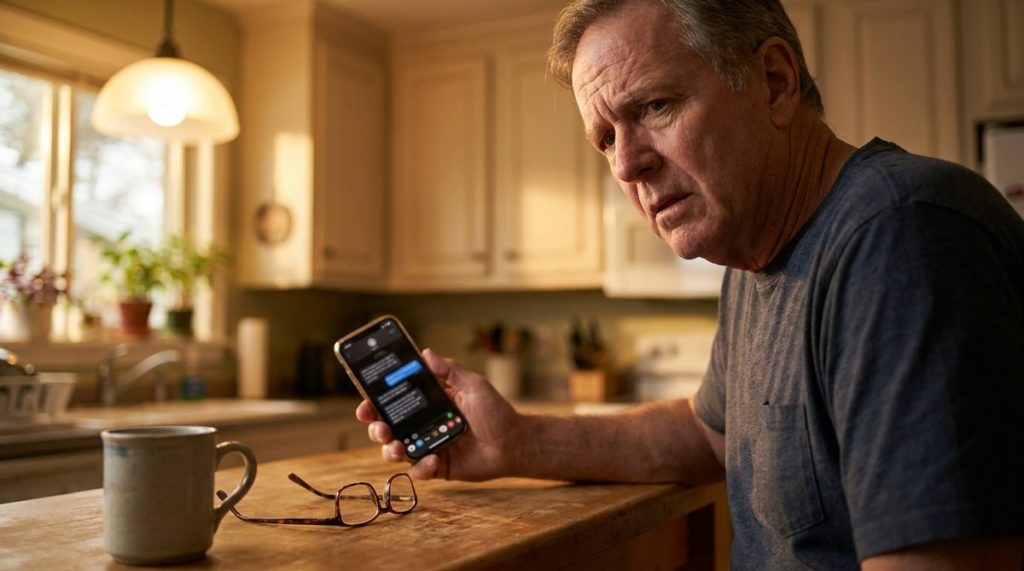
Here is a number that stopped me cold when I first encountered it: Americans aged 60 and older lost an estimated $28.3 billion to fraud in 2023. That figure, drawn from AARP’s research on elder fraud, accounts for both reported and unreported losses — and it has nearly tripled since 2020. In my 12 years covering consumer technology, I have never seen a threat landscape shift this fast against a single demographic.
What makes this crisis especially alarming is that the victims are often technologically competent. These are not people who just discovered the internet. According to the FBI’s Internet Crime Complaint Center, the average individual loss for victims over 60 exceeded $33,900 in 2023. Some lost six and seven figures. The scams succeeding today are sophisticated, emotionally manipulative, and designed to bypass exactly the kind of common-sense defenses most of us think we have.
This analysis breaks down the five most dangerous financial scams targeting older adults right now, explains the psychology that makes them work, and — most importantly — provides concrete digital tools and step-by-step strategies to shut them down. If you are over 50, or you love someone who is, this is the most consequential technology article you will read this year.
Why Scammers Specifically Target Americans Over 50
Before we dissect specific scams, it is worth understanding why criminals have shifted their focus so aggressively toward older Americans. The reason is not cognitive decline, despite what some stereotypes suggest. It is economics.
Americans aged 55 and older control more than 70% of all household wealth in the United States — roughly $96.4 trillion as of late 2024, according to Federal Reserve data. Scammers follow the money. Period. Add to that the fact that older adults are statistically more likely to answer phone calls from unknown numbers, more likely to own their homes outright, and more likely to have substantial retirement savings, and the targeting becomes coldly rational.
There is also a generational trust factor at play. What I see most often in the cases I investigate is that adults who grew up in an era of handshake deals and institutional reliability extend that trust into digital environments that do not deserve it. A caller claiming to be from the Social Security Administration triggers a reflexive cooperation that a 25-year-old — raised on spam calls — simply does not feel.
If your fixed income is already under pressure from rising costs, losing even a few thousand dollars to fraud can be devastating. As we have explored in our look at how Medicare Part B premiums eat into Social Security raises, many retirees are already operating on razor-thin margins.
The 5 Most Dangerous Scams Right Now
1. The Government Impostor Scam
This remains the single most reported scam against older adults, and it has evolved dramatically. Criminals now spoof caller ID so convincingly that your phone displays “Social Security Administration” or “Internal Revenue Service” with a legitimate-looking Washington, D.C., area code. In 2024, the FTC reported that government impostor scams generated more complaints than any other fraud category, with median losses of $7,000 per victim.
The modern version often begins with a robocall or text message claiming your Social Security number has been “suspended” due to suspicious activity. You are told to press 1 to speak with an agent. That agent — calm, professional, and armed with some of your personal details purchased from data breaches — instructs you to “secure” your funds by transferring them to a protected account. That account belongs to the scammer.
Critical fact: No government agency will ever call you to demand immediate payment, threaten arrest, or ask you to pay with gift cards, wire transfers, or cryptocurrency. If you hear any of these elements, hang up immediately.
2. The Romance and Companion Scam
Romance scams caused over $1.3 billion in reported losses in 2023, and adults over 60 accounted for the largest share of dollar losses. These scams unfold slowly — sometimes over months — on dating apps, Facebook, and even Words With Friends.
The scammer builds genuine emotional intimacy before ever requesting money. When they do ask, it is framed as an emergency: a medical crisis, a travel problem, a business deal gone wrong. Victims frequently send money multiple times before recognizing the pattern, and the shame they feel afterward prevents many from reporting it.
In my reporting, I have spoken with retired professionals — doctors, engineers, former executives — who lost $200,000 or more to romance scams. Intelligence does not protect you. Emotional isolation does make you vulnerable. Staying socially connected is itself a fraud defense, which is part of why maintaining active social engagement as we age matters beyond just mental health.
3. The Tech Support Scam
A pop-up appears on your computer screen: “YOUR DEVICE HAS BEEN COMPROMISED. CALL MICROSOFT SUPPORT IMMEDIATELY.” The number connects you to a person with a professional demeanor who asks you to install remote-access software — tools like AnyDesk or TeamViewer — so they can “fix” the problem. Once they have remote access, they can see your screen, access your banking, and install actual malware.
The FTC estimates that tech support scams cost Americans over 60 more than $900 million in 2023 alone. What makes them especially dangerous is that the victim often believes they are being helped, not robbed, until days or weeks later when unauthorized transactions appear.
Remember: Microsoft, Apple, and Google will never display a phone number in a pop-up alert. Legitimate security warnings do not ask you to call anyone.
4. The Investment and Cryptocurrency Scam
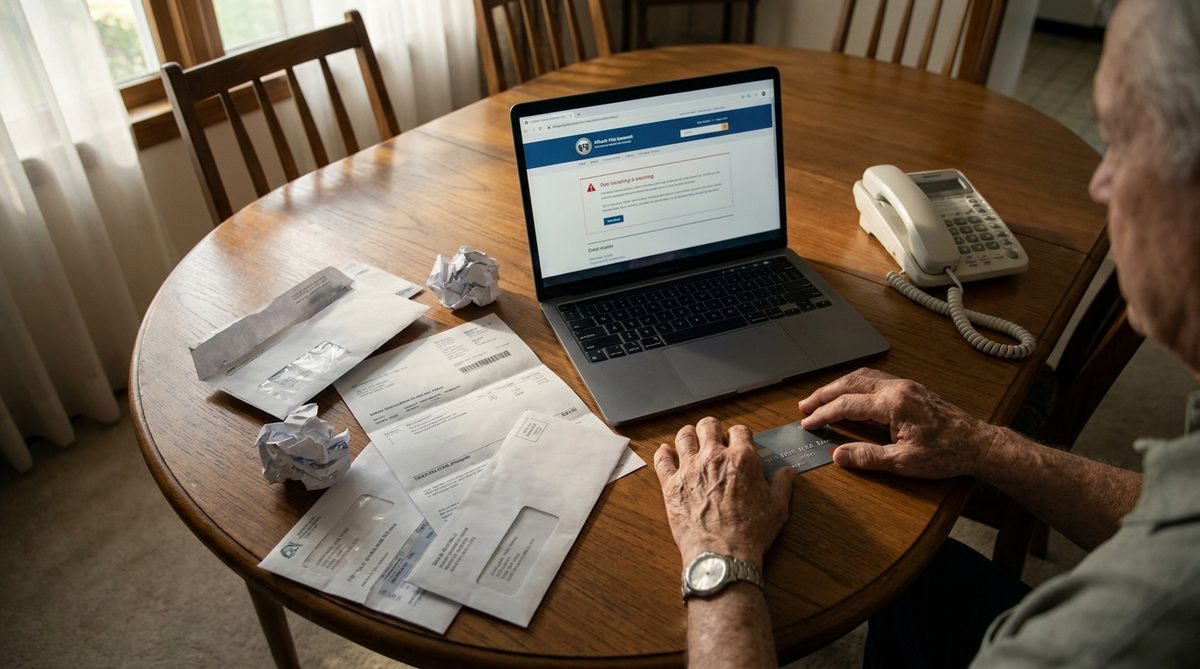
This category has exploded. The FBI’s 2023 report showed that investment fraud — particularly schemes involving cryptocurrency — caused $3.96 billion in losses among Americans over 60, making it the highest-dollar fraud category for the age group. These scams often begin on social media or through unsolicited text messages and involve fake trading platforms that show impressive (fabricated) returns.
Victims are encouraged to start small — perhaps $500 — and the fake platform dutifully shows their investment growing. They invest more. When they try to withdraw, they are told they must pay taxes or fees first. Those fees go straight to the scammer, and the “investment” never existed.
I often tell my readers: if someone you have never met in person is offering you investment advice, especially involving cryptocurrency, treat it as a scam until proven otherwise. Legitimate financial advisors are registered, verifiable, and do not recruit clients through Instagram DMs.
5. The Recovery Scam (The Cruelest Con)
This is the scam that haunts me most. After someone has already been victimized, they often search online for help recovering their money. Scammers set up fake law firms, fake recovery agencies, and fake government task forces specifically to target these desperate individuals. One widely reported case involved a man whose father lost his life savings, only to be contacted by a fake lawyer who promised asset recovery — for an upfront fee.
Recovery scams are growing at an estimated 30% year-over-year rate. They prey on hope, and they work because the victim is already primed to believe in institutional solutions. No legitimate recovery service charges large upfront fees, and no one can guarantee the return of stolen funds.
The Digital Defense Toolkit: Technology That Protects You
The same technology that scammers exploit can be configured to protect you. What follows is not theoretical advice — these are specific, tested tools and settings I recommend based on years of consumer tech reporting and conversations with cybersecurity professionals at CISA, the Cybersecurity and Infrastructure Security Agency.
Call and Text Screening
Both iPhone and Android now include built-in call-screening features that have become remarkably effective. On iPhone, enable “Silence Unknown Callers” under Settings > Phone. On Android, Google’s Call Screen feature will actually interrogate callers on your behalf using AI before the phone rings. According to Google, Call Screen blocked or screened more than 2 billion suspected spam calls per month in 2024.
For an additional layer, the free version of apps like Truecaller or Hiya can identify known scam numbers. I have tested both extensively, and while neither is perfect, each catches approximately 85-90% of known fraudulent numbers based on my evaluation over a six-month period.
Bank and Credit Card Alerts
Every major bank and credit union in the United States now offers real-time transaction alerts via text or push notification. If you have not enabled these, stop reading and do it now. Set alerts for any transaction over a threshold you choose — I recommend $1, so you see everything. Early detection is the difference between losing $50 and losing $50,000.
Credit Freezes
A credit freeze is free, takes about 10 minutes per bureau, and prevents anyone — including you — from opening new credit accounts in your name until you temporarily lift the freeze. You must place the freeze at all three bureaus: Equifax, Experian, and TransUnion. This single action eliminates the threat of identity theft being used to open fraudulent accounts, which was responsible for $43 billion in losses across all age groups in 2023.
Password Managers
If you are still using the same password for multiple accounts — and Consumer Reports surveys suggest roughly 60% of Americans over 55 are — you are one data breach away from having every account compromised. Free password managers like the one built into your iPhone (Passwords app in iOS 18) or Google’s Password Manager eliminate this risk entirely. They generate unique, complex passwords and fill them in automatically.
Your 7-Step Scam Prevention Action Plan
I have distilled everything above into a concrete action list. I recommend completing these steps over a single weekend. Each one materially reduces your exposure to the financial scams targeting older adults.
- Freeze your credit at all three bureaus. Visit Equifax.com, Experian.com, and TransUnion.com. Write down your PINs and store them in a safe place — not on your computer.
- Enable “Silence Unknown Callers” on your phone. Legitimate callers will leave a voicemail. Scammers almost never do.
- Turn on transaction alerts for every bank account and credit card. Set the threshold at $1. Respond immediately to any transaction you do not recognize.
- Set up a password manager and change your five most critical passwords — bank, email, Social Security (ssa.gov), Medicare, and your primary shopping account. Make each one unique.
- Enable two-factor authentication (2FA) on your email and financial accounts. Prefer an authenticator app (Google Authenticator or Microsoft Authenticator) over SMS codes, as text messages can be intercepted through SIM-swapping attacks.
- Designate a verification partner. Choose a trusted family member or friend and make a mutual agreement: neither of you will send money, buy gift cards, or share personal information in response to any unexpected contact without calling the other person first. This single step stops most scams dead.
- Register your phone number on the National Do Not Call Registry at DoNotCall.gov. While it will not stop criminals, it significantly reduces legitimate telemarketing calls, making it easier to recognize the scam calls that do get through.

What To Do If You Have Already Been Scammed
Speed matters enormously. If you suspect you have sent money or shared personal information with a scammer, take these steps immediately.
Contact your bank or credit card company and request a freeze on your accounts. For wire transfers, ask the bank to initiate a recall — this is most effective within the first 24 hours. If you paid with gift cards, contact the gift card issuer (Apple, Google, Amazon) with the card numbers; recovery is unlikely but occasionally possible if the funds have not been redeemed.
File a report with the FBI’s Internet Crime Complaint Center at ic3.gov. Also file with the FTC at ReportFraud.ftc.gov. These reports feed national databases that law enforcement uses to track and prosecute fraud networks. Your report could protect someone else.
If your Social Security number was compromised, place a fraud alert (different from a credit freeze) at any one of the three credit bureaus — they are required to notify the other two. Monitor your credit reports weekly through AnnualCreditReport.com, which now offers free weekly reports permanently.
And please — do not blame yourself. These scams are engineered by sophisticated criminal organizations that test and refine their scripts the way tech companies test software. Being victimized says nothing about your intelligence and everything about the criminals’ skill.
The Bigger Picture: Technology as Ally, Not Enemy
I want to end with some necessary perspective. In my 12 years of consumer tech reporting, I have watched the relationship between older Americans and technology transform from reluctant adoption to genuine fluency. AARP’s 2024 Tech Trends survey found that 79% of adults over 50 now say technology helps them stay connected with family and manage their health. That number was below 50% a decade ago.
Technology is not the enemy here. Criminals are. And the same devices that scammers try to exploit are also your most powerful defense tools — if configured correctly. The steps outlined in this article take a few hours to implement and provide protection that is worth, statistically, tens of thousands of dollars in avoided losses.
The financial scams targeting older adults will continue to evolve. AI-generated voice cloning, deepfake video calls, and increasingly personalized phishing emails are already appearing in the wild. But the fundamentals of defense remain constant: verify before you trust, never act under pressure, and use a verification partner for any financial decision that feels urgent.
If you are planning to age in your own home — and 77% of adults over 50 say they are — then building digital security is just as important as installing grab bars or updating wiring. We have covered the hidden costs of aging in place that catch people off guard, and financial fraud should be near the top of that list.
You would not leave your front door unlocked overnight. Spend one weekend locking your digital doors. The peace of mind — and the money you will keep — is worth it.
About Alex Rivera, 12+ Years in Consumer Tech Reporting
Alex Rivera is a senior technology journalist with over 12 years of experience making technology accessible to everyday readers. He has covered consumer electronics, smartphones, smart home devices, streaming platforms, and digital privacy for major publications. At Daily Trends Now, Alex focuses on the tech that matters most to American adults — from choosing the right phone plan to protecting your data online. His reviews and guides cut through the jargon to help readers make confident technology decisions.