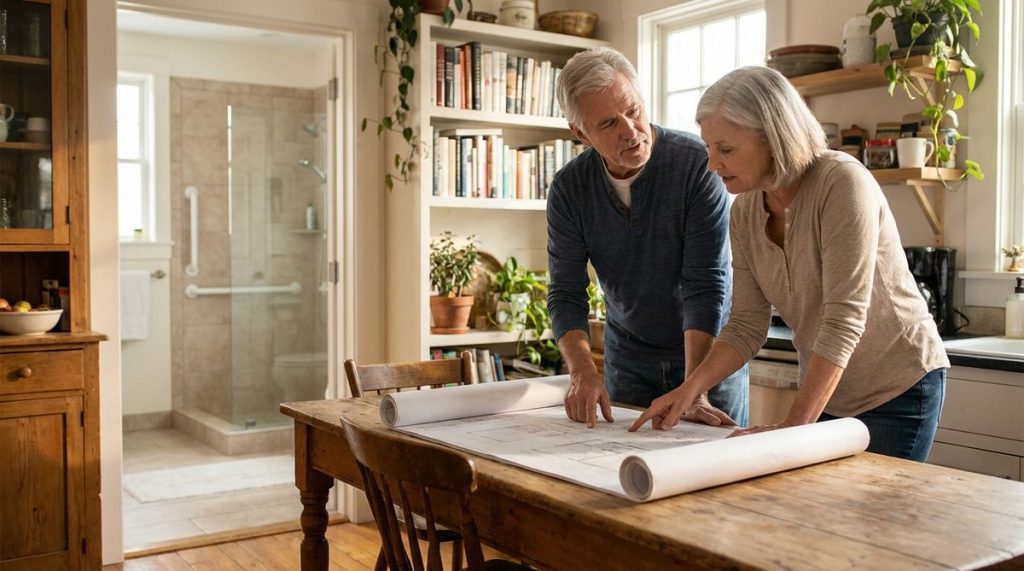


Why Aging in Place Costs More Than You Think
Here’s a number that stops most of my clients mid-conversation: according to a 2024 survey by AARP, roughly 77% of adults aged 50 and older want to remain in their current home as they age. That desire is completely understandable. Your home is where your memories live, your neighbors know your name, and your morning routine feels effortless.
But in my 14 years as a Certified Aging-in-Place Specialist, what I see most often is a dangerous gap between that desire and the financial reality. A 2024 Genworth Cost of Care survey found that the median annual cost of a home health aide is now $75,504 nationally—and even modest home modifications can run $10,000 to $30,000 before you touch anything structural. The problem isn’t the dream of aging in place; it’s the sticker shock that derails it.
Below, I’m breaking down the seven aging in place costs that blindside older Americans most frequently—and, more importantly, what you can do about each one right now.
1. Home Modifications Are Rarely One-and-Done
Most people picture a single project: install a grab bar, add a ramp, done. In reality, safe aging in place usually requires a phased approach that evolves as your mobility and health change over the years.
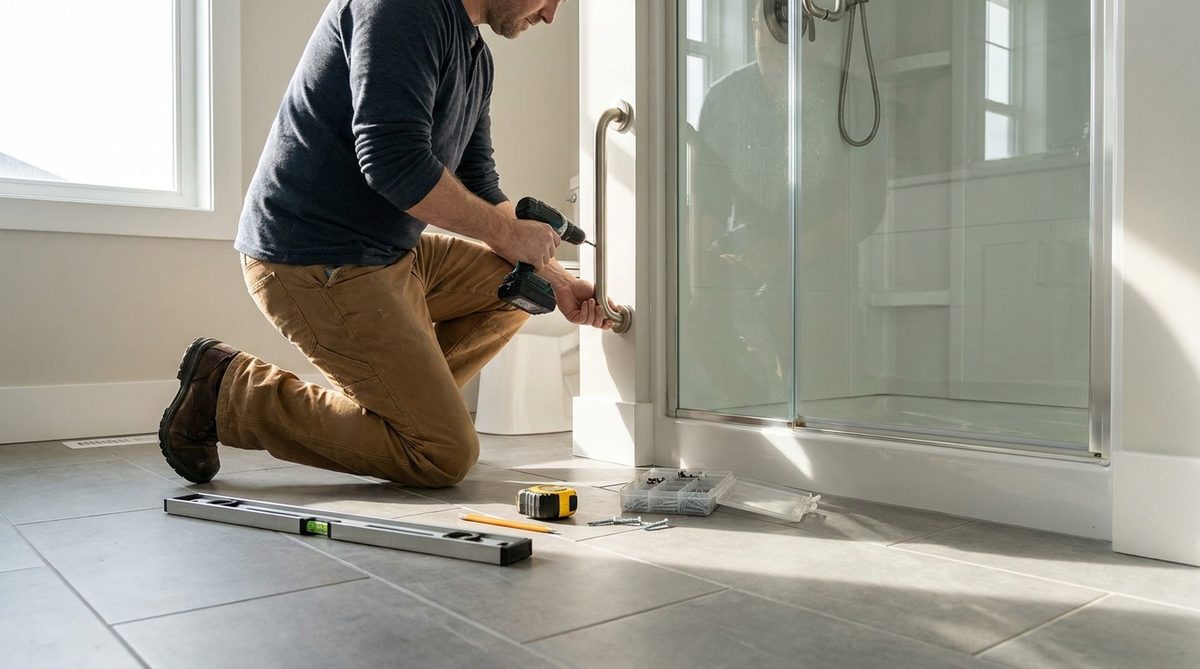
A basic bathroom remodel with a walk-in shower, non-slip flooring, and grab bars averages $8,500 to $15,000 depending on your market. But within five to seven years, many homeowners also need wider doorways for walkers or wheelchairs ($1,500–$3,000 per doorway), first-floor bedroom conversions ($15,000–$50,000), and improved lighting throughout the home ($2,000–$5,000).
What to Do About It
I always tell my clients to get a comprehensive home assessment before doing anything. The National Association of Home Builders offers a CAPS directory where you can find specialists who will evaluate your entire home and create a prioritized, multi-year plan. This prevents you from spending $12,000 on a bathroom today only to realize next year you can’t get a wheelchair through the hallway leading to it.
“The biggest financial mistake I see isn’t overspending on modifications—it’s spending on the wrong modifications first. A $200 professional assessment can save you $20,000 in misguided renovations.”
2. Property Taxes and Home Insurance Keep Climbing
Your mortgage might be paid off, but your home still charges you rent in the form of property taxes and homeowner’s insurance. Between 2020 and 2024, homeowner’s insurance premiums rose an average of 33% nationally, according to S&P Global data. In states like Florida, Texas, and Louisiana, increases exceeded 50%.
Property taxes are no gentler. As home values have surged, so have assessments. If you’re on a fixed income, a $1,200 annual tax increase can gut your monthly budget. These are ongoing aging in place costs that never stop growing, and too few retirees factor them into their long-term projections.
What to Do About It
Check whether your state offers a property tax exemption or freeze for seniors. Currently, at least 30 states provide some form of property tax relief for adults over 65. Also review your homeowner’s insurance annually—bundling policies, raising your deductible, or switching carriers can trim 10–20% off premiums. For more on protecting your retirement income, see how Social Security and Medicare shifts are reshaping retiree budgets in 2026.
3. Home Maintenance Becomes a Hidden Budget Drain
When you’re 55, you clean your own gutters, repaint the trim, and pressure-wash the driveway on a Saturday. By 70 or 75, most of those tasks require hired help. The National Council on Aging estimates that home maintenance costs for older homeowners average $6,000 to $10,000 annually—and that’s before anything breaks.
Roof repairs, HVAC replacement, plumbing emergencies—these aren’t luxuries. They’re inevitable. A furnace replacement alone averages $5,800 in 2025. What I see most often is retirees deferring maintenance to save money, which only compounds costs later when small problems become structural failures.
What to Do About It
- Set up a dedicated home maintenance savings account and contribute $300–$500 monthly, separate from your emergency fund.
- Schedule annual HVAC, plumbing, and electrical inspections to catch small issues before they become five-figure emergencies.
- Explore whether your local Area Agency on Aging offers free or subsidized home repair programs for older adults—many do, and they’re chronically underutilized.
- Consider a home warranty plan ($400–$700/year) to cap your exposure on major appliance and system failures.
- Build relationships with two or three trusted local contractors now, while you can vet them carefully, rather than scrambling during a crisis.
4. In-Home Care Costs Are Accelerating Faster Than Inflation
This is the number that genuinely alarms me. The median cost of a home health aide in the United States hit $33 per hour in 2024, which translates to roughly $75,504 per year for full-time care. Even 20 hours per week of part-time assistance runs about $34,320 annually.
And here’s what catches people off guard: Medicare does not pay for custodial care. It covers skilled nursing visits after a qualifying hospital stay, but it won’t pay someone to help you bathe, cook, or manage medications day-to-day. Medicaid may help if you qualify, but income and asset limits are strict.
Long-term care insurance, if you purchased a policy in your 50s or early 60s, can offset these costs significantly. But premiums have risen so steeply that many insurers have exited the market entirely.
| Type of Care | Annual Median Cost | Medicare Coverage | Best For |
|---|---|---|---|
| Homemaker Services (44 hrs/wk) | $68,640 | None | Help with cooking, cleaning, errands |
| Home Health Aide (44 hrs/wk) | $75,504 | Limited skilled care only | Personal care and health monitoring |
| Adult Day Health Care | $22,620 | None (Medicaid may cover) | Daytime supervision and socialization |
| Assisted Living Facility | $64,200 | None | 24/7 support with some independence |
| Nursing Home (semi-private) | $104,025 | Short-term rehab only | Full medical and custodial care |
Source: Genworth Cost of Care Survey, 2024
5. Technology Upgrades Aren’t Optional Anymore
Smart home technology has moved from luxury to necessity for safe aging in place. Medical alert systems, smart doorbells, automated lighting, voice-activated assistants, and remote health monitoring devices all cost money—both upfront and in monthly subscriptions.
A quality medical alert system with fall detection runs $30–$60 per month. A basic smart home setup (smart locks, video doorbell, automated lighting, voice assistant) costs $500–$1,200 to install. Remote health monitoring platforms prescribed by physicians can add $100–$200 per month in out-of-pocket fees depending on your insurance.
What to Do About It
Start with the technology that addresses your most immediate safety concern. For most of my clients, that’s fall detection—falls are the leading cause of injury-related death for Americans over 65, according to the National Institute on Aging. Layer in additional technology over time, and take advantage of free digital literacy programs offered by many public libraries and senior centers. Being comfortable with the technology you’re paying for ensures you’ll actually use it.
And while you’re upgrading your tech, make sure you understand the scam risks that come with it. I’d recommend reading these 7 tech scam myths that put older adults at serious risk before connecting any new devices.
6. Social Isolation Has a Real Financial Cost
This one surprises people because it doesn’t show up on a spreadsheet. But social isolation among older adults is linked to a 50% increased risk of dementia and a 29% increased risk of heart disease, according to the CDC. Those health outcomes translate directly into higher medical bills, more emergency room visits, and earlier need for intensive care.
When you age in place without a plan for social connection, your world can shrink gradually. The friends who used to live nearby move or pass away. Driving becomes harder. Before you know it, weeks go by without meaningful human interaction.
“Aging in place isn’t just about the house—it’s about the life you live inside it. The most beautifully modified home in America won’t keep you healthy if you’re spending every day alone.”
What to Do About It
Budget for social engagement the same way you budget for home repairs. That might mean $50–$150 per month for a gym membership, community classes, a hobby club, or regular meals out with friends. Transportation costs matter too—ride-sharing services, volunteer driver programs, and senior transit passes are all worth investigating. For ideas on hobbies that keep you connected and sharp, take a look at how older adults can thrive rather than simply age.
7. You’re Probably Underestimating How Long You’ll Need the Money
A 65-year-old American today has roughly a 40% chance of living to 90, and about a 20% chance of reaching 95. That means your aging-in-place budget isn’t a 10-year plan—it could easily be a 25- to 30-year plan. Every cost I’ve listed above compounds over that timeframe.
If your home modifications cost $25,000 at age 67, and you spend $6,000 annually on maintenance, $3,600 on a medical alert system, and eventually $35,000 per year on part-time home care starting at age 80, you’re looking at cumulative aging in place costs that can exceed $400,000 over a 25-year span. That doesn’t include property taxes, insurance, utilities, or food.
What to Do About It
Work with a financial planner who specializes in retirement longevity. Run projections that assume you’ll live to 95, not 85. Factor in 3–5% annual inflation on care costs specifically, which historically outpace general CPI. And review your Social Security claiming strategy carefully—delaying benefits from 62 to 70 increases your monthly check by up to 77%, which provides a much stronger income floor for those expensive later years.
A Realistic Aging in Place Budget Framework
I don’t want this article to scare anyone away from aging in place—it remains the right choice for millions of Americans, and often it’s more affordable than facility care when planned properly. The key word is planned.
Here’s the framework I walk my clients through:
- Get a professional home assessment from a CAPS-certified specialist to identify current and future modification needs.
- Request a longevity-focused financial plan that models aging in place costs through age 95, including care, maintenance, taxes, and insurance.
- Research every benefit available to you—state property tax freezes, VA Aid and Attendance (for veterans), Medicaid waiver programs, and nonprofit home repair grants.
- Invest in preventive health—exercise, nutrition, fall prevention, and regular screenings. Every year you stay independent saves tens of thousands of dollars in care costs.
- Build your social infrastructure now—community ties, volunteer networks, and transportation alternatives that will sustain you when driving is no longer safe.
- Review and adjust annually—your health, finances, and home all change. An aging-in-place plan that never gets updated is barely a plan at all.
The Bottom Line on Aging in Place Costs
Staying in your home as you age is a deeply personal decision, and for most people, it’s the right one. But it demands honest financial planning and a willingness to invest in your home, your health, and your community before a crisis forces your hand.
In my experience, the clients who age in place most successfully aren’t the wealthiest—they’re the ones who started planning earliest. Even small steps taken at 55 or 60 create enormous advantages by 75 or 80. If you’re reading this and haven’t started, today is the best day to begin.
Your home can absolutely be your forever home. It just needs a realistic budget to match the dream.
About Marcus Bell, Certified Aging-in-Place Specialist (CAPS)
Marcus Bell is a Certified Aging-in-Place Specialist (CAPS) with 14 years of experience helping American seniors create safer, more comfortable living environments. He has consulted on hundreds of home modifications — from bathroom safety upgrades to smart home installations — and writes extensively about the products, services, and strategies that help older adults live independently for longer. At Daily Trends Now, Marcus covers home improvement, aging-in-place solutions, gardening, and practical lifestyle tips for seniors.