
Key Takeaways
- Retirees who monetize hobbies report higher life satisfaction and stronger cognitive health than those who remain fully idle in retirement.
- You don't need a business degree or tech savvy to turn a passion project into a reliable income stream after 50.
- The best hobby-based income strategies align with skills you already have, minimizing startup costs and maximizing enjoyment.
- Even modest hobby income of $500 to $1,500 per month can dramatically ease the pressure on retirement savings and Social Security.
Why Turning Hobbies Into Income Is the Smartest Retirement Move Right Now
After 16 years covering lifestyle trends for adults over 50, I can tell you the retirement conversation has fundamentally shifted. It’s no longer just about how much you’ve saved—it’s about how you spend your time and whether that time can also ease financial pressure. The retirees I interview who are happiest aren’t lounging on beaches every day. They’re building, creating, teaching, and yes, earning.
A 2024 AARP survey found that 27% of adults aged 50 and older are already engaged in some form of self-employment or freelance work, and that number climbs each year. Meanwhile, the National Council on Aging reports that nearly 80% of older adults express anxiety about outliving their savings. When you combine financial stress with the well-documented cognitive and emotional benefits of staying engaged, the case for turning hobbies into steady cash becomes almost irresistible.
What I see most often is retirees underestimating themselves. They assume nobody would pay for what they love doing. They’re almost always wrong. Here are five creative, proven strategies real retirees are using right now to transform passions into paychecks—without sacrificing the joy that drew them to the hobby in the first place.
1. Sell Handcrafted Goods Through Online Marketplaces and Local Markets
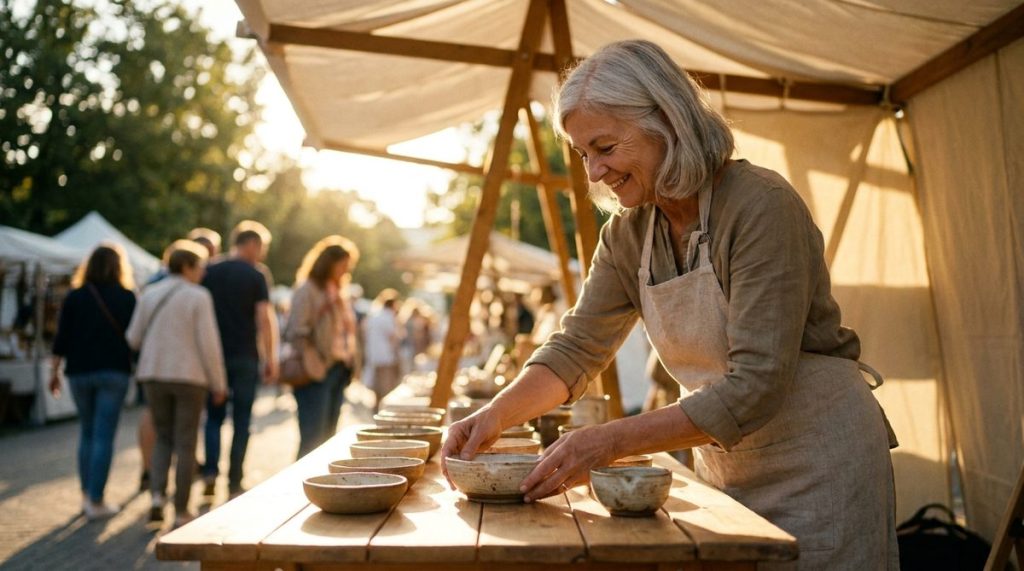
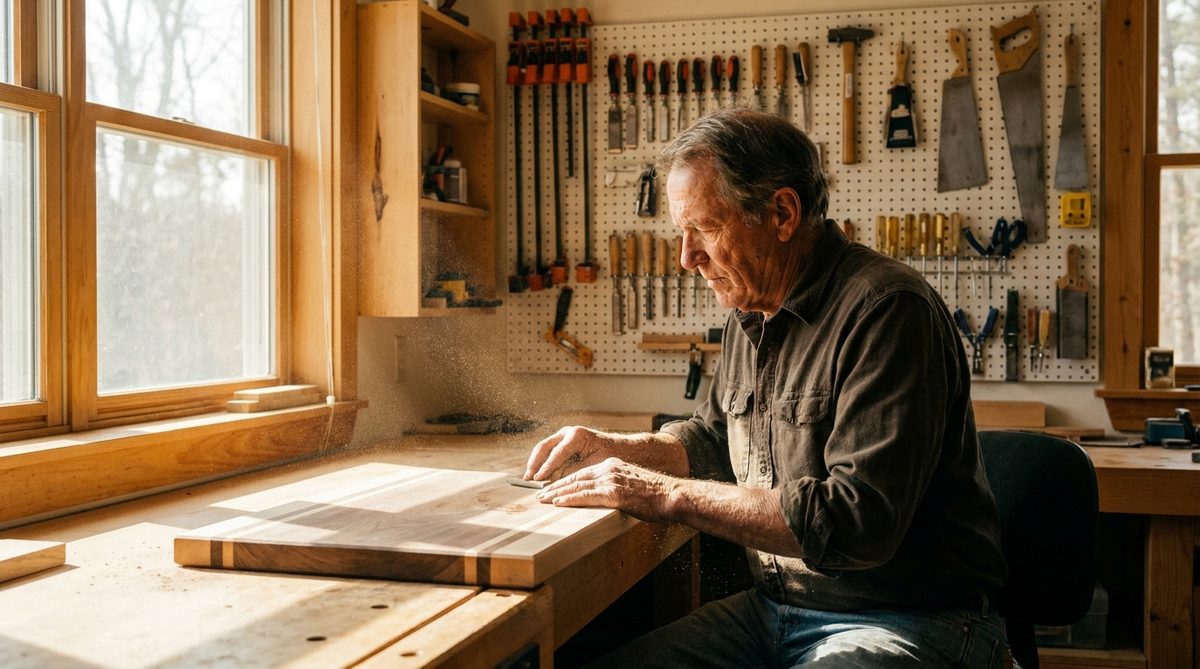
This is the most intuitive path, and for good reason—it works. Retirees who woodwork, knit, make jewelry, create pottery, or craft anything by hand are sitting on a genuine income opportunity. Etsy reported that sellers over 55 represented one of its fastest-growing demographics in 2024, with average monthly earnings between $400 and $1,200 for active shops.
But the savviest retirees I’ve spoken with don’t rely on online platforms alone. They combine digital sales with local farmers’ markets, holiday craft fairs, and consignment arrangements with boutique shops in their communities. This dual approach builds a personal brand and creates repeat customers who value the story behind the product.
Getting Started Without Overwhelm
In my experience, the biggest barrier isn’t talent—it’s the technology. If that resonates with you, start local. Rent a table at a weekend market for $25 to $50, test your pricing, and gather feedback. Once you’ve validated demand, then consider an online shop. Many communities also offer free or low-cost small business workshops specifically for older adults through local SBDCs (Small Business Development Centers).
- Start with 5 to 10 products to test the market before scaling up
- Price to cover materials, your time, and at least a 30% profit margin
- Photograph products in natural light—smartphone cameras are genuinely sufficient
- Ask satisfied buyers for reviews, which drive future online sales
One thing I always caution readers about: watch your startup costs. The goal is steady cash flow, not a money pit. Keep initial investment under $300 and reinvest early profits. If you’re concerned about how hobby income might interact with your broader financial picture, it’s worth reviewing 8 Retiree Budget Threats in 2026 and How to Fight Back to understand the full landscape.
2. Teach What You Know Through Workshops, Lessons, and Online Courses
If you’ve spent decades perfecting a skill—whether it’s watercolor painting, guitar, fly fishing, bread baking, or garden design—someone wants to learn from you. The experience economy is booming, and retirees are uniquely positioned to capitalize on it because they bring something younger instructors often lack: depth and patience.
According to a 2024 report from the Bureau of Labor Statistics, tutoring and private instruction among workers aged 55 and older grew by 18% between 2021 and 2024. Community centers, recreation departments, and libraries actively seek instructors, and many pay $30 to $75 per hour for specialized workshops.
The Online Teaching Option
Platforms like Skillshare, Udemy, and Outschool have made it remarkably simple to create and sell courses from your living room. A well-made course on a niche subject—say, restoring vintage furniture or mastering sourdough—can generate passive income for years. I interviewed a 68-year-old retired teacher in Tucson who earns $1,800 per month from a single Udemy course on calligraphy she recorded in 2023.
You don’t need a production studio. A decent USB microphone ($40), free editing software, and a quiet room are genuinely all you need. The content is what matters, and that’s exactly where your years of expertise shine.
- Start by teaching one free community workshop to build confidence and refine your material
- Record your best class and repurpose it as an online course
- Offer private one-on-one lessons at a premium rate for personalized instruction
- Partner with local senior centers that already have built-in audiences
Teaching also delivers powerful cognitive benefits. Research from the National Institute on Aging consistently shows that intellectually stimulating activities—especially those involving social interaction—help maintain brain health and may reduce dementia risk. It’s income that literally keeps you sharp. For more on staying mentally and physically engaged as you age, take a look at 6 Pillars of a Healthier Age-Defying Lifestyle for 2026.
3. Turn Photography, Writing, or Art Into Freelance and Licensing Income
Retirement is when many people finally have time to pursue creative passions they sidelined during their working years. What surprises most of my readers is how many ways creative work can generate income beyond simply selling a finished piece.
Stock photography is a prime example. If you enjoy taking photos—landscapes, food, lifestyle shots, nature—platforms like Shutterstock, Adobe Stock, and Alamy will license your images and pay you royalties every time someone downloads one. A retired photographer in Colorado I profiled last year uploads 20 to 30 images per month and earns a consistent $600 to $900 in passive royalties.
Writing and Content Creation
Freelance writing is another avenue where life experience is a genuine asset. Publications and websites serving the 50-plus demographic—including travel, health, gardening, and personal finance niches—actively seek writers who understand their audience from the inside. Rates for experienced freelance writers typically range from $150 to $1 per word for established outlets, and many assignments can be completed from anywhere.
If you paint, illustrate, or create digital art, print-on-demand services like Redbubble, Society6, and Zazzle let you upload designs that are printed on merchandise only when someone orders. Zero inventory, zero shipping hassle, and a royalty check every month.
- Build a simple portfolio using free platforms like WordPress or Contently
- Submit stock photos in batches—consistency matters more than volume
- Pitch articles to publications whose audience matches your expertise
- License art for greeting cards, calendars, and home décor through print-on-demand
I often tell my readers that creative freelancing isn’t about competing with 25-year-olds. It’s about leveraging decades of perspective that younger creatives simply don’t have yet. That perspective is your competitive advantage.

4. Offer Consulting or Coaching Based on Your Career Expertise
Here’s what I see most often when someone retires from a 30-year career: they assume that expertise expired the day they cleaned out their desk. It didn’t. In fact, the knowledge and professional judgment you built over decades is extraordinarily valuable—especially to small business owners, startups, and younger professionals who can’t afford full-time senior talent.
Consulting is one of the most lucrative ways retirees turn hobbies into steady cash, particularly when your “hobby” is helping people solve problems you’ve already solved a hundred times. A retired accountant offering bookkeeping consulting to small businesses. A former HR director coaching first-time managers. A retired contractor advising homeowners on renovation projects. These aren’t hypotheticals—they’re real income stories I encounter constantly.
Structuring Your Consulting Practice
The beauty of consulting after 50 is that you get to set the terms. You choose your hours, your clients, and your rates. Industry data from 2024 shows that independent consultants over 55 charge an average of $75 to $200 per hour depending on their field, and most work fewer than 20 hours per week.
- Define a specific problem you solve—vague consulting offers attract nobody
- Create a simple one-page website with your background, services, and contact info
- Leverage LinkedIn to reconnect with former colleagues and signal your availability
- Offer a free 30-minute discovery call to convert prospects into paying clients
- Consider platforms like Clarity.fm or GLG that connect experts with paying clients
One critical note: if you’re drawing Social Security before full retirement age and earning consulting income, be aware of the earnings limit ($22,320 in 2024) that can temporarily reduce your benefits. Understanding the nuances matters—especially when retirees are depleting savings faster amid inflation. Hobby income should supplement your financial strategy, not complicate it.
5. Monetize Gardening, Cooking, and Domestic Skills Through Local Services
Not every hobby-based income stream requires a website or an online platform. Some of the most reliable cash flow I’ve seen retirees generate comes from hyper-local services rooted in skills they’ve honed over a lifetime at home.
Gardening is the standout example. According to Better Homes & Gardens, the home gardening market has surged post-pandemic, and many homeowners want help but don’t want a full landscaping company. Retirees who offer garden design consultations, seasonal planting services, or even sell seedlings and produce at local stands are carving out a reliable niche. A raised-bed vegetable garden installation can command $200 to $500 depending on your area.
Cooking, Baking, and Meal Prep Services
Cottage food laws—which now exist in all 50 states with varying rules—allow home bakers and cooks to sell certain foods directly to consumers without a commercial kitchen. If you’re the person whose pies, jams, salsas, or cookies everyone raves about at family gatherings, there’s a real market waiting. Many cottage food entrepreneurs over 60 report earning $500 to $2,000 per month, especially around holidays.
Meal prep services for busy families or other older adults who want home-cooked food without the daily effort is another growing niche. This pairs especially well with the trend toward aging in place, where older adults living independently may need nutritional support. If you’re exploring what it takes to stay comfortably in your own home, Aging in Place Costs More Than You Think: 7 Myths Exposed is essential reading.
- Check your state’s cottage food laws before selling any homemade food products
- Start with a signature item—one stellar product beats a scattered menu
- Use neighborhood apps like Nextdoor to market gardening and cooking services locally
- Partner with community organizations that serve older adults for referral opportunities
The Financial and Emotional Payoff of Monetized Hobbies
Let’s talk numbers for a moment. Even modest hobby income of $500 to $1,500 per month translates to $6,000 to $18,000 per year. That’s enough to cover property taxes in many states, fund travel, pay for long-term care insurance premiums, or simply provide a buffer that keeps you from drawing down retirement accounts too aggressively.
But in my 16 years covering this beat, I’ve learned that the emotional returns matter just as much. Retirees who earn income from hobbies consistently report higher purpose, stronger social connections, and better mental health than those who stop working entirely and don’t replace that structure. A 2023 study published in the Journal of Aging and Health found that retirees engaged in productive leisure activities—including income-generating hobbies—scored 23% higher on life satisfaction measures than peers who were fully idle.
This isn’t about hustling in retirement. It’s about choosing engagement on your own terms. It’s about proving—to yourself and everyone around you—that your best years of creativity and contribution aren’t behind you.
Practical Steps to Get Moving This Week
If you’ve read this far and feel a spark of possibility, don’t let it fizzle. Here’s how to take concrete action in the next seven days:
- Write down three hobbies or skills you genuinely enjoy—not what sounds profitable, but what energizes you
- For each one, identify at least two ways someone might pay for it (a product, a service, a lesson, licensed content)
- Talk to three people this week—friends, family, or community members—about whether they’d pay for what you offer
- Set a modest 90-day income goal (even $200/month) and reverse-engineer the steps to get there
- Join one local or online community of retirees pursuing similar ventures for accountability and support
The retirees who successfully turn hobbies into steady cash aren’t extraordinary. They’re simply people who decided their skills have value and then took the first small step to prove it. The market is there. The tools are accessible. The only thing between you and a more financially secure, more fulfilling retirement is the decision to start.
Frequently Asked Questions
Do I have to pay taxes on hobby income in retirement?
Yes. The IRS considers hobby income taxable, and if your activity generates consistent profit, it may be classified as a business, requiring you to report it on Schedule C. If you earn more than $400 in net self-employment income, you'll also owe self-employment tax. Consult a tax professional to understand your specific obligations.
Will earning money from a hobby affect my Social Security benefits?
If you're under full retirement age and collecting Social Security, earnings above the annual limit ($22,320 in 2024) will temporarily reduce your benefits by $1 for every $2 over the limit. Once you reach full retirement age, there's no earnings penalty regardless of how much you make.
How much startup money do I need to monetize a hobby?
Most hobby-based ventures can launch for under $300, especially if you already own the tools and materials. The key is starting small, testing demand with minimal risk, and reinvesting early profits rather than making large upfront purchases before you've validated your market.
What if I'm not tech-savvy enough to sell online?
You absolutely don't need to start online. Local farmers' markets, craft fairs, community centers, and word-of-mouth referrals are proven sales channels that require zero technology. Many retirees build thriving hobby businesses entirely through in-person relationships and local networks before ever going digital.
What are the best hobbies to monetize in retirement?
The most successfully monetized hobbies combine personal enjoyment with market demand. Woodworking, baking, photography, gardening, tutoring, and consulting based on career expertise consistently rank among the top earners. The best choice is always the one you'll stick with because you genuinely love doing it.
About Jennifer Adams, 16 Years in Lifestyle Journalism
Jennifer Adams is a lifestyle journalist with 16 years of experience writing about travel, hobbies, relationships, home life, and the art of aging well. She has contributed to national publications focused on the interests and aspirations of adults over 50 — from budget-friendly travel destinations to rediscovering hobbies in retirement. At Daily Trends Now, Jennifer writes warm, practical articles that celebrate life after 50 and help readers make the most of every chapter.