

Key Takeaways
- The average cost of strategic home modifications for aging in place ranges from $5,000 to $30,000—far less than a single year of assisted living at $64,200.
- Bathroom modifications, especially walk-in showers and grab bars, deliver the highest safety return and should be prioritized first.
- Many home modifications for aging in place also increase resale value, making them smart investments regardless of your long-term plans.
- Federal, state, and nonprofit programs can offset 30–70% of modification costs for qualifying homeowners over 50.
Why Home Modifications for Aging in Place Are Worth Every Dollar
Here’s a number I share with every client who walks through my door: the median annual cost of an assisted living facility in the United States hit $64,200 in 2024, according to the National Council on Aging. A semi-private room in a nursing home? That’s closer to $104,000. Compare that to a well-planned set of home modifications for aging in place, which typically runs between $5,000 and $30,000 for a comprehensive retrofit, and the math becomes impossible to ignore.
In my 14 years as a Certified Aging-in-Place Specialist, I’ve walked through more than 1,200 homes across the Southeast and Mid-Atlantic. What I see most often is not resistance to modification—it’s confusion about where to start. Homeowners over 50 know they want to stay in their homes. A 2024 AARP survey found that 77% of adults aged 50 and older want to remain in their current residence as they age. But wanting it and preparing for it are two different things.
That gap between desire and readiness is exactly what this article addresses. If you haven’t already, take a look at our deeper dive into why most seniors want to age in place but few feel ready—it provides important context for the practical steps below.
What follows are the seven home modifications that deliver the greatest return in safety, independence, and even resale value. I’ve ranked them by impact, broken down real costs, and included the action steps I give my own clients.
1. Bathroom Safety Upgrades — The Single Highest-Impact Modification
The bathroom is where I start every single home assessment, no exceptions. The CDC reports that 80% of fall-related injuries among older adults happen in the bathroom, making it the most dangerous room in any house. Wet surfaces, awkward tub entries, and poor lighting create a trifecta of risk that’s entirely preventable.
What to Prioritize
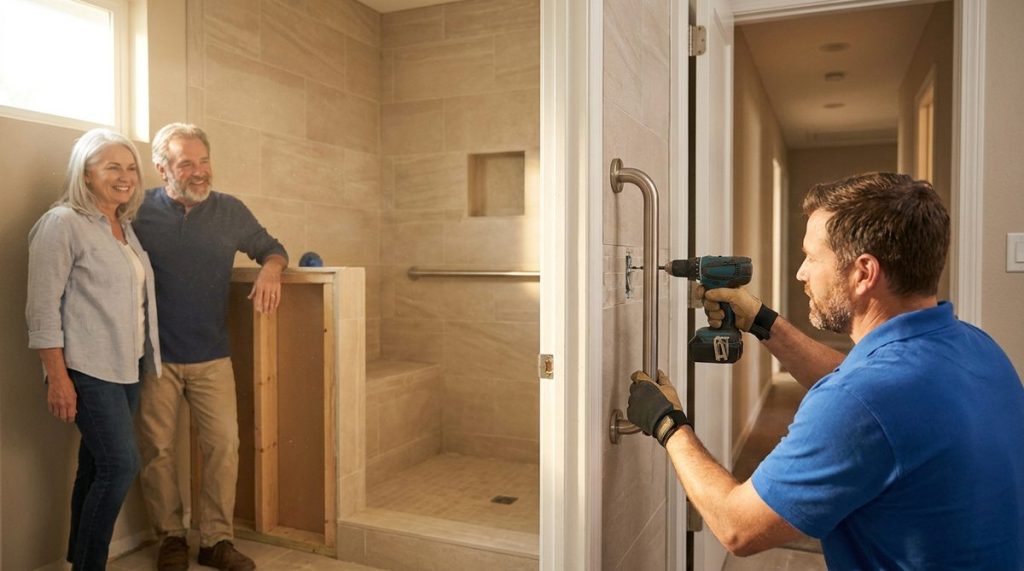
A curbless (zero-threshold) walk-in shower is the gold standard. It eliminates the step-over that causes so many falls, accommodates mobility aids down the road, and frankly looks beautiful in modern design. Pair it with ADA-compliant grab bars—not the institutional kind from the 1990s, but the sleek, brushed-nickel or matte-black bars that double as towel holders.
Add a comfort-height toilet (17 to 19 inches versus the standard 15), a handheld showerhead on a slide bar, and non-slip tile flooring. Together, these changes transform the most hazardous room in your home into one of the safest.
What It Costs
A full bathroom remodel with aging-in-place features runs $8,000 to $18,000 depending on your market and finishes. Grab bar installation alone costs $150 to $350 per bar installed. A comfort-height toilet swap is $300 to $600 including labor. If budget is tight, I tell clients to start with grab bars and non-slip mats—those two changes alone reduce bathroom fall risk by up to 40%.
2. Main-Floor Living Capability — Eliminate the Stairs Problem Before It Starts
I often tell my clients that stairs don’t become a problem gradually—they become a problem suddenly. One knee replacement, one hip fracture, one bout of vertigo, and that second-floor bedroom becomes unreachable overnight.
If your home doesn’t already have a bedroom and full bathroom on the main floor, creating one should be near the top of your priority list. This might mean converting a dining room or den, adding a half-bath expansion, or finishing a portion of the first floor that’s been underused.
The Numbers
Converting an existing room into a main-floor bedroom typically costs $2,000 to $5,000 (assuming the room exists and needs minor modifications). Adding a full bathroom where plumbing needs to be run can range from $15,000 to $35,000. A stairlift, as an alternative, runs $3,000 to $5,000 for a straight staircase model, but I consider that a bridge solution, not a permanent one.
The investment pays dividends beyond safety. Homes with main-floor master suites consistently sell faster and at higher prices, particularly in markets popular with retirees. If you’re exploring the best locations for your next chapter, our guide to the best small towns for retirees can help narrow the search.
3. Lighting Improvements — The Most Underestimated Safety Upgrade
This is the modification I have to advocate hardest for, because it doesn’t feel dramatic. No one posts their new hallway lighting on social media. But the National Institute on Aging identifies poor lighting as a leading contributor to falls in older adults, and our eyes need three times more light at age 60 than at age 20 to see the same level of detail.
Where to Focus
Start with transition zones: the top and bottom of staircases, hallways, the path from bedroom to bathroom, and exterior walkways. Install motion-activated LED lights in these areas so you never walk into darkness. Replace toggle light switches with illuminated rocker switches that are easier to find and operate.
Under-cabinet lighting in the kitchen, LED strips along baseboards, and smart bulbs that adjust color temperature throughout the day (warmer at night to reduce glare) make a measurable difference in safety and comfort.
Cost Breakdown
A whole-home lighting upgrade with motion sensors and smart switches costs $1,500 to $4,000 professionally installed. DIY options using plug-in motion-sensor night lights and adhesive LED strip lighting can bring costs under $300. Dollar for dollar, this is the best return on safety investment in my toolkit.
4. Kitchen Accessibility Modifications — Where Independence Lives
The kitchen is where aging-in-place success is won or lost. If you can prepare your own meals safely, you’ve preserved one of the most fundamental aspects of independent living. If you can’t, the cascade toward outside help accelerates fast.
Smart Modifications
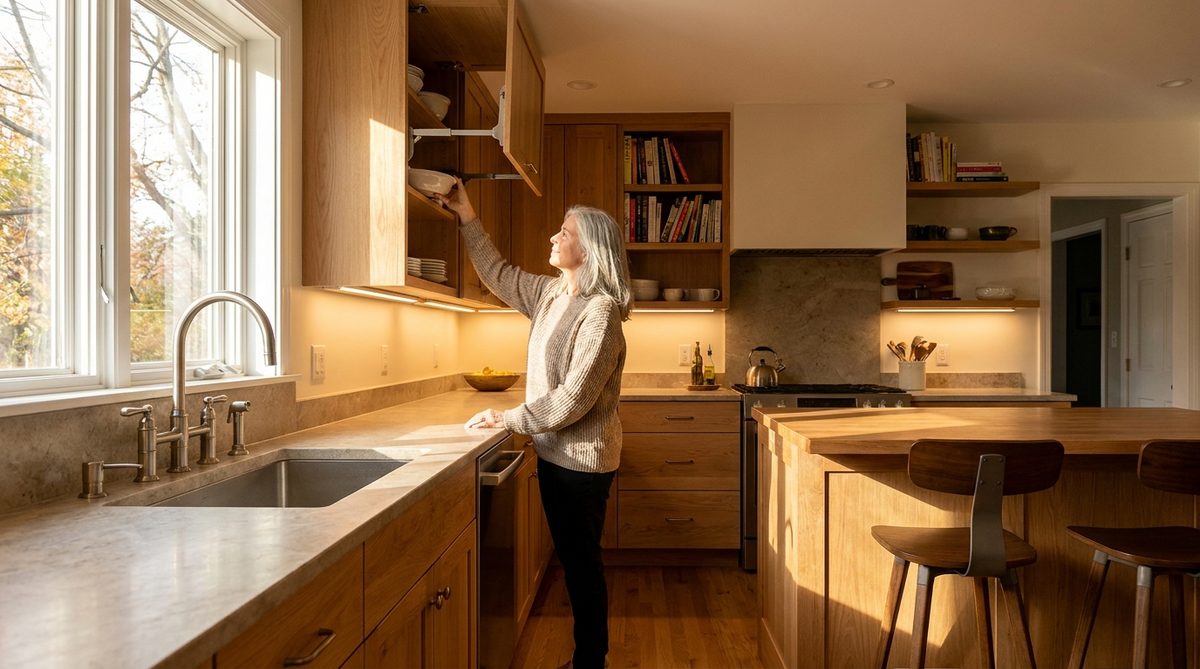
Pull-down shelving systems let you access upper cabinets without reaching overhead or climbing step stools—which, for the record, I’d like to ban from every home I visit. Lever-handle faucets replace knobs that become impossible with arthritic hands. A wall oven installed at counter height eliminates bending to retrieve heavy, hot dishes from a low oven cavity.
Consider drawer-style dishwashers and microwaves, contrasting-color countertop edges for those with low vision, and anti-fatigue floor mats for joints that protest standing.
The Investment
A targeted kitchen accessibility retrofit runs $3,000 to $12,000. Pull-down shelf systems cost $200 to $500 per cabinet. Lever faucet replacement is $150 to $400 installed. A wall oven relocation is the biggest ticket item at $2,000 to $5,000 depending on whether electrical or gas lines need rerouting.
5. Entrance and Doorway Modifications — Getting In and Out Safely
A 2023 study published in the Journal of Applied Gerontology found that 30% of older adults who reported difficulty with daily activities cited entering or exiting their home as a primary challenge. Steps, narrow doorways, and heavy doors create barriers that seem minor until they aren’t.
Key Changes
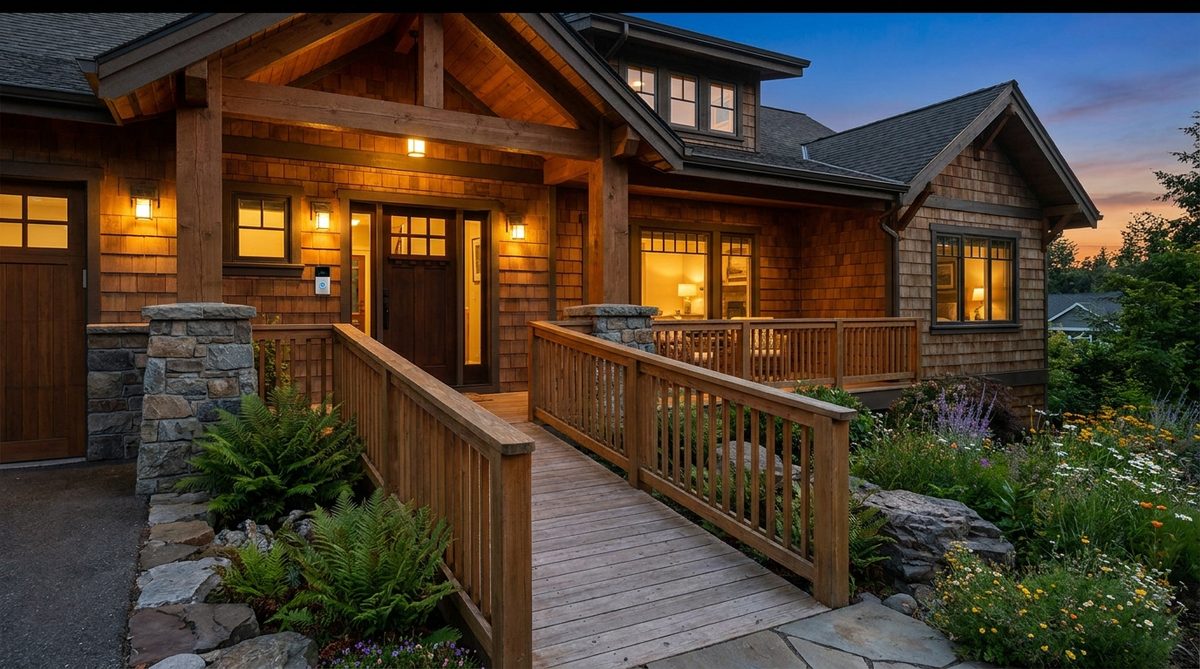
- Install at least one no-step entry. A gently sloped ramp or graded walkway to one entrance eliminates the need to navigate steps. Modern ramp designs integrate with landscaping so seamlessly that visitors don’t even notice them.
- Widen interior doorways to 36 inches. Standard doorways are 30 to 32 inches—too narrow for most wheelchairs and many walkers. Swing-clear hinges can add 2 inches without construction, but full widening costs $300 to $800 per doorway.
- Replace round doorknobs with lever handles. This $15-per-door upgrade is one of the easiest and most impactful modifications you can make today.
- Add a smart lock with keypad or phone entry. Fumbling with keys on a dark porch is both a safety risk and a security concern. Smart locks cost $150 to $350 and eliminate the problem entirely. While you’re thinking about security, brush up on protecting yourself from online scams too—digital entry points matter as much as physical ones.
- Install motion-activated exterior lighting at all entry points for visibility and security.
Total Cost Range
Entrance modifications vary widely. A basic package (ramp, one widened doorway, lever handles, smart lock, and exterior lighting) runs $2,500 to $7,000. A full exterior accessibility overhaul with concrete ramp construction can reach $10,000 to $15,000.
6. Flooring Replacements — Removing Tripping Hazards From Every Room
I cannot count the number of clients I’ve worked with who tripped on a carpet edge, slid on a polished hardwood floor, or caught a walker wheel on a transition strip between rooms. Flooring is the silent hazard that runs through your entire house.
Best Flooring Options for Aging in Place
Luxury vinyl plank (LVP) has become my go-to recommendation. It provides excellent traction, cushions impact better than tile or hardwood, is waterproof (critical for bathroom and kitchen use), and comes in designs that genuinely mimic natural wood or stone. Cork flooring is another excellent option for its cushion and grip, though it requires more maintenance.
Remove all throw rugs—yes, all of them—or secure them with industrial-grade double-sided tape. Eliminate transition strips between rooms wherever possible by using flush-mount transitions. These details sound small, but they prevent falls every single day.
What You’ll Spend
Replacing flooring throughout a 1,500-square-foot home with LVP costs $6,000 to $12,000 installed. Doing high-traffic and high-risk areas only (bathroom, kitchen, hallways) brings costs to $2,500 to $5,000. This is also a modification that adds resale value—LVP is the most-requested flooring among today’s homebuyers across all age groups.
7. Smart Home Technology — Your 24/7 Safety Net
Technology has transformed aging in place from a hope into a realistic, monitored, and supported lifestyle. What I see most often is clients who are intimidated by smart home technology until they experience it—then they wonder how they ever lived without it.
Essential Smart Home Features
Voice-activated assistants (Amazon Echo, Google Nest) let you call for help, control lighting, set medication reminders, and make phone calls without reaching for anything. Smart thermostats prevent dangerous temperature extremes. Water leak sensors alert you before a small drip becomes a catastrophic flood. Video doorbells let you see who’s at the door without approaching it.
Medical alert systems have evolved far beyond the “I’ve fallen and I can’t get up” pendant. Modern systems include automatic fall detection, GPS tracking, and two-way communication, with monthly monitoring fees of $25 to $50.
The connection between a well-adapted home and overall health outcomes is real and measurable. Research continues to show that environment shapes how we age—recent findings on reversing biological age in seniors underscore how much control we actually have over the aging process when we set up the right conditions.
Technology Costs
A basic smart home aging-in-place technology package costs $500 to $2,000 for equipment plus $25 to $50 monthly for monitoring services. This includes a voice assistant, smart lighting controls, a video doorbell, leak sensors, and a medical alert system.
What Each Modification Really Costs: A Side-by-Side Comparison
| Modification | Budget Option | Mid-Range Cost | Premium Build-Out | Safety Impact (1–10) |
|---|---|---|---|---|
| Bathroom Safety Upgrades | $500 (grab bars + non-slip mats) | $8,000–$12,000 | $18,000+ | 10 |
| Main-Floor Living | $2,000 (room conversion) | $10,000–$20,000 | $35,000+ | 9 |
| Lighting Improvements | $200 (DIY night lights + LEDs) | $1,500–$3,000 | $4,000+ | 8 |
| Kitchen Accessibility | $400 (lever faucet + mats) | $5,000–$8,000 | $12,000+ | 7 |
| Entrance & Doorway Mods | $300 (lever handles + lighting) | $3,000–$5,000 | $15,000+ | 8 |
| Flooring Replacement | $500 (remove rugs + secure transitions) | $4,000–$8,000 | $12,000+ | 7 |
| Smart Home Technology | $300 (voice assistant + sensors) | $1,000–$1,500 | $2,000+ plus monthly fees | 6 |
How to Pay for Home Modifications for Aging in Place
Cost is the number one objection I hear, and I understand it. But the funding landscape is far better than most people realize. Here are the primary sources I help clients access:
Medicaid Home and Community-Based Services (HCBS) waivers cover home modifications in most states for qualifying individuals. Benefits vary widely—some states cap at $5,000, others cover up to $20,000 in modifications.
Area Agencies on Aging administer grants and low-interest loans for home modifications. The National Council on Aging’s BenefitsCheckUp tool can identify programs specific to your zip code in minutes.
VA Specially Adapted Housing (SAH) and Home Improvement and Structural Alterations (HISA) grants provide up to $6,800 for qualifying veterans for aging-in-place modifications.
USDA Section 504 Home Repair Loans and Grants offer up to $10,000 in grants for homeowners over 62 in rural areas who cannot repay a loan. Loans up to $40,000 are also available at 1% interest.
And don’t overlook the financial planning side of aging in place. Budgeting for modifications works best when you understand the full picture of your retirement income, including how Social Security COLA adjustments affect your long-term purchasing power.
Your 6-Step Action Plan: Where to Start This Weekend
- Do a walk-through with fresh eyes. Walk every path you take daily—bed to bathroom, kitchen to front door, car to house—and note every step, narrow passage, dim spot, and slippery surface.
- Prioritize by risk. Bathroom first, then entryways, then lighting. These three areas account for over 70% of fall-related injuries at home.
- Get a professional assessment. Hire a Certified Aging-in-Place Specialist (CAPS) through the National Association of Home Builders directory. Assessments typically cost $200 to $500 and produce a detailed modification plan tailored to your home and health.
- Check your funding eligibility. Visit NCOA’s BenefitsCheckUp, contact your local Area Agency on Aging, and explore VA or USDA programs if applicable.
- Start with quick wins. Install grab bars, swap doorknobs for levers, add night lights, and remove throw rugs. You can accomplish all of this in a single weekend for under $500.
- Schedule the bigger projects. Plan bathroom renovations, flooring replacements, and entrance modifications for the coming months. Get at least three bids from contractors experienced in accessibility work—not all general contractors understand ADA specifications.
The Real Cost of Waiting
I want to end with something I tell every client during our first conversation: the best time to modify your home is before you need the modifications. Every year I work with families who are scrambling to make changes after a fall, after a diagnosis, after a hospital stay—and the emotional, physical, and financial cost of reactive modification is always higher than proactive planning.
A 2024 AARP study found that homeowners who made proactive modifications reported 58% fewer fall-related injuries over a five-year period compared to those who made no changes. That statistic alone makes the case, but there’s a quality-of-life dimension that numbers can’t capture: the confidence of knowing your home works with you, not against you.
Home modifications for aging in place aren’t about admitting limitations. They’re about engineering independence. And in my experience, the homeowners who start early don’t just stay safer—they stay happier, more active, and more connected to the lives they’ve built in the homes they love.
Frequently Asked Questions
What is the most important home modification for aging in place?
Bathroom safety upgrades, including grab bars, a curbless walk-in shower, and non-slip flooring, are consistently the highest-impact modification. The bathroom is the site of approximately 80% of fall-related injuries among older adults, making it the single most important room to address first.
How much does it cost to modify a home for aging in place?
A comprehensive set of home modifications for aging in place typically costs between $5,000 and $30,000, depending on the scope of work and your local market. Budget-friendly options like grab bars, lever handles, and improved lighting can be done for under $500, while major renovations like bathroom remodels and ramp construction fall at the higher end.
Does Medicare pay for home modifications for aging in place?
Traditional Medicare does not cover most home modifications. However, some Medicare Advantage plans include home safety benefits. Medicaid HCBS waivers, VA grants, USDA Section 504 programs, and local Area Agency on Aging grants are more reliable funding sources for qualifying homeowners.
Do aging-in-place modifications hurt home resale value?
No—most aging-in-place modifications actually increase resale value. Features like walk-in showers, main-floor master suites, wider doorways, and luxury vinyl plank flooring are desirable to buyers of all ages. Universal design elements are increasingly seen as premium features rather than medical accommodations.
About Marcus Bell, Certified Aging-in-Place Specialist (CAPS)
Marcus Bell is a Certified Aging-in-Place Specialist (CAPS) with 14 years of experience helping American seniors create safer, more comfortable living environments. He has consulted on hundreds of home modifications — from bathroom safety upgrades to smart home installations — and writes extensively about the products, services, and strategies that help older adults live independently for longer. At Daily Trends Now, Marcus covers home improvement, aging-in-place solutions, gardening, and practical lifestyle tips for seniors.