

The Retirement Hobby Problem Nobody Talks About
After 16 years writing about lifestyle and active aging, I’ve noticed a pattern that genuinely concerns me. Readers over 50 tell me they feel stuck—not because they lack time or money, but because they’ve absorbed a pile of outdated beliefs about what hobbies for seniors should look like. They picture shuffleboard. They imagine quiet, solitary pursuits. They assume their window for trying something new has closed.
Every single one of those assumptions is wrong.
A 2023 study published in Nature Medicine found that adults who regularly engaged in leisure activities had a 30% lower risk of mortality and significantly lower rates of depression. The National Institute on Aging now recommends a mix of physical, cognitive, and social activities as a frontline strategy for healthy aging—not just a nice way to pass the time.
Yet myths persist, and they’re costing retirees years of vitality. Let’s dismantle the seven biggest ones, because what I see most often is that once these mental barriers come down, everything changes.
Myth 1: You’re Too Old to Start Something New
This is the granddaddy of all hobby myths, and it crumbles under the slightest scrutiny. Neuroscience research from the last decade has confirmed that the adult brain retains neuroplasticity—the ability to form new neural connections—well into the 80s and beyond. A 2022 study from the University of Cambridge showed that adults who learned a new musical instrument after age 60 demonstrated measurable improvements in working memory within just four months.
I often tell my readers: the only hobby you’re too old for is the one you never try. Grandma Moses didn’t start painting seriously until age 78. Harriette Thompson ran her first marathon at 76. These aren’t flukes—they’re evidence of a biological reality that our culture has been slow to accept.
“The brain doesn’t have a retirement date. Adults who challenge themselves with unfamiliar activities after 60 build cognitive reserve that may delay dementia onset by up to five years.” — Dr. Denise Park, Director of Research, Center for Vital Longevity, University of Texas at Dallas
The truth? Your 60s and 70s are neurologically fertile ground. You have patience, discipline, and life experience that make you a faster learner in many domains than you were at 25.
Myth 2: Hobbies for Seniors Need to Be “Low-Impact” and Gentle
Somewhere along the way, the wellness world decided that anyone over 60 should be wrapped in bubble wrap. While joint health and injury prevention absolutely matter, the notion that retirees should limit themselves to chair yoga and bird-watching is patronizing—and medically inaccurate.
The AARP reports that adults aged 65-74 who engage in moderate-to-vigorous physical hobbies—hiking, swimming, pickleball, cycling, even surfing—have 40% lower rates of cardiovascular events than sedentary peers. Pickleball alone has exploded among the 55+ demographic, growing by 158% among players over 55 between 2020 and 2023, according to the Association of Pickleball Professionals.
The key isn’t avoiding challenge—it’s scaling appropriately and working with your body rather than against it. A 68-year-old who has never kayaked can absolutely take it up; she just needs proper instruction and a gradual ramp-up, the same as any beginner at any age.
Myth 3: Solo Hobbies Are Just as Good as Social Ones
I want to be careful here because solitary hobbies—reading, gardening, puzzles—have genuine cognitive benefits. But claiming they’re equivalent to socially engaged hobbies ignores a mountain of evidence about loneliness and aging.
The U.S. Surgeon General’s 2023 advisory on the loneliness epidemic reported that social isolation among older adults carries health risks equivalent to smoking 15 cigarettes a day. The National Council on Aging found that seniors who participate in group hobby activities report 34% higher life satisfaction scores than those who pursue hobbies exclusively alone.
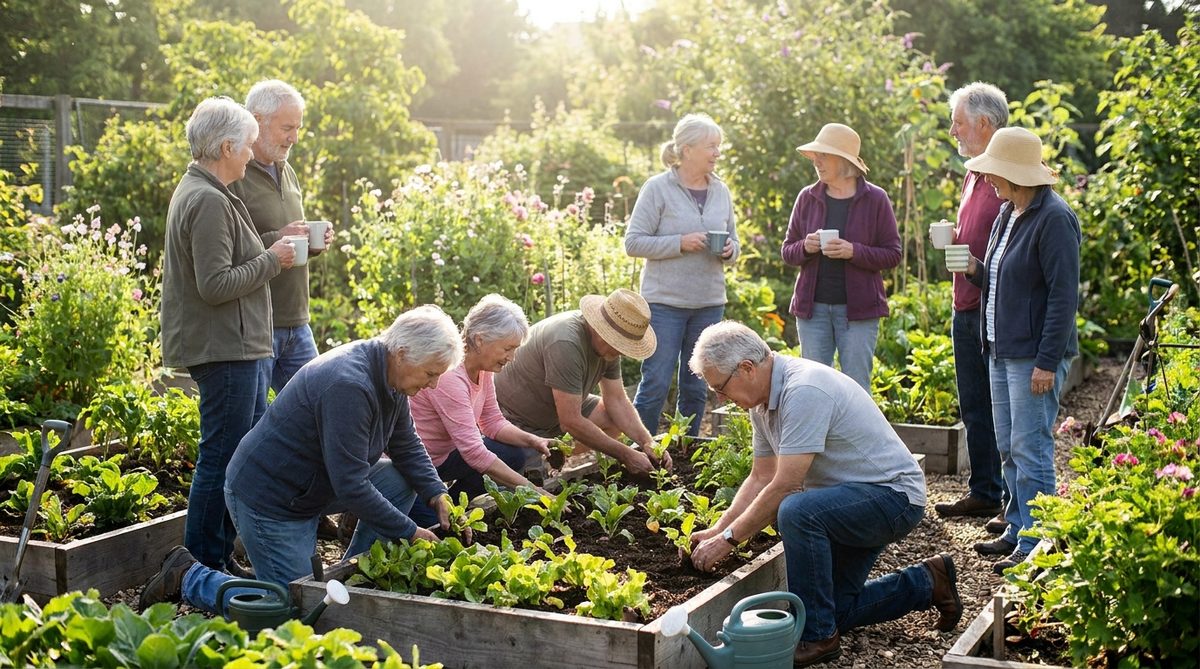
What I see most often in my reporting is that the retirees thriving the most are the ones who blend both. They read alone in the morning and join a book club weekly. They garden at home and volunteer at a community garden. The social component isn’t optional—it’s medicinal.
Hobbies With Built-In Community
- Community theater or improv classes — combine creativity, memorization, and social bonding
- Group hiking clubs — many chapters through organizations like Meetup specifically serve the 50+ demographic
- Pickleball leagues — the fastest-growing sport in America with deep social roots
- Community garden plots — shared spaces that foster neighborly connections and produce fresh food
- Pottery and ceramics studios — hands-on creativity in a workshop setting
- Travel groups and cruise communities — structured social exploration (group cruises have seen a 25% enrollment increase among solo retirees since 2022)
Myth 4: Hobbies Are Just for Fun—They Don’t Really Affect Your Health
This might be the most dangerous myth on the list because it reduces hobbies to entertainment when the science says they’re closer to preventive medicine.
Consider the data: A longitudinal study from University College London tracking over 93,000 adults aged 65+ found that those who engaged in hobbies daily had a 21% lower risk of mortality over an eight-year period compared to those who rarely or never participated in hobbies. The effect held even after controlling for income, pre-existing conditions, and physical activity levels.
| Hobby Category | Examples | Primary Health Benefit | Key Research Finding |
|---|---|---|---|
| Physical/Active | Swimming, dancing, pickleball, hiking | Cardiovascular, mobility, fall prevention | 36% lower risk of falls (CDC, 2023) |
| Cognitive/Creative | Painting, writing, learning languages, chess | Memory, cognitive reserve, mood regulation | Up to 73% lower risk of dementia (Mayo Clinic, 2022) |
| Social/Group | Book clubs, choir, volunteering, travel groups | Reduced loneliness, lower depression rates | 34% higher life satisfaction (NCOA, 2023) |
| Nature-Based | Gardening, birdwatching, fishing, nature photography | Lower cortisol, improved sleep, reduced anxiety | Cortisol drops 21% after 20 min in green space (Frontiers in Psychology, 2022) |
| Mind-Body | Tai chi, yoga, meditation, qigong | Balance, stress reduction, chronic pain management | 28% improvement in balance after 12 weeks of tai chi (JAMA, 2023) |
Hobbies aren’t just filler for empty hours—they’re a pillar of healthy aging. If you’re building a holistic plan for your later years, combining the right hobbies with other evidence-based habits creates a powerful foundation. For more on that comprehensive approach, explore these 6 Pillars of a Healthier Age-Defying Lifestyle After 50.
Myth 5: It Costs Too Much to Pick Up a New Hobby in Retirement
I hear this one constantly, and I understand the anxiety. Retirement budgets are real, and the last thing anyone needs is a $3,000 pottery kiln collecting dust in the garage. But the cost myth confuses the exception with the rule.
The vast majority of the most beneficial hobbies for seniors cost little to nothing:
- Walking groups: Free. Just shoes and a meeting spot.
- Public library programs: Free classes in everything from watercolor to genealogy research—offered at over 9,000 public library systems nationwide.
- YouTube and free online courses: Platforms like MIT OpenCourseWare, Khan Academy, and Coursera offer thousands of free classes. Learning a new language through Duolingo costs zero dollars.
- Volunteering: Free, and it provides structure, purpose, and social connection simultaneously.
- Community center classes: Most offer sliding-scale or senior-discounted rates. The national average for a community center class is $5-$15 per session.
Even hobbies with startup costs—like photography or cycling—can be entered affordably. A refurbished digital camera runs $75-$150. A reliable used bicycle costs $100-$300. The trick, in my experience, is to borrow or rent before you buy, and to take advantage of the extensive senior discount infrastructure that already exists across America.
And for those watching retirement finances carefully, understanding your income picture matters too. Knowing what retirees actually take home from Social Security in 2026 can help you budget for the activities that keep you healthy and engaged.

Myth 6: Technology-Based Hobbies Aren’t for Older Adults
This one drives me up the wall, frankly. The assumption that people over 60 can’t—or shouldn’t—engage with digital hobbies is contradicted by every metric available.
According to the Pew Research Center’s 2024 data, 75% of Americans aged 65+ now use the internet daily, and 61% own smartphones. Digital photography, video editing, blogging, genealogy research through platforms like Ancestry.com, online chess, and even video game communities have become legitimate, enriching hobbies for millions of retirees.
In my 16 years covering this space, I’ve interviewed a 72-year-old woman who runs a popular travel blog, a 79-year-old man who streams chess on Twitch, and a 68-year-old couple who taught themselves 3D printing to make adaptive tools for their home. Technology isn’t the enemy of aging—it’s increasingly one of its best allies. The real barriers are often misconceptions about age and tech, which I’ve seen explored in depth in this piece on 5 Myths About Age Tech That Stop Seniors From Aging in Place.
Digital Hobbies Worth Exploring After 50
- Digital photography and editing — modern smartphone cameras rival professional equipment from a decade ago
- Podcasting — startup costs under $100; a natural outlet for storytelling and expertise-sharing
- Genealogy research — combines detective work, history, and family connection
- Online gaming communities — strategic games like bridge, chess, and even cooperative video games offer cognitive and social benefits
- Blogging or memoir writing — platforms like WordPress are free and increasingly intuitive
Myth 7: Once You Retire, You’ll Naturally Find Things to Do
This might be the quietest myth—and the one that causes the most harm. The assumption that free time automatically fills itself with meaningful activity is how too many retirees end up watching six hours of television a day and wondering why they feel depressed.
Research from the American Psychological Association shows that retirees who don’t proactively plan their leisure time are 40% more likely to experience a decline in mental health within the first two years of retirement. The structure that work provided—schedules, goals, social contact, identity—doesn’t replace itself. You have to build a new scaffold.
“Retirement isn’t the end of productivity—it’s the beginning of the most self-directed chapter of your life. But self-direction requires intention. The happiest retirees I’ve encountered over 16 years are the ones who treat their hobby life with the same seriousness they once gave their careers.”
I recommend what I call the “three-bucket approach”: maintain at least one physical hobby, one cognitive or creative hobby, and one social hobby. They can overlap—a dance class covers physical and social, a community writing workshop covers cognitive and social—but having all three buckets filled creates a resilient, varied life that protects against the boredom, isolation, and cognitive decline that unstructured retirement can invite.
How to Actually Get Started (Without Overthinking It)
If you’ve recognized yourself in any of these myths, here’s my practical advice after nearly two decades in this field: start before you’re ready.
- Audit your curiosity. What did you love at 15 that adult life crowded out? What do you watch YouTube videos about at midnight? That’s your starting point.
- Try before you commit. Attend a free session, borrow equipment, watch an introductory class online. Give yourself permission to sample without obligation.
- Build in social accountability. Sign up with a friend or join a group. You’re 65% more likely to stick with a new activity if someone else is expecting you to show up (American Journal of Preventive Medicine, 2021).
- Schedule it like an appointment. Put it on the calendar with a specific day and time. Vague intentions (“I should try painting sometime”) have a near-zero success rate.
- Expect the awkward phase. You will be bad at new things initially. That discomfort is literally your brain growing new connections. Welcome it.
The Real Cost of Doing Nothing
Here’s the part I wish more people talked about. The myths I’ve outlined above aren’t just intellectually wrong—they have measurable consequences. Sedentary, socially isolated retirees face higher rates of cardiovascular disease, dementia, depression, and premature death. The healthcare costs alone are staggering: the CDC estimates that physical inactivity costs the U.S. healthcare system $117 billion annually, with adults over 65 accounting for a disproportionate share.
Hobbies for seniors aren’t a luxury. They aren’t a way to “keep busy.” They are, according to virtually every major health organization in the country, a critical component of aging well. And the only thing standing between most retirees and a richer, healthier life is a handful of outdated myths that deserve to be retired themselves.
If you’re also thinking about how your living environment supports this next chapter, the overlap between hobbies, health habits, and home setup is significant. These 7 Healthy Aging Habits That Actually Work After 60 are a solid companion read.
The best time to start a new hobby was ten years ago. The second-best time is this afternoon.
Frequently Asked Questions
What are the best hobbies for seniors who have limited mobility?
Chair yoga, digital photography, painting or drawing, genealogy research, audiobook clubs, birdwatching from a patio, and online chess or bridge are all excellent options. Many community centers now offer seated versions of popular group classes, and creative hobbies like writing or podcasting require minimal physical movement while providing strong cognitive and social benefits.
How many hobbies should a retiree realistically maintain?
Research suggests maintaining at least two to three active hobbies that cover different categories—one physical, one cognitive or creative, and one social. You don't need to fill every hour; even dedicating 30-60 minutes daily to a meaningful hobby shows measurable health benefits according to the University College London's 2023 longevity study.
Can hobbies actually help prevent dementia in older adults?
Strong evidence supports this. A 2022 Mayo Clinic study found that engaging in cognitive hobbies like reading, playing musical instruments, crafting, and computer use was associated with up to a 73% lower risk of developing mild cognitive impairment. While hobbies aren't a guaranteed prevention method, they build what neurologists call "cognitive reserve," which helps the brain compensate for age-related changes.
Are group travel and cruises considered beneficial hobbies for retirees?
Yes. Group travel combines physical activity, cognitive stimulation from new environments, and social interaction—the three pillars of a well-rounded hobby life. Research from the Global Coalition on Aging found that adults who travel regularly after retirement report 30% higher satisfaction scores and lower rates of depression. Cruise communities in particular have grown as a social outlet for solo retirees, with group cruise enrollments up 25% since 2022.
About Jennifer Adams, 16 Years in Lifestyle Journalism
Jennifer Adams is a lifestyle journalist with 16 years of experience writing about travel, hobbies, relationships, home life, and the art of aging well. She has contributed to national publications focused on the interests and aspirations of adults over 50 — from budget-friendly travel destinations to rediscovering hobbies in retirement. At Daily Trends Now, Jennifer writes warm, practical articles that celebrate life after 50 and help readers make the most of every chapter.