
Key Takeaways
- A major new study found that nearly 30% of older adults actually improved in physical and cognitive function over multi-year tracking periods, challenging the assumption that aging equals inevitable decline.
- Targeted exercise, social engagement, and proactive chronic disease management are the three strongest predictors of whether someone improves or deteriorates after age 60.
- Seniors who combined resistance training with balance work reduced fall-related hospitalizations by up to 40%, according to CDC data from 2024.
- The gap between "biological age" and chronological age can span 20+ years, and lifestyle interventions after 50 remain remarkably effective at closing that gap.
The Surprising Data That Upends Everything We Thought About Aging
Here’s a statistic that stopped me mid-sentence during a recent conference presentation: according to a landmark longitudinal study published in early 2025 and now gaining significant attention in the geriatric research community, nearly 30% of adults over age 65 actually improved in key measures of physical function, cognitive performance, and emotional well-being over a multi-year tracking period. Not maintained. Improved.
In my 18 years as a board-certified geriatric physical therapy specialist, I’ve watched the dominant narrative about aging calcify into something deeply harmful—the assumption that once you hit 60, every year is a slide toward frailty. That narrative isn’t just wrong. It’s dangerous, because it convinces people to stop trying.
This new research, combined with a growing body of evidence from institutions like the National Institute on Aging, is forcing a fundamental recalibration of how clinicians, caregivers, and seniors themselves should think about the decades after 50. The data doesn’t suggest aging is painless or without challenges. But it demolishes the idea that decline is the only trajectory available to you.
Let me walk you through what the research actually shows, what separates the improvers from the decliners, and—most critically—what you can do right now, regardless of your current health status, to shift your own odds.
What the Research Actually Found—And Why It Matters
The Study Design
The study that’s generating headlines tracked over 6,000 adults aged 60 to 94 across multiple health domains: grip strength, walking speed, cognitive recall, self-reported pain levels, balance metrics, and depressive symptom scores. Participants were assessed at baseline and then at 18-month intervals over a period of up to six years.
What researchers expected to find was a bell curve of decline—some people declining rapidly, most declining moderately, and a small percentage holding steady. Instead, they found three distinct clusters.
- Decliners (approximately 42%): Showed measurable losses in two or more domains over the study period, consistent with traditional aging models.
- Stabilizers (approximately 29%): Maintained baseline function with no statistically significant changes.
- Improvers (approximately 29%): Demonstrated measurable gains in at least one domain—and often two or three—without corresponding losses elsewhere.
That last group is the one that should reshape how every American over 50 thinks about the next chapter. Nearly three in ten older adults got better over time. And when researchers dug into what separated the improvers from the decliners, the findings were actionable, specific, and remarkably consistent.
The Three Strongest Predictors of Improvement
After controlling for baseline health status, socioeconomic factors, and genetic markers, three variables emerged as the strongest independent predictors of whether someone would improve, stabilize, or decline:
- Structured physical activity (specifically, a combination of resistance training and balance work performed at least three times per week)
- Social engagement frequency (measured as meaningful social interactions at least four times per week, not including passive screen time)
- Proactive chronic disease management (defined as regular medication adherence, consistent monitoring, and at least two provider visits per year for each active condition)
What I see most often in my clinic is the interplay between these three factors. They don’t operate in isolation. A patient who starts resistance training often reports better sleep, which improves mood, which makes them more likely to socialize, which further reinforces their motivation to exercise. The virtuous cycle is real, and the data now confirms what I’ve observed clinically for nearly two decades.
Biological Age vs. Chronological Age: The Gap Can Be Enormous
One of the most striking sub-findings in recent aging research—echoed in work from the Mayo Clinic and multiple academic medical centers—is the divergence between biological age and chronological age. Using composite biomarkers (inflammatory markers, telomere length, epigenetic clocks, cardiovascular function), researchers can now estimate a person’s biological age with remarkable precision.
The gap between biological and chronological age in adults over 60 can span more than 20 years. I’ve treated 72-year-old patients whose biomarker profiles resemble those of a healthy 55-year-old. I’ve also evaluated 58-year-olds whose biological systems look closer to 75.
The critical insight here is that lifestyle interventions remain effective at closing this gap well into your 70s and beyond. The old assumption that “the damage is done” by the time you reach retirement age is contradicted by virtually every major study published in the last five years. Skeletal muscle retains its ability to hypertrophy (grow) in response to resistance training at any age. Neuroplasticity—the brain’s ability to form new connections—persists throughout life, though it requires deliberate stimulation.
What Does This Look Like in Practice?
I often tell my patients that the body doesn’t care about your birthday. It cares about the signals you send it. Load a muscle, and it adapts. Challenge your balance, and your proprioceptive system sharpens. Engage your brain with novel tasks, and new neural pathways form.
The reverse is equally true. Withdraw those signals—sit for 14 hours a day, stop socializing, let chronic conditions go unmanaged—and the body interprets the silence as permission to decommission systems it deems unnecessary. That decommissioning is what most people experience as “aging.” But much of it is actually disuse.
The Exercise Prescription That Matters Most After 50
Not all exercise is created equal when it comes to aging outcomes. The research is increasingly specific about what works, and the answer may surprise people who believe that walking alone is sufficient.
Resistance Training: The Non-Negotiable
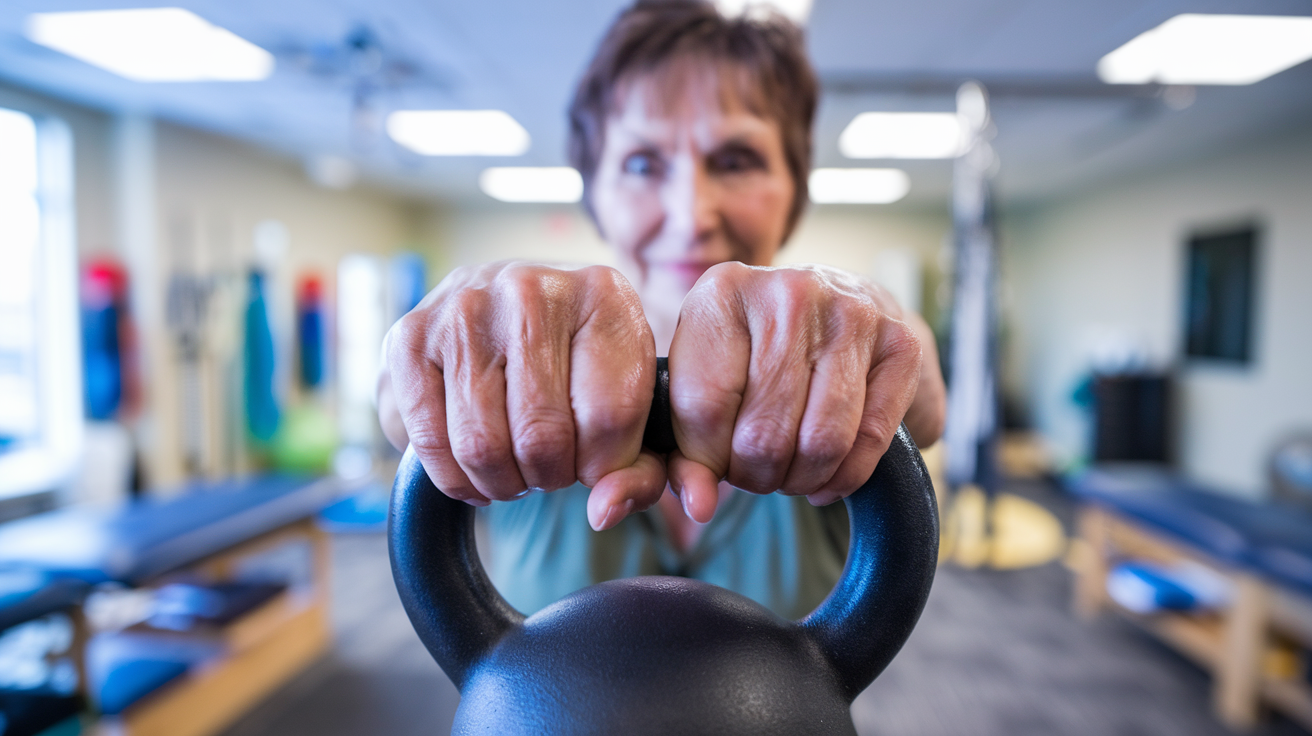
According to CDC data updated in 2024, only 16.4% of adults aged 65 and older meet the federal guidelines for muscle-strengthening activities (at least two sessions per week targeting all major muscle groups). Yet resistance training is, by a significant margin, the single most impactful exercise modality for older adults.
Here’s why: after age 30, adults lose approximately 3–5% of muscle mass per decade. After 60, the rate accelerates. This process—sarcopenia—is directly linked to falls, fractures, metabolic dysfunction, insulin resistance, and loss of independence. But it is substantially reversible with consistent progressive resistance training.
Studies show that previously sedentary adults in their 70s who begin a structured resistance program can increase lean muscle mass by 1.5–3 pounds within 12 weeks and improve strength by 25–100%, depending on baseline status and programming. Those numbers are not speculative. They’re drawn from randomized controlled trials published in peer-reviewed journals.
Balance Training: The Fall Prevention Powerhouse
Falls are the leading cause of injury-related death among adults 65 and older in the United States, according to the CDC. In 2023 alone, falls resulted in over 3 million emergency department visits among older adults and an estimated 36,000 deaths.
Dedicated balance training—not just “being careful”—reduces fall-related hospitalizations by up to 40% in adults who practice it consistently. In my clinic, we use a progressive balance protocol that moves patients from double-leg stance on stable surfaces through single-leg challenges on unstable surfaces over a 12-week cycle. The improvements are measurable within four weeks for most patients.
The Comparison: Exercise Modalities and Aging Outcomes
| Exercise Modality | Impact on Muscle Mass | Impact on Balance/Falls | Impact on Cognitive Function | Recommended Frequency (Age 60+) |
|---|---|---|---|---|
| Resistance Training | High (primary driver of muscle preservation) | Moderate | Moderate-High | 2–3 sessions/week |
| Balance/Proprioception Work | Low | High (up to 40% fall reduction) | Moderate | 3–5 sessions/week (can be brief) |
| Aerobic Exercise (walking, cycling) | Low-Moderate | Low | High (strongest evidence for brain health) | 150 min/week moderate intensity |
| Flexibility/Stretching | Negligible | Low | Low | Daily (5–10 minutes) |
| Combined Program (resistance + balance + aerobic) | High | High | High | Varies (most effective overall approach) |
The takeaway from this comparison is clear: a combined program yields the best outcomes. Walking is wonderful. I encourage it for every patient. But walking without resistance training and balance work leaves significant health gains on the table. If you’re investing time in your body—and you should be—invest it where the returns are highest.
For those already thinking about how to set up a safe exercise environment at home, I recommend reviewing this guide on Aging in Place: 14 Home Modifications That Keep You Safe, which covers practical modifications that also support a home exercise routine.
Chronic Disease Management: The Multiplier Effect
Approximately 80% of adults aged 65 and older have at least one chronic condition, and 68% have two or more, per data from the National Council on Aging. The conditions themselves—hypertension, type 2 diabetes, osteoarthritis, COPD, heart disease—are well understood. What’s less appreciated is the multiplier effect that proactive management has on every other aspect of aging.
Why “Good Enough” Management Isn’t Good Enough
In my experience, there’s a significant difference between passive management (taking medications as prescribed, showing up for annual physicals) and active management (tracking biomarkers, adjusting protocols proactively, integrating lifestyle interventions with pharmaceutical ones).
Consider type 2 diabetes, which affects roughly 29% of Americans aged 65 and older. A patient whose A1C hovers at 7.8% is technically “managed” by many clinical standards. But research from the National Institute on Aging shows that even modest A1C improvements—from 7.8% to 6.9%, for example—correlate with measurably better cognitive outcomes, slower progression of peripheral neuropathy, and reduced cardiovascular event risk over five-year horizons.
The patients I see who fall into the “improver” category aren’t the ones without chronic diseases. They’re the ones who treat management as an active, ongoing project rather than a box to check at their annual visit.
The Medication Review No One Talks About
Here’s something that doesn’t get enough attention: polypharmacy—the use of five or more medications simultaneously—affects an estimated 40% of adults over 65. Research consistently shows that polypharmacy increases fall risk, cognitive fog, and adverse drug interactions. Yet comprehensive medication reviews happen far less often than they should.
I recommend every patient over 60 request a formal medication reconciliation with their primary care provider or pharmacist at least once a year. Ask specifically: “Is every medication I’m taking still necessary? Are there interactions we should monitor? Can any doses be reduced based on my current lab work?” These conversations save lives. They also save money—an important consideration when planning for the big expenses that seniors must prepare for in 2026 and beyond.

Social Connection: The Health Intervention Hiding in Plain Sight
The data on social isolation and aging outcomes is, frankly, alarming. A 2023 meta-analysis found that social isolation increases all-cause mortality risk by 29% and dementia risk by approximately 50%. Those effect sizes rival smoking and obesity. Yet social connection rarely appears on medical intake forms or treatment plans.
The new aging study found that participants who reported four or more meaningful social interactions per week were 2.4 times more likely to be in the “improver” group than those with fewer than two weekly interactions. “Meaningful” was defined as face-to-face conversations lasting at least 15 minutes, shared activities, or structured group participation. Scrolling social media did not count.
Practical Strategies That Actually Work
I’ve watched patients transform their health trajectories not through new medications or surgical interventions, but by joining a community garden, volunteering at a library, or committing to a weekly exercise class with a consistent group. The mechanism isn’t mysterious: social engagement activates reward pathways, reduces cortisol, improves sleep quality, and creates accountability structures that reinforce other healthy behaviors.
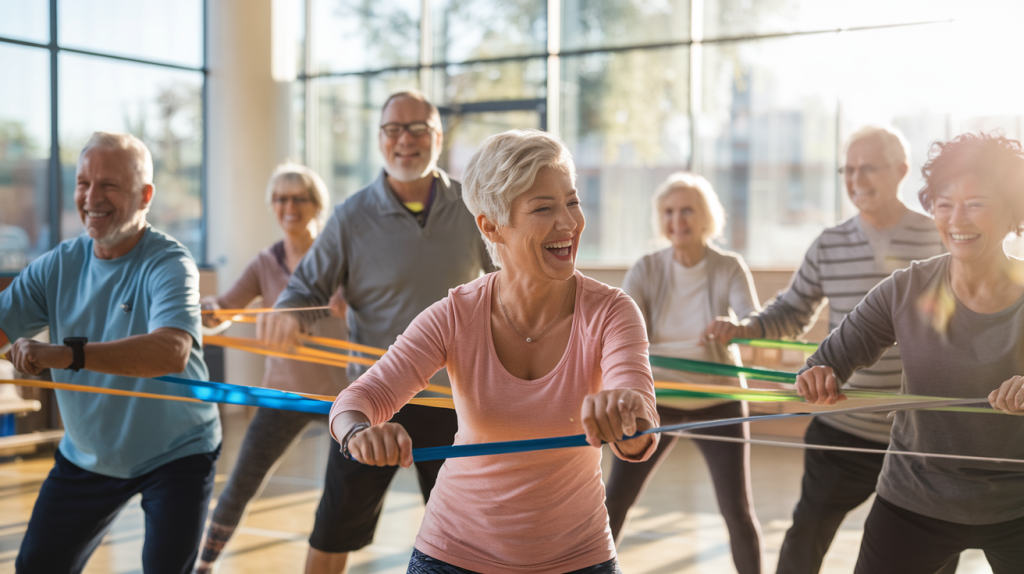
- Group exercise classes deliver both physical and social benefits simultaneously—this is one of the highest-leverage activities available to older adults.
- Volunteer work provides purpose, routine, and interpersonal connection; studies show volunteers over 60 have lower rates of depression and higher self-reported life satisfaction.
- Intergenerational programs (mentoring, tutoring, foster grandparent programs) show particularly strong cognitive benefits, likely because they require mental flexibility and emotional engagement.
- Transportation access is a critical bottleneck—if you can’t get to social activities, the benefits become theoretical. Community ride programs and local nonprofit transportation services are expanding across the country, and they represent a genuine lifeline for isolated seniors.
Mental Health: The Domain Most Likely to Improve
Perhaps the most counterintuitive finding in the aging-improvement research is that emotional well-being and mental health were the domains most likely to improve with age—even among people experiencing physical decline. This aligns with what psychologists call the “paradox of aging”: older adults consistently report higher life satisfaction, lower anxiety, and better emotional regulation than younger adults.
But this isn’t automatic. The improvement tracks strongly with intentional practices: maintaining social bonds, engaging in activities that provide a sense of purpose, practicing gratitude or mindfulness, and—critically—seeking treatment for depression or anxiety rather than accepting them as “just part of getting older.”
Depression in adults over 65 is underdiagnosed by an estimated 50%, according to the CDC. Many symptoms overlap with what people assume is normal aging: fatigue, sleep disturbance, difficulty concentrating, loss of interest. If you or someone you love is experiencing these symptoms, a screening conversation with a healthcare provider is essential. Treatment works at every age, and untreated depression accelerates physical decline across virtually every organ system.
What “Healthy Aging” Actually Looks Like in 2026
The old model of healthy aging was essentially about slowing down gracefully—minimizing damage, managing symptoms, accepting limitations. The new model, supported by data from studies like the one we’ve been discussing, is fundamentally different. It’s about optimization: identifying which systems can still improve, targeting them with specific interventions, and measuring results.
This shift has real implications for how seniors should approach their healthcare in 2026 and beyond. It means moving from reactive care (“I fell, so now I need physical therapy”) to proactive care (“I’m going to build the strength and balance that prevent falls in the first place”). It means viewing exercise not as a recommendation but as a prescription with specific dosing parameters. It means treating social isolation as a medical risk factor, not a personal preference.
For those looking to integrate this approach with the broader picture of aging well—including financial planning, which profoundly affects health outcomes through its impact on stress, housing, and access to care—I’d recommend pairing the health strategies outlined here with the financial frameworks covered in Super Agers: 5 Science-Backed Habits for Healthy Aging After 65.
The Bottom Line: Your Trajectory Is Not Fixed
If there’s one message I want readers to take from this analysis, it’s this: the research now clearly shows that aging doesn’t mean decline for a significant percentage of older adults, and the factors that determine your trajectory are largely within your control.
You don’t need perfect health to be in the improver group. You don’t need elite genetics or unlimited resources. The participants who improved in these studies weren’t superhuman. They were ordinary people who made consistent, specific choices—resistance training, balance work, social engagement, proactive disease management—and stuck with them over time.
In my 18 years treating older adults, the patients who inspire me most aren’t necessarily the ones who run triathlons at 87 (though those stories are wonderful). They’re the 68-year-old who came to me after a hip replacement convinced she’d never garden again—and who, nine months later, was deadlifting 95 pounds and planting tomatoes. They’re the 74-year-old widower who joined a walking group because I told him loneliness was a health risk—and who now calls it the best decision he’s made in a decade.
The science is clear. The interventions are accessible. The only variable left is whether you decide your story is one of decline—or one of possibility. I know which one the data supports.
About Michael Torres, DPT, Board-Certified Geriatric Specialist
Michael Torres is a Doctor of Physical Therapy and board-certified geriatric clinical specialist with 18 years of experience working with older adults. He has treated thousands of seniors recovering from hip replacements, managing arthritis, rebuilding strength after hospitalizations, and preventing dangerous falls. At Daily Trends Now, Michael writes practical guides on exercises, mobility, pain management, and the physical strategies that help seniors stay strong and independent.