According to a recent study, scientists have put forward the notion that remnants of a lost alien world lie approximately 1,800 miles beneath the Earth’s surface. This intriguing hypothesis proposes that peculiar anomalies found within the Earth’s interior could be traces of a celestial body that collided with our planet around 4.5 billion years ago. Additionally, the study suggests that similar ancient remnants might exist within other celestial bodies.
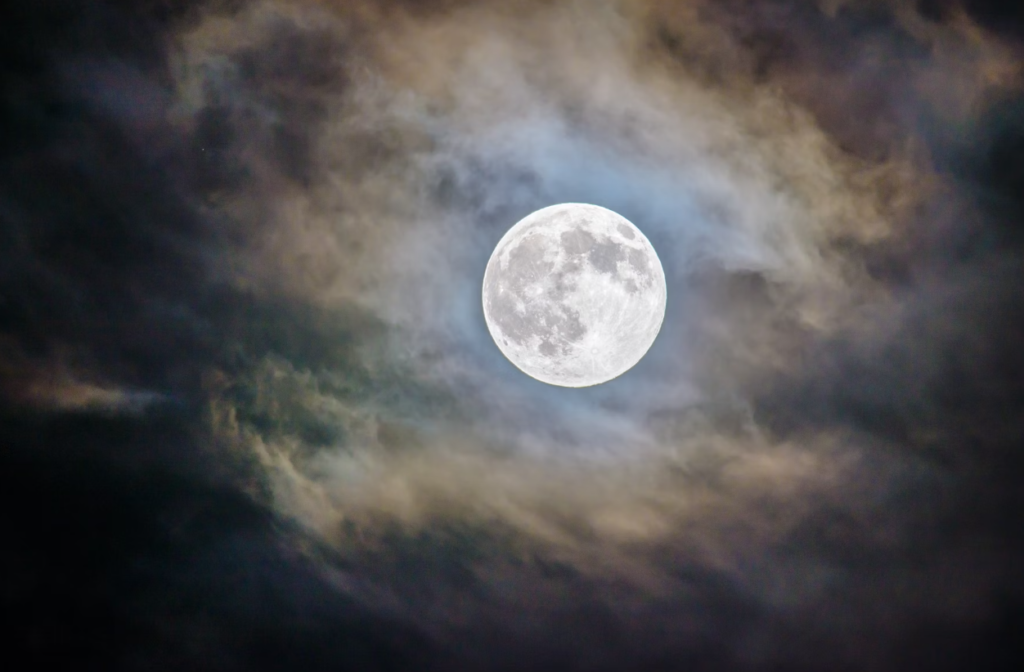
During its early stages, the solar system was far more chaotic and tumultuous compared to its present state, marked by numerous collisions between small embryonic worlds referred to as protoplanets. Scientists have held the belief for some time that an ancient protoplanet named Theia, potentially comparable in size to Mars, collided with Earth during this period. According to this theory, the catastrophic impact led to the ejection of debris from both Theia and Earth into space, ultimately coalescing to form the Moon.
Presenting new findings, a team of scientists led by Qian Yuan, a postdoctoral scholar in geophysics at the California Institute of Technology, suggests that remnants of Theia might have become embedded deep within Earth’s mantle, persisting to the present day. This proposition could provide an explanation for the presence of two significant “blobs” within Earth, recognized as large low-velocity provinces (LLVPs), which appear denser than the surrounding mantle in seismic observations. Seismic waves traverse these regions at notably lower velocities than the surrounding material.
Yuan and his collaborators propose that “LLVPs may represent buried relics of Theia mantle material (TMM) that was preserved in proto-Earth’s mantle after the Moon-forming giant impact.” Their study, published in Nature on Wednesday, suggests that “similar mantle heterogeneities caused by impacts may also exist in the interiors of other planetary bodies.”
Yuan emphasized the crucial role of Earth’s initial condition in its evolution, stating, “The initial condition of Earth may play a crucial role in Earth’s evolution and many uniquenesses. And that initial condition is widely believed to be set by the Moon-forming impact.”
The concept of LLVPs potentially being remnants of Theia was first contemplated by Yuan during his Ph.D. studies at Arizona State University. He and his colleagues developed the idea using geodynamical models and formally presented it at the 52nd Lunar and Planetary Science Conference in 2021.
Building upon their initial findings, Yuan and his team have conducted more advanced simulations of the Moon-forming impact and its long-term consequences within the early Earth. The researchers explored the possibility that the large low-velocity provinces (LLVPs), each spanning several hundred miles, could be remnants of Theia that became embedded in our planet during the aftermath of the collision 4.5 billion years ago.
Yuan credited co-authors Hongping Deng and Jacob Kegerreis for the sophisticated models that significantly improved their simulations of the Moon-forming impact. “Both of their impact simulations show this collision did not melt the whole Earth’s mantle, and the lower half of Earth’s mantle is mostly solid and it captures an amount of Theia’s mantle (~2% of Earth’s whole mass) that is consistent with the Earth’s present blobs,” he explained.
In essence, the team’s enhanced models support the notion that the LLVPs may indeed be remnants of Theia, contributing to the Moon’s formation upon colliding with Earth. Additionally, Yuan and his colleagues pointed to evidence suggesting that the blobs contain primordial elements predating the Moon-forming impact event. This indication implies that the LLVPs must be exceptionally ancient, a timeline less aligned with explanations positing them as masses of subducted oceanic crust or remnants of Earth’s differentiation phase.
Contemplating the idea that continent-sized fragments of a shattered world might reside beneath our daily lives, possibly releasing extraterrestrial materials through interior plumes to Earth’s surface basalt, is truly astonishing. While this hypothesis is incredibly intriguing, substantiating it requires extensive research and experimentation.
In pursuit of further understanding, Yuan and his colleagues express hope that remnants of Theia may be preserved on the Moon’s surface, offering a more accessible avenue compared to the deep layer of Earth where the LLVPs are located.
“I look forward to seeing future missions on the Moon to bring back its mantle rocks, which are very likely to come from the impactor Theia according to the majority of Moon-forming impact simulations,” Yuan remarked. “If the lunar mantle rock and LLVP-related basalts share the same chemical signatures, they should both originate from Theia.”
Additionally, the team highlighted the potential presence of ancient world remnants within the interiors of other planets, considering the prevalence of impacts in many early star systems. NASA’s InSight mission to Mars, concluded last year, provided unprecedented insights into the red planet’s interior. Future missions hold the potential to detect extraterrestrial relics within other celestial bodies, akin to unearthly nesting dolls.
“I’ve been talking to people who work on InSight data about the possibility, but since it only has one seismometer, I imagine it will be very, very challenging to observe the 3D structures of the blobs if Mars has them,” Yuan remarked. “Most of the InSight work is still focused on 1D structures of its interior, but since Mars has been suggested to have had a giant impact to form the crustal dichotomy, it may have related heterogeneities, which needs future more seismometers to test the hypothesis.”