


The Phone Call That Almost Cost Everything
Last October, I got an email from a reader named Margaret — a 72-year-old retired schoolteacher in Tucson, Arizona — that stopped me cold. She described how a man who sounded exactly like her grandson had called her in a panic, claiming he’d been arrested and needed $9,000 for bail. The voice was trembling, desperate, and unmistakably familiar. She’d driven to her bank and was standing at the teller window, withdrawal slip in hand, when something made her pause.
“He called me ‘Grandma,'” she wrote. “My grandson has called me ‘Nana’ since he was two years old.”
Margaret hung up, called her daughter, and confirmed her grandson was sitting safely in his college dorm room in Flagstaff. The voice on the phone had been generated by artificial intelligence — a deepfake audio clone likely scraped from a short video her grandson had posted on social media. Margaret was shaken but safe. Thousands of others aren’t so lucky.
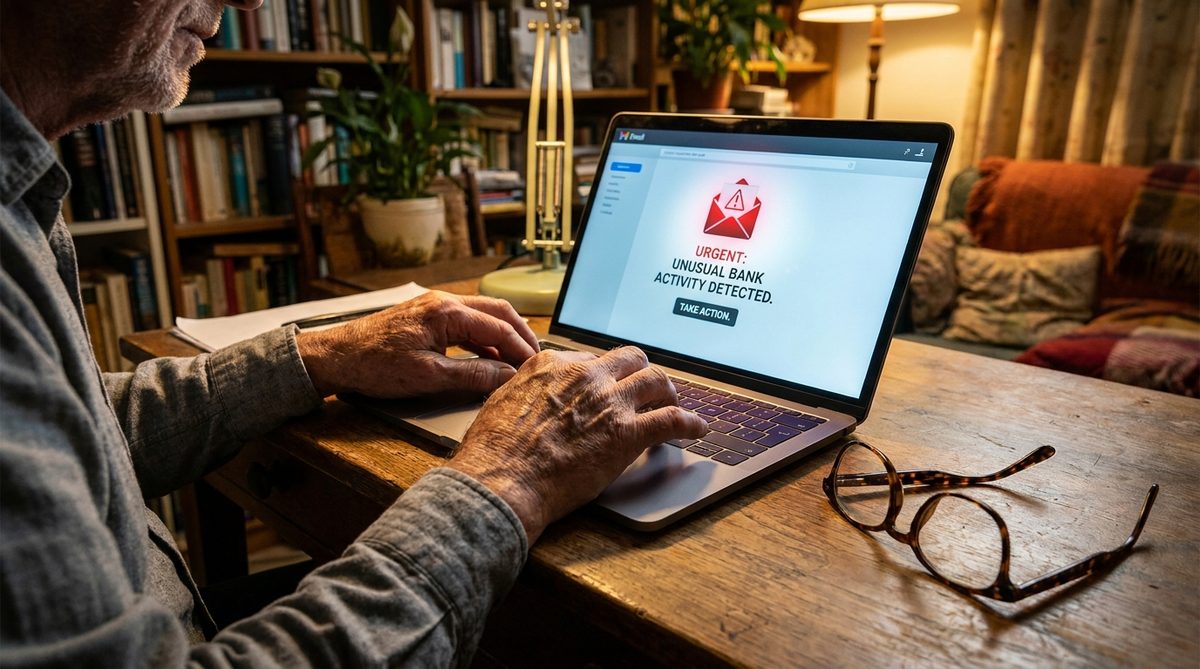
In my 12 years covering consumer technology, I’ve watched digital scams evolve from clumsy Nigerian prince emails into sophisticated, emotionally devastating operations that specifically prey on older Americans. And in 2025 and into 2026, the problem has reached what I can only call crisis levels. Financial scams targeting older adults are no longer a footnote in cybersecurity reports — they are a national emergency that deserves far more attention than it gets.
The Staggering Scale of Elder Financial Fraud
The numbers are genuinely alarming. According to the FBI’s Internet Crime Complaint Center (IC3), Americans over 60 reported losses exceeding $3.4 billion to online fraud in 2023, a 11% increase from the year before. By 2024, preliminary data suggested that figure climbed past $4.8 billion. And those are only the cases that get reported — the FBI estimates that fewer than 1 in 5 victims ever file a complaint, meaning real losses could exceed $20 billion annually.
The FTC’s Consumer Advice division has flagged a disturbing trend: while younger adults actually report fraud more frequently, older adults lose significantly more money per incident. The median loss for someone over 70 is roughly four times higher than for someone in their 20s. The reason is straightforward — older Americans tend to have more accumulated savings, more home equity, and more trust in institutions that scammers impersonate.
What I see most often is a dangerous combination: increasingly sophisticated technology in the hands of criminals meeting a generation that didn’t grow up with the internet’s darker side. That gap is where billions of dollars disappear every year.
Why Scammers Are Targeting Older Adults More Aggressively
There’s a cruel logic to why financial scams targeting older adults have intensified so dramatically. It’s not because older people are gullible — that’s a harmful myth I’ve spent years pushing back against. It’s because scammers are rational predators who follow the money and exploit specific vulnerabilities.
The Wealth Factor
Americans over 55 control roughly 72% of all U.S. household wealth, according to Federal Reserve data. Retirement accounts, paid-off homes, Social Security income, and pension funds create a target profile that criminal networks find irresistible. When budgets are already tight — as we’re seeing with Social Security’s 2.8% COLA falling short for many retirees in 2026 — the financial devastation of a scam can be permanent.
The Isolation Factor
Older adults who live alone are disproportionately targeted. Scammers know that someone without a spouse, nearby family, or regular social contact is less likely to have a person in the room saying, “Wait — that sounds wrong.” The pandemic accelerated isolation for millions of older Americans, and many never fully reconnected. That loneliness creates an opening that romance scammers, fake tech support agents, and phony government officials exploit ruthlessly.
The Technology Adoption Factor
Here’s the paradox: older adults are using technology more than ever — AARP’s 2024 technology survey found that 76% of adults 50 and over own a smartphone and 44% own a tablet — but many haven’t received adequate education about digital threats. As AARP’s personal technology resources have documented extensively, the desire to stay connected and independent drives tech adoption, but security awareness often lags behind usage.
The Five Most Dangerous Scams Right Now
Over the past year, I’ve interviewed fraud investigators, cybersecurity researchers, and dozens of victims and their families. These are the scam categories causing the most damage to older Americans in 2025 and 2026.
AI-Powered Voice Cloning and Deepfakes
Margaret’s story at the top of this article represents the fastest-growing category of elder fraud. Criminals can now clone a voice from as little as three seconds of audio — pulled from Facebook videos, YouTube clips, or voicemail greetings. The technology, which was experimental just two years ago, is now available through free or cheap apps that require zero technical skill.
These “grandparent scams” generated over $2.7 billion in reported losses in 2023, and AI is making them exponentially more convincing. I often tell my readers that if someone calls you in a crisis asking for money, hang up and call that person directly on a number you already have saved. Every single time. No exceptions.
Romance and Companionship Scams
This is the category that breaks my heart most. Scammers create elaborate fake profiles on dating sites, Facebook, and even Words With Friends, then spend weeks or months building emotional connections with their targets. The FTC reports that romance scam losses topped $1.14 billion in 2023, with victims over 60 losing a median of $9,000 — though many lose six figures.
One victim I spoke with, a 68-year-old widower in Ohio, sent over $180,000 across eight months to someone he believed was a retired Army nurse stationed overseas. The scammer had used stolen photos and maintained daily text conversations that felt genuinely intimate. “I wasn’t stupid,” he told me. “I was lonely.”
Tech Support and Government Impersonation
That alarming pop-up on your computer screen warning that your device is infected? The phone call from “Microsoft” saying your account has been compromised? The voicemail from the “Social Security Administration” claiming your number has been suspended? All scams. All extremely common. All designed to create panic that overrides critical thinking.
The Cybersecurity and Infrastructure Security Agency (CISA) has issued multiple advisories about government impersonation scams, which surged 53% between 2022 and 2024. These scammers often demand payment via gift cards, wire transfers, or cryptocurrency — methods chosen specifically because they’re nearly impossible to reverse.
Investment and Cryptocurrency Fraud
Cryptocurrency scams have become the single largest dollar-loss category for older adults, according to the FBI’s IC3 data. Victims are lured through social media ads, fake news articles featuring celebrity endorsements, or even direct messages from compromised accounts of people they know. The scammer walks them through setting up a crypto wallet, helps them make an initial “investment” that appears to grow, then drains the account once a larger sum is deposited.
I covered a case last spring where a retired engineer in Florida lost $340,000 to a Bitcoin investment platform that displayed completely fabricated returns on a professional-looking dashboard. The website vanished overnight.
Recovery Scams — The Cruelest Twist
Perhaps the most devastating development in recent years is the recovery scam. After someone has already been victimized, a second scammer contacts them — often posing as a lawyer, law enforcement agent, or fraud recovery specialist — and promises to help retrieve their stolen funds for a fee. It’s the same criminals, or their associates, victimizing the same person twice.
This was the subject of a widely reported case in 2024 where a fake lawyer targeted an elderly father who had already lost his life savings. As one fraud investigator told me, “They keep a list. Once you’ve proven you’ll send money, you go on the ‘sucker list,’ and it gets sold to other scam operations.” Understanding that common scam myths can put you at serious risk is the first step toward recognizing these second-wave attacks.
Red Flags That Should Stop You Cold
After covering hundreds of these cases, I’ve identified the warning signs that appear in virtually every scam. Memorize these — and share them with everyone you care about.
- Urgency and panic: Every scam creates artificial time pressure. “You must act now,” “Your account will be frozen today,” “He needs bail money within the hour.” Legitimate institutions don’t operate this way.
- Unusual payment methods: Gift cards, wire transfers, cryptocurrency, and cash sent via courier are scammer currencies. No government agency, utility company, or legitimate business will ever ask you to pay with Target gift cards.
- Requests for secrecy: “Don’t tell your family.” “The bank teller doesn’t need to know what this is for.” “This is a confidential investigation.” These phrases are engineered to isolate you from the people who would protect you.
- Unsolicited contact: Whether it’s a phone call, email, text, or social media message — if you didn’t initiate the conversation, your guard should be up. Period.
- Too-good-to-be-true offers: Guaranteed investment returns, surprise lottery winnings, free government grants. If it sounds miraculous, it’s manufactured.
- Emotional manipulation: A grandchild in danger, a romantic partner in crisis, an IRS agent threatening arrest. Scammers weaponize your emotions because fear and love both disable rational thinking.

Practical Steps to Protect Yourself and Your Family
Awareness is crucial, but it’s not enough. In my experience, the people who avoid scams have specific habits and systems in place — not just good intentions.
Create a Family Code Word
This is the single most effective defense against voice-cloning scams, and it costs nothing. Choose a word or phrase that only your family knows — something that would never appear on social media or in a public conversation. If someone calls claiming to be a relative in trouble, ask for the code word. No code word, no money. Margaret’s instinct about “Grandma” versus “Nana” saved her $9,000. A code word removes the guesswork entirely.
Freeze Your Credit
A credit freeze with all three major bureaus — Equifax, Experian, and TransUnion — is free and prevents anyone from opening new accounts in your name. You can temporarily lift the freeze when you need to apply for credit. There is no downside to doing this, and I recommend it for every adult over 50. The process takes about 10 minutes per bureau online.
Enable Two-Factor Authentication Everywhere
Yes, it’s an extra step when logging in. Yes, it’s worth it. Two-factor authentication (2FA) means that even if a scammer gets your password, they can’t access your account without also having your phone. Enable it on your email, bank accounts, and social media. If you need help setting this up, most banks and your phone carrier’s local store will walk you through it at no charge.
Set Up Trusted Contacts at Your Financial Institutions
Most major banks and brokerage firms now allow you to designate a trusted contact — a family member or friend who can be notified if the institution suspects financial exploitation. This isn’t giving someone access to your money. It’s giving your bank permission to call someone you trust if they see something suspicious, like a large unusual withdrawal.
Use Call-Screening and Spam-Filtering Tools
Both iPhone and Android now offer built-in call screening that can silence unknown callers and send them to voicemail. Apps like the ones recommended by Consumer Reports add additional layers of robocall blocking. I always tell people: if it’s truly important, they’ll leave a message. And if they leave a message, you can verify who they are before calling back.
Talk About It — Openly and Without Shame
The single biggest obstacle to fighting elder fraud isn’t technology — it’s shame. Victims often don’t report scams because they’re embarrassed. Families don’t discuss it because they don’t want to seem patronizing. This silence is exactly what scammers count on.
I’ve seen families transform their vulnerability into strength simply by having honest, nonjudgmental conversations about fraud. Make it routine. Mention the latest scam you read about at dinner. Share this article. Normalize the idea that smart, capable people get targeted — because they do, every single day.
Technology as Shield, Not Just Threat
I want to be careful not to leave you with the impression that technology is the enemy here. It isn’t. The same smartphones and computers that scammers try to exploit are also powerful tools for helping older adults thrive and live independently.
Telehealth appointments save trips to the doctor. Video calls keep families connected across thousands of miles. Medication reminder apps prevent dangerous missed doses. Smart home devices can detect falls, automate lighting, and provide voice-activated emergency calls. Banking apps let you monitor your accounts in real time and catch unauthorized transactions within minutes rather than weeks.
The goal isn’t to retreat from technology — it’s to use it with confidence and appropriate caution. Think of it like driving. You don’t stop driving because accidents happen. You wear a seatbelt, follow traffic laws, and stay alert. Digital security works the same way.
And staying active online can complement other pillars of healthy aging. Research continues to show that cognitive engagement — including learning new technology skills — supports brain health, much like maintaining good sleep habits supports overall wellness after 50.
What to Do If You’ve Already Been Scammed
If you or someone you love has been victimized, speed matters. Here’s what to do immediately:
- Contact your bank or credit card company right away. Many transactions can be reversed or disputed if reported quickly — especially credit card charges and some wire transfers.
- File a report with the FBI’s IC3 at ic3.gov. This is the federal government’s primary database for internet crime and helps law enforcement identify patterns and catch perpetrators.
- Report the scam to the FTC at consumer.ftc.gov. Your report contributes to enforcement actions that have recovered hundreds of millions of dollars for consumers.
- Contact your local Adult Protective Services. Every state has an APS office that investigates financial exploitation of older adults and can connect victims with recovery resources.
- Call the AARP Fraud Watch Network Helpline at 877-908-3360. It’s free, staffed by trained volunteers, and available to anyone regardless of AARP membership.
- Do not engage with anyone who contacts you offering to recover your money — this is almost certainly a recovery scam layered on top of the original fraud.
And please, regardless of how much you lost, do not stay silent. Reporting protects the next person. The shame belongs to the criminals, not to you.
Building a Scam-Resistant Future
I’ve been covering technology for over a decade, and I’ll be honest — the sophistication of modern scams sometimes keeps me up at night. AI-generated voices, deepfake video calls, and hyper-personalized phishing emails built from your social media data represent a threat landscape that would have seemed like science fiction five years ago.
But I’ve also never seen more energy being directed at fighting back. Banks are implementing AI-powered fraud detection that can flag suspicious transactions before money leaves your account. Phone carriers are deploying network-level call authentication. Federal agencies are finally treating elder fraud as the serious crime it is, with dedicated prosecutors and task forces in every state.
Most importantly, older Americans themselves are becoming more digitally savvy every year. The community center classes, the library workshops, the family members patiently helping set up two-factor authentication — all of that matters. Every person who learns to recognize a scam is one fewer victim and one more voice spreading awareness.
Margaret, the retired teacher from Tucson, told me she now gives informal “scam awareness” talks at her church. “I taught sixth graders for 30 years,” she said. “I can certainly teach my friends not to fall for this nonsense.” She paused, then added: “And if my story helps even one person hang up that phone, then that awful call was worth something.”
She’s right. And I believe sharing these stories — openly, without shame, with practical advice attached — is the most powerful tool we have. The scammers are organized, well-funded, and relentless. We need to be just as determined to protect each other.
Frequently Asked Questions
What is the most common financial scam targeting older adults in 2026?
AI-powered voice cloning scams — often called "grandparent scams" — are among the fastest growing, but tech support impersonation and romance scams also remain extremely prevalent. The FBI reported over $4.8 billion in losses from older adult fraud victims in 2024, with cryptocurrency investment fraud causing the highest dollar losses per incident.
How can I tell if a phone call from a family member is actually a deepfake AI voice?
Establish a family code word that only your immediate family knows and would never share publicly or on social media. If someone calls claiming to be a relative in an emergency, ask for the code word before sending any money. Also, hang up and call the family member directly using a phone number you already have saved in your contacts.
Should I report a scam even if I only lost a small amount of money?
Absolutely. Every report filed with the FBI's IC3 (ic3.gov) and the FTC (consumer.ftc.gov) helps law enforcement identify scam networks and build cases against criminals. Your report could prevent someone else from losing their life savings. There is no minimum dollar amount for filing, and the process can be completed online in about 15 minutes.
About Alex Rivera, 12+ Years in Consumer Tech Reporting
Alex Rivera is a senior technology journalist with over 12 years of experience making technology accessible to everyday readers. He has covered consumer electronics, smartphones, smart home devices, streaming platforms, and digital privacy for major publications. At Daily Trends Now, Alex focuses on the tech that matters most to American adults — from choosing the right phone plan to protecting your data online. His reviews and guides cut through the jargon to help readers make confident technology decisions.