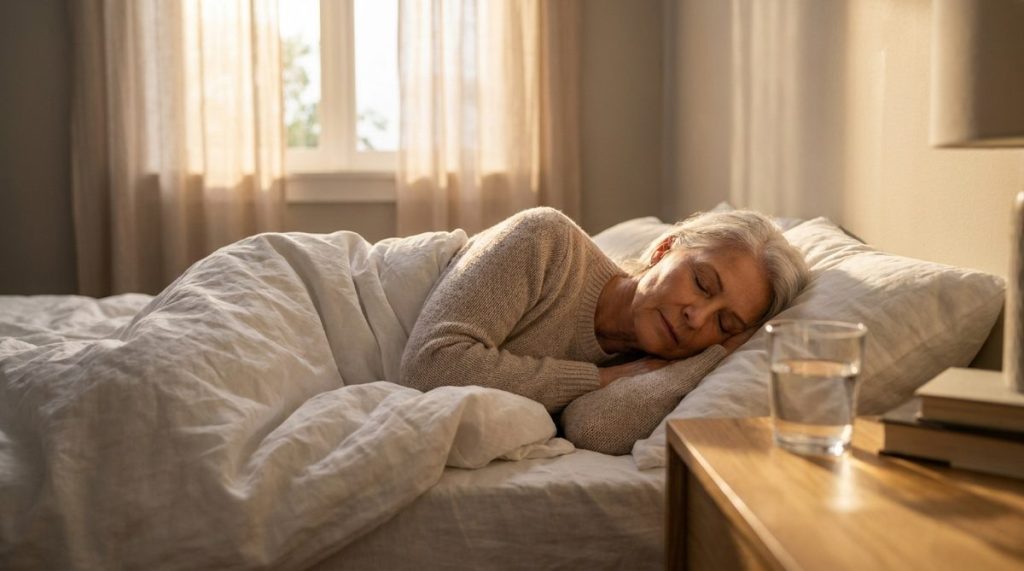


Why Sleep Is the Most Underrated Factor in Healthy Aging
In my 22 years as a board-certified geriatrician, I’ve watched patients optimize their diets, exercise religiously, and take every supplement on the shelf — while consistently neglecting the single behavior that may matter most for healthy aging: sleep.
A landmark 2024 study published in collaboration with researchers at the National Institute on Aging found that adults over 50 who consistently slept within a specific duration window — roughly seven hours per night — showed significantly slower rates of cognitive decline, lower inflammatory markers, and better cardiovascular outcomes over a 10-year follow-up. This wasn’t a small study. It tracked more than 7,000 adults aged 50 to 85.
The findings reinforced what I’ve been telling my patients for years: there’s a sleep-time “sweet spot” for older adults, and missing it — in either direction — accelerates biological aging. Too little sleep raises your risk for dementia, heart disease, and falls. Too much sleep is associated with depression, metabolic dysfunction, and increased mortality.
What I see most often is older adults accepting poor sleep as an inevitable part of getting older. It isn’t. And the research now proves that fixing your sleep habits after 50 can meaningfully change your health trajectory. Here are seven evidence-based strategies I recommend to my patients — and the science behind each one.
1. Aim for the 7-Hour Sweet Spot (Not More, Not Less)
The data is increasingly clear: for adults over 50, seven hours of sleep per night is the target associated with the best health outcomes. A 2022 study in Nature Aging analyzed data from nearly 500,000 UK Biobank participants aged 38 to 73 and found that seven hours was the optimal duration for cognitive performance, mental health, and well-being. Both shorter and longer sleep durations were linked to worse outcomes.
This challenges the old advice that older adults simply “need less sleep.” What actually happens is that our sleep architecture changes — we spend less time in deep slow-wave sleep and wake more frequently during the night. But our biological need for restorative sleep doesn’t disappear.
What This Means for You
Track your actual sleep time (not just time in bed) for two weeks. Many of my patients discover they’re spending nine hours in bed but only sleeping five or six. A simple sleep diary — or a basic wearable tracker — can reveal the gap. Your goal is roughly seven hours of actual sleep, which may mean spending about 7.5 to 8 hours in bed.
If you’re consistently falling far short of this target or overshooting it significantly, that’s a conversation worth having with your doctor — not something to dismiss as “just aging.” As I discuss often, aging doesn’t mean decline, and sleep quality is one of the most actionable places to prove it.
2. Lock In a Consistent Wake Time — Even on Weekends
Your circadian rhythm — the internal clock that governs sleep-wake cycles, hormone release, and body temperature — becomes more fragile with age. Research from the Mayo Clinic shows that irregular sleep schedules are associated with higher rates of metabolic syndrome, obesity, and hypertension in older adults.
I often tell my patients that the single most powerful thing they can do for their sleep is to wake up at the same time every day. Not just on weekdays. Every day. Your body’s clock anchors to your wake time more reliably than your bedtime, and consistency here cascades into better sleep quality at night.
The Implementation Strategy
- Choose a wake time that works for your life seven days a week — for most of my patients over 60, this falls between 6:00 and 7:30 AM.
- Set a single alarm and place it across the room so you must stand to turn it off.
- Within 10 minutes of waking, expose yourself to bright light — ideally natural sunlight. This resets your circadian clock and triggers the cortisol awakening response your body needs.
- Resist the urge to “make up” for a bad night by sleeping in. A consistent wake time will self-correct your sleep drive within three to five days.
- If you’re drowsy mid-afternoon, a short nap (under 20 minutes, before 2:00 PM) is fine. Anything longer disrupts nighttime sleep.
Consistency may sound boring, but in my clinical experience, it produces more dramatic sleep improvements than any supplement or medication I’ve ever prescribed.

3. Get Morning Light Exposure to Reset Your Internal Clock
Here’s something many older adults don’t realize: the aging eye lets in significantly less light. By age 60, the amount of light reaching your retina is roughly one-third what it was at age 20, partly due to changes in the lens and smaller pupil size. This means your circadian system receives weaker signals, which is one reason sleep timing drifts earlier with age — the phenomenon where you’re falling asleep at 8 PM and wide awake at 3 AM.
Morning bright light exposure — at least 30 minutes within the first hour of waking — is one of the most effective non-pharmaceutical interventions for this problem. A 2023 study in Sleep Medicine Reviews found that consistent morning light therapy improved sleep efficiency in adults over 65 by an average of 12%, comparable to the effect of some prescription sleep medications.
Practical Tips for Light Exposure
Step outside for a morning walk if weather permits. Even overcast daylight delivers 5,000 to 10,000 lux — far more than indoor lighting, which typically tops out around 300 to 500 lux. If you live in a northern climate or mobility limits your outdoor time, a 10,000-lux light therapy box positioned about 16 to 24 inches from your face for 20 to 30 minutes works well.
I recommend combining morning light with gentle physical activity — even a 15-minute walk around the block. You’re stacking two powerful circadian signals: light and movement. Many of my patients who adopt this habit report falling asleep more easily at a normal bedtime within one to two weeks.
4. Rethink Your Evening Routine (It Starts at 6 PM)
Most sleep advice focuses on what you do right before bed. But for adults over 50, the critical window starts much earlier — around 6:00 PM, or roughly three to four hours before your target bedtime. What you consume, view, and do during this window has an outsized impact on sleep quality.
The Big Three Evening Disruptors
Alcohol. I can’t overstate this one. Many of my patients use a glass of wine to “relax” in the evening, and it does induce drowsiness initially. But alcohol fragments the second half of your sleep cycle, suppresses REM sleep, and increases nighttime awakenings. A 2023 analysis from the CDC’s Behavioral Risk Factor Surveillance System found that adults over 55 who consumed even moderate alcohol within three hours of bedtime reported 26% more sleep disturbances than non-drinkers. If you enjoy wine, have it with dinner — early dinner — and stop there.
Late meals and fluids. Eating a large meal after 7 PM increases the risk of gastroesophageal reflux, which worsens when you lie down. Excess fluids after 6 PM contribute to nocturia — nighttime urination — which is already the number-one sleep disruptor I hear about from patients over 60. Front-load your fluid intake earlier in the day.
Screen light. Blue-spectrum light from phones, tablets, and TVs suppresses melatonin production. After age 50, your body already produces less melatonin naturally, so this effect hits harder. Dim your screens after 7 PM or use blue-light filters. Better yet, switch to a book, podcast, or conversation.
5. Address Sleep Apnea — the Silent Health Thief After 50
Obstructive sleep apnea (OSA) affects an estimated 30 to 50% of adults over 65, according to data from the CDC. Yet the vast majority remain undiagnosed because they — or their partners — assume that loud snoring and daytime fatigue are just normal parts of aging.
They are not. Untreated sleep apnea is associated with a two- to threefold increased risk of stroke, a significant acceleration of cognitive decline, treatment-resistant hypertension, and atrial fibrillation. In my practice, I’ve seen patients who spent years on blood pressure medications finally achieve normal readings after starting CPAP therapy for previously undiagnosed apnea.
Warning Signs You Shouldn’t Ignore
Loud, irregular snoring — especially with witnessed pauses in breathing. Waking up with a dry mouth or headache. Excessive daytime sleepiness despite spending adequate time in bed. Difficulty concentrating or memory problems that seem worse than expected. Waking up gasping or choking.
If any of these apply, ask your doctor about a home sleep study. Modern home testing devices are far more convenient than the old overnight lab studies, and many are now covered by Medicare. Getting tested is one of the highest-return medical decisions an older adult can make, and it connects directly to broader efforts to manage healthcare costs — something that matters more than ever as Social Security and Medicare shifts reshape retiree budgets in 2026.
6. Reconsider Your Sleep Medications (Many Cause More Harm Than Good)
This is a conversation I have almost daily in my geriatrics practice. Older adults are the most heavily medicated demographic in the country for sleep — and many of the drugs they’re taking are the wrong ones.
Benzodiazepines (like temazepam and lorazepam) and “Z-drugs” (like zolpidem/Ambien) remain widely prescribed to older adults despite strong evidence that they increase fall risk by 40 to 60%, impair next-day cognition, and are linked to higher rates of dementia with long-term use. The American Geriatrics Society’s Beers Criteria has flagged these medications as potentially inappropriate for adults over 65 since 2012.
Safer Alternatives That Actually Work
Cognitive Behavioral Therapy for Insomnia (CBT-I) is the first-line treatment recommended by every major medical organization, including the American College of Physicians. It’s a structured program — typically six to eight sessions — that addresses the thought patterns and behaviors perpetuating poor sleep. Studies consistently show it outperforms medication for chronic insomnia and the benefits last long after treatment ends. Many programs are now available online, making access easier than ever.
Low-dose melatonin (0.5 to 1 mg, taken two hours before bedtime) can help with sleep-onset issues, particularly for adults whose circadian rhythm has shifted. The key is low dose — the 5 to 10 mg tablets sold in most pharmacies are far more than your body needs and can cause next-day grogginess.
If you’re currently taking a sleep medication, don’t stop it abruptly — work with your physician to taper safely. But do raise the conversation. As I wrote about in a related piece, some medical routines older adults follow may no longer be necessary, and sleep medications are near the top of that list.
7. Build a Sleep Environment That Works for an Aging Body
Your bedroom setup at 65 shouldn’t look the same as it did at 35. Age-related changes in thermoregulation, pain sensitivity, bladder function, and light sensitivity all demand specific environmental adjustments.
Temperature
The ideal sleep temperature for older adults is between 65°F and 68°F. Aging reduces the body’s ability to thermoregulate, making overheating a more common cause of nighttime wakefulness. If you tend to run hot, consider moisture-wicking sheets and a cooling mattress topper. If you’re always cold, warm socks are more effective than heavy blankets — peripheral warming of the extremities actually promotes sleep onset.
Light and Noise
Complete darkness matters more than most people realize. Even dim light exposure during sleep — a nightlight, streetlight through curtains, or a glowing alarm clock — has been shown to increase insulin resistance and heart rate during sleep in adults over 60. Use blackout curtains or a comfortable sleep mask. For noise, a white noise machine at a consistent low volume can mask the intermittent sounds (traffic, a partner’s snoring, neighborhood dogs) that fragment sleep.
The Mattress and Pillow Question
If your mattress is more than eight years old, it’s likely contributing to the back and joint pain that disrupts sleep. A medium-firm mattress consistently scores highest in studies for spinal alignment and pain reduction in older adults. Your pillow should keep your neck in a neutral position — side sleepers typically need a thicker pillow than back sleepers.
Fall Prevention at Night
This is a geriatrician-specific concern that most sleep advice ignores: if you’re getting up at night to use the bathroom — and most adults over 60 are — your path needs to be safe. Motion-activated, low-red-spectrum nightlights in the hallway and bathroom provide enough visibility to prevent falls without disrupting melatonin production. Remove loose rugs. Keep a clear, obstacle-free path from bed to bathroom.
Putting It All Together: Your Healthy Aging Sleep Action Plan
I want to leave you with a structured approach. You don’t need to overhaul everything at once. In fact, trying to change too many habits simultaneously usually backfires. Here’s the sequence I recommend to my patients:
- Week 1: Set a consistent wake time and stick to it for seven consecutive days, including weekends. Get outside within 30 minutes of waking for light exposure.
- Week 2: Establish a 6 PM cutoff for caffeine and limit alcohol to early dinner hours only. Begin dimming screens and overhead lights by 7 PM.
- Week 3: Optimize your bedroom — check your thermostat setting, invest in blackout curtains if needed, and evaluate your mattress and pillow.
- Week 4: If you’re still struggling with sleep after these changes, talk to your doctor about screening for sleep apnea and ask about CBT-I. Review any sleep medications you’re currently taking.
- Ongoing: Keep a simple sleep diary. Track bedtime, wake time, estimated hours slept, and how you feel the next day. Patterns will emerge that guide further adjustments.
This phased approach works because it builds momentum. Most of my patients notice measurable improvement by the end of week two — falling asleep faster, waking less often, and feeling more alert during the day.
Sleep Is Where Healthy Aging Begins
The conversation around healthy aging tends to focus on exercise, nutrition, and brain games. These all matter. But sleep is the foundation that makes everything else work. Your body consolidates memories during sleep. It clears amyloid-beta — the protein associated with Alzheimer’s disease — during deep sleep. It regulates the hormones that control appetite, blood sugar, and inflammation.
When sleep falls apart, everything else follows. And when you fix sleep, the downstream benefits touch virtually every system in your body.
The new research confirming a sleep-time sweet spot for healthy aging isn’t just an interesting headline. It’s a call to action. At 50, 60, 70, and beyond, the quality of your sleep is one of the most powerful predictors of how well you’ll age — and unlike your genetics, it’s something you can actually control.
If this resonates with you, I’d encourage you to explore additional strategies in our guide to the 6 pillars of a healthier, age-defying lifestyle for 2026. Sleep is one pillar. But it may be the one that holds up all the others.
Start tonight. Pick one habit from this list. Give it a week. You have nothing to lose — except the fatigue, brain fog, and restless nights you’ve been told are just part of getting older. In my experience, they don’t have to be.
About Dr. James Roberts, MD, Board-Certified in Geriatrics
Dr. James Roberts is a board-certified geriatrician with 22 years of clinical experience caring for American seniors. He specializes in chronic disease management, medication safety, cognitive health, and senior wellness. Dr. Roberts is passionate about translating the latest medical research into clear, practical guidance that helps older adults make confident, informed decisions about their health. At Daily Trends Now, his articles are based on peer-reviewed studies and authoritative sources such as the CDC, Mayo Clinic, and the National Institute on Aging.