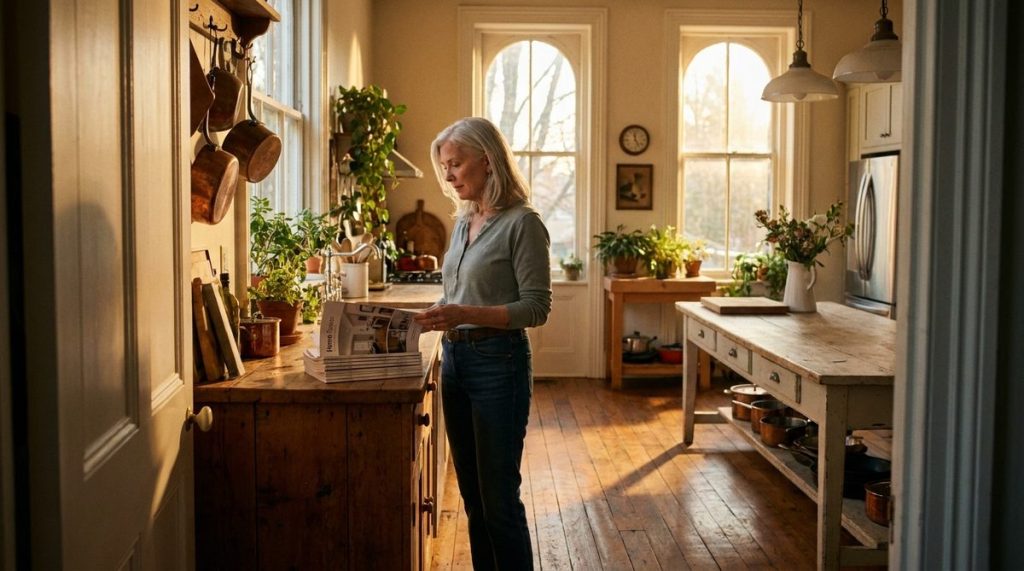


Why “Age-Defying” Doesn’t Mean Fighting Aging — It Means Owning It
Let me start with something I tell nearly every client who walks into my practice after turning 50: aging isn’t a disease. It’s a biological process — and one you have far more influence over than you might think. A recent longitudinal study found that many older adults actually improve in key health markers over time, challenging the deeply held assumption that getting older automatically means getting sicker.
In my 15 years as a registered dietitian and nutritional scientist, I’ve watched the science of healthy aging evolve dramatically. We now have robust data showing that roughly 80% of chronic diseases in adults over 50 are influenced by lifestyle factors — not just genetics. That’s an extraordinary amount of control sitting right in your hands.
So what does a healthier, age-defying lifestyle actually look like in 2026? It’s not about miracle supplements or extreme diets. It rests on six foundational pillars — each backed by research, each within your reach. Let’s break them down.
Pillar 1: Nutrition That Fuels, Not Just Fills
The protein problem no one talks about
Here’s what I see most often in my practice: seniors eating enough calories but not nearly enough of the right nutrients. After age 50, your body becomes less efficient at synthesizing muscle protein — a process called anabolic resistance. The National Institute on Aging recommends that older adults consume 1.0 to 1.2 grams of protein per kilogram of body weight daily, yet NHANES data consistently shows that over 40% of adults over 65 fall short of even the baseline RDA of 0.8 g/kg.
What does this mean practically? A 160-pound senior should aim for roughly 73–87 grams of protein per day, spread across meals. Frontloading protein at breakfast — think eggs, Greek yogurt, or a whey-based smoothie — can significantly improve muscle protein synthesis throughout the day.
Anti-inflammatory eating isn’t a trend — it’s a strategy
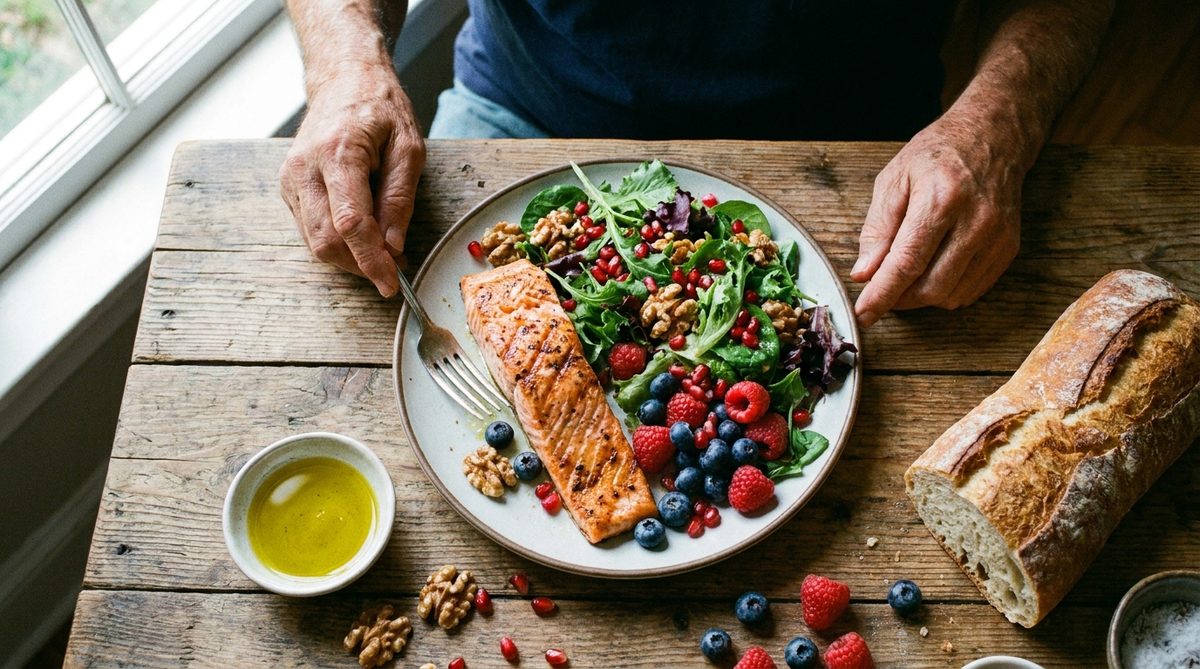
Chronic low-grade inflammation (sometimes called “inflammaging”) drives conditions from arthritis to Alzheimer’s. The Mediterranean and MIND diets remain the gold standard for older adults. A 2023 study in The BMJ found that adherence to Mediterranean-style eating patterns reduced all-cause mortality risk by 23% in adults over 65.
“You don’t need a perfect diet — you need a consistent pattern of anti-inflammatory foods. Think colorful produce, fatty fish twice a week, olive oil daily, and minimally processed grains. Small shifts sustained over months create measurable biological change.” — Dr. Linda Park, PhD, RD
For a deeper dive into nutrition strategies tailored specifically for seniors, I’ve outlined more in my guide on healthy aging after 50.
Pillar 2: Movement That Matches Your Body
The four types of exercise every senior needs
The CDC recommends that adults 65 and older get at least 150 minutes of moderate-intensity aerobic activity per week, plus muscle-strengthening activities on two or more days. But what often gets left out of the conversation are balance training and flexibility work — two categories that dramatically reduce fall risk.
Falls are the leading cause of injury-related death among Americans 65 and older, accounting for over 36,000 deaths annually as of 2024 CDC data. Yet only about 30% of older adults report doing any balance-specific exercises.
- Aerobic activity: Brisk walking, swimming, or cycling — 30 minutes most days. Start with 10-minute bouts if needed.
- Strength training: Resistance bands, bodyweight exercises, or light weights — 2 to 3 sessions per week targeting major muscle groups.
- Balance exercises: Tai chi, single-leg stands, or heel-to-toe walking — daily practice for 10–15 minutes.
- Flexibility/mobility: Gentle yoga, dynamic stretching, or foam rolling — incorporated into warm-ups and cool-downs.
The “use it or lose it” window is real
After just 10 days of bed rest, adults over 65 can lose up to 1.5 kg of lean leg muscle — roughly equivalent to a decade of age-related muscle loss compressed into a week and a half. I can’t stress this enough: staying active after illness, surgery, or hospitalization is critical. Talk to your physician or physical therapist about safe re-entry into movement.
Pillar 3: Sleep as a Non-Negotiable Health Tool
Sleep is where your body repairs tissue, consolidates memory, and regulates hormones that control appetite and blood sugar. Yet the National Sleep Foundation reports that 44% of older adults experience insomnia symptoms at least a few nights per week.
Poor sleep in seniors is linked to higher rates of cardiovascular disease, cognitive decline, depression, and falls. It’s not just about quantity — sleep architecture changes with age, with less time spent in deep (slow-wave) sleep.
Evidence-based sleep strategies for adults over 50
Before reaching for a sleep aid, try these approaches that I regularly recommend to clients:
- Consistent timing: Go to bed and wake up within the same 30-minute window every day, including weekends.
- Light exposure: Get 20–30 minutes of natural morning sunlight to regulate your circadian rhythm.
- Evening nutrition: A small snack with tryptophan and complex carbs (like a banana with a tablespoon of almond butter) about 90 minutes before bed can support melatonin production.
- Temperature: Keep the bedroom between 65°F and 68°F — cooler environments promote deeper sleep.
- Screen cutoff: Blue light from devices suppresses melatonin. Aim for a 60-minute screen-free buffer before sleep.
If you’re exploring devices that can support safer nighttime routines and independent living, check out these age tech devices designed to help seniors age in place.
Pillar 4: Cognitive Engagement and Mental Health
Your brain needs a workout too
The Alzheimer’s Association estimates that 6.9 million Americans age 65 and older are living with Alzheimer’s disease in 2024, with that number projected to reach 13.8 million by 2060 without medical breakthroughs. But emerging research from the National Institute on Aging suggests that cognitive engagement — learning new skills, social interaction, and novel problem-solving — may help build cognitive reserve that delays symptom onset.
I often tell my clients that nutrition and brain health are deeply intertwined. Omega-3 fatty acids (particularly DHA), B vitamins (B12, folate), and flavonoid-rich foods like blueberries and dark chocolate have all shown neuroprotective effects in clinical trials.
Addressing the loneliness epidemic
Social isolation among older adults increases the risk of dementia by approximately 50% and the risk of premature death by 26%, according to the CDC. This isn’t a soft issue — it’s a clinical one. Joining community groups, volunteering, or even scheduling regular video calls with family creates measurable neurological benefits.

Pillar 5: Proactive (Not Reactive) Medical Care
Screenings, medications, and knowing when to question
A healthier age-defying lifestyle isn’t just about what you do at home — it’s about how you navigate the healthcare system. Recent reporting has highlighted that some medical routines commonly recommended for younger adults may be unnecessary or even harmful for older patients. Certain cancer screenings, for example, may carry more risk than benefit after age 75, depending on life expectancy and comorbidities.
This doesn’t mean skipping your doctor’s visits. It means having informed conversations. I recommend that every senior maintain an updated health binder that includes:
- Current medication list with dosages and prescribing physicians
- Recent lab results (especially vitamin D, B12, kidney function, and A1C)
- Vaccination records (including RSV, updated COVID boosters, shingles, and pneumococcal vaccines)
- Advance directives and healthcare proxy information
The polypharmacy trap
Nearly 40% of adults over 65 take five or more prescription medications. Polypharmacy increases the risk of adverse drug interactions, falls, cognitive impairment, and hospitalization. An annual comprehensive medication review with your pharmacist or geriatrician can identify drugs that may no longer be necessary — or that may be interacting in harmful ways.
| Screening | Recommended Ages | Frequency | Notes for Seniors 65+ |
|---|---|---|---|
| Blood pressure | All adults | At least annually | Target may differ; discuss with MD |
| Colonoscopy | 45–75 | Every 10 years (or per risk) | After 75, individualize based on health status |
| Mammography | 50–74 | Every 2 years | After 75, shared decision-making recommended |
| Bone density (DEXA) | Women 65+; men 70+ | Every 2 years | Essential for osteoporosis prevention |
| A1C (diabetes) | Adults 45+ or at risk | Every 1–3 years | More frequent if prediabetic or diabetic |
| Lipid panel | All adults | Every 4–6 years; annually if elevated | Statin use after 75 should be re-evaluated |
| Vision/hearing | Adults 50+ | Every 1–2 years | Critical for fall prevention and cognitive health |
Source guidelines: USPSTF, Mayo Clinic, and American Geriatrics Society. Always discuss individual risk factors with your healthcare provider.
Pillar 6: Financial Health Protects Physical Health
The link between money stress and chronic disease
This pillar might surprise you on a health article, but I include it because the evidence is overwhelming. Financial stress elevates cortisol, disrupts sleep, triggers inflammatory responses, and leads to skipping medications or medical appointments. A 2024 AARP survey found that 53% of adults over 50 reported that financial concerns negatively affected their physical health.
I’ve seen it firsthand in my practice: clients who ration insulin, skip protein-rich foods in favor of cheaper processed carbohydrates, or avoid dental care — all because of budget constraints. Health and finances are inseparable in older adulthood.
“A senior who can’t afford their medications or nutritious food isn’t going to benefit from a lecture on Mediterranean eating. We need to treat financial stability as a social determinant of health — because that’s exactly what it is.” — Dr. Linda Park, PhD, RD
If rising costs are squeezing your retirement budget, this practical guide on retiree budget threats in 2026 offers concrete strategies for protecting both your finances and your wellbeing.
Practical steps to protect your health through financial planning
- Review Medicare coverage annually during Open Enrollment (October 15–December 7). Plans change every year, and switching could save hundreds on prescriptions.
- Use pharmacy discount programs like GoodRx or Medicare Extra Help if you qualify — these can cut medication costs by 30–80%.
- Explore community nutrition programs such as SNAP for Seniors, Meals on Wheels, or local food bank partnerships that now offer medically tailored meals.
- Ask about generic alternatives at every prescription refill. The FDA requires generics to meet the same efficacy and safety standards as brand-name drugs.
- Budget for preventive care — many Medicare-covered preventive services (annual wellness visits, vaccines, certain screenings) have zero out-of-pocket cost.
Putting All 6 Pillars Together: Your 2026 Action Plan
An age-defying lifestyle isn’t built overnight. It’s the accumulation of small, consistent choices across nutrition, movement, sleep, cognitive engagement, medical advocacy, and financial wellness. No single pillar works in isolation — they reinforce each other.
Start with the pillar where you feel the weakest. If your diet needs work, commit to adding one extra serving of vegetables and 20 grams of protein to your day for two weeks. If sleep is your challenge, try a strict 10:30 p.m. bedtime for 10 nights and track how you feel. If you haven’t reviewed your medications in over a year, schedule that pharmacist consultation this week.
For a broader look at how these principles connect to an overall framework for thriving after 50, explore the full pillar framework for seniors.
The science is clear: aging doesn’t have to mean decline. With the right foundation, your best years of health may still be ahead of you. I’ve watched clients in their 70s reverse prediabetes, rebuild muscle mass, improve their sleep quality, and rediscover joy in movement. It starts with believing that change is still possible — because the data says it absolutely is.
About Dr. Linda Park, PhD, RD (Registered Dietitian)
Dr. Linda Park is a Registered Dietitian with a PhD in Nutritional Science and 15 years of clinical and research experience focused on older adults. She has published peer-reviewed research on the role of nutrition in managing diabetes, cardiovascular health, and cognitive decline in seniors. At Daily Trends Now, Dr. Park writes evidence-based articles on senior nutrition, supplement safety, meal planning, and the foods that truly make a difference for aging well.